
The Complete Guide to Retail Algo Trading in India
The Indian stock market has undergone a remarkable transformation over the last decade. From investors placing orders through phone calls to brokers, to today’s instant mobile trading applications, technology has completely changed how people participate in the financial markets. Yet, one challenge remains constant for most retail traders—making decisions under pressure.
Emotions such as fear, greed, hesitation, and overconfidence often influence trading decisions more than logic or data. A trader may enter a position too late due to fear of missing out (FOMO), exit a profitable trade too early, or ignore stop-loss levels in the hope that the market will reverse. These emotional mistakes can significantly impact long-term profitability.
This is where retail algo trading is reshaping the trading landscape. Instead of manually monitoring charts throughout the day, traders can now rely on predefined algorithms that execute trades automatically based on specific rules and market conditions. Modern algorithmic trading platforms make it possible for retail investors to access technology that was once available only to large financial institutions and hedge funds.
The rise of affordable trading APIs, improved internet infrastructure, cloud computing, artificial intelligence, and regulatory support has accelerated the adoption of retail algorithmic trading in India. Today, traders no longer need to be programmers or quantitative analysts to benefit from automation. Many platforms provide ready-to-use, plug-and-play strategies designed specifically for retail participants.
As India’s financial ecosystem continues to evolve, the introduction of a structured regulatory framework for retail algorithmic trading has further increased transparency, investor protection, and confidence in automated trading solutions. This has encouraged more traders to explore automation as a disciplined and systematic approach to market participation.
This comprehensive guide explains everything you need to know about retail algo trading in India, including how it works; its benefits; regulatory developments; popular trading strategies; risk management practices; and how to choose the right platform for long-term success.
What Is Retail Algo Trading?
“Retail algo trading” refers to the use of computer-based algorithms to automatically execute trades in financial markets according to predefined rules. These rules may be based on price movements, technical indicators, volume, volatility, time, or various market conditions.
Unlike manual trading, where individuals constantly monitor price charts and place orders themselves, algorithmic trading systems analyse market data continuously and execute trades instantly when predefined conditions are met.
Simply put, an algorithm is a set of instructions.
For example:
Buy Nifty call options when the 20 EMA crosses above the 50 EMA and RSI is above 60. Exit if profit reaches 20 points or stop-loss hits 10 points.”
Once these rules are configured within an algorithmic trading platform, the system continuously monitors live market data and executes trades automatically without requiring constant manual intervention.
This automation significantly reduces human error while improving execution speed and consistency.
Why Is Retail Algo Trading Becoming Popular?
Several factors have contributed to the rapid growth of algorithmic trading among retail investors:
Faster Market Movements
Financial markets react instantly to economic news, earnings announcements, geopolitical events, and global developments. Human traders often struggle to react within seconds, whereas algorithms can process data and execute trades almost immediately.
Emotion-Free Decision Making
Retail traders frequently face psychological biases such as the following:
- Fear
- Greed
- FOMO
- Revenge trading
- Overtrading
- Confirmation bias
Algorithms execute only the predefined trading plan without emotional interference.
Improved Discipline
Successful trading requires consistency rather than occasional lucky trades. Algorithmic systems follow the same rules repeatedly, helping traders maintain discipline over time.
Time Efficiency
Many traders cannot actively monitor the market during trading hours due to professional or personal commitments. Automated trading allows strategies to operate without continuous supervision.
Manual Trading vs Retail Algo Trading
| Feature | Manual Trading | Retail Algo Trading |
| Decision Making | Human | Rule-based Algorithm |
| Speed | Seconds or Minutes | Milliseconds |
| Emotional Influence | High | None |
| Execution Accuracy | Depends on Trader | Highly Consistent |
| Multiple Trades | Limited | Easily Managed |
| Monitoring | Continuous | Automated |
| Scalability | Low | High |
| Discipline | Varies | Consistent |
The objective of algorithmic trading is not to predict the future but to execute a well-defined trading strategy consistently and efficiently.
Evolution of Algorithmic Trading in India
Algorithmic trading was initially introduced for institutional investors and large broking firms. These organisations used sophisticated systems to execute large orders with minimal market impact and high precision.
Retail investors had limited access to such technology due to:
- High infrastructure costs
- Lack of APIs
- Technical complexity
- Regulatory limitations
- Limited awareness
Over time, several technological advancements changed this landscape.
Phase 1: Institutional Dominance
During the early years, algorithmic trading was largely restricted to:
- Investment banks
- Foreign Institutional Investors (FIIs)
- Mutual funds
- Proprietary trading firms
- High-Frequency Trading (HFT) desks
Retail participation was minimal.
Phase 2: API-Based Trading
As brokers began offering secure trading APIs, developers gained the ability to build custom trading systems. This marked the beginning of accessible automation for technically skilled retail traders.
However, coding expertise was still required, limiting widespread adoption.
Phase 3: No-Code Automation Platforms
The emergence of user-friendly platforms eliminated the need for programming knowledge. Traders could now:
- Choose predefined strategies
- Configure risk parameters
- Define capital allocation
- Enable automated execution
- Monitor performance through intuitive dashboards
This significantly lowered the barrier to entry for retail participants.
Phase 4: Retail Algo Trading
The Indian regulatory environment has evolved to address the growing adoption of retail algorithmic trading. Regulatory guidelines now emphasise the following:
- Investor protection
- Risk controls
- Secure API usage
- Broker oversight
- Transparency in automated execution
- Responsible deployment of retail algorithms
These developments have enhanced confidence in algorithmic trading among retail investors and encouraged the growth of compliant platforms.
How Retail Algo Trading Works
Understanding the workflow of an algorithmic trading system helps traders appreciate the technology behind automated execution.
Step 1: Market Data Collection
The algorithm continuously receives live market information such as the following:
- Price movements
- Volume
- Open Interest
- Bid-Ask Spread
- Volatility
- Option Chain Data
- Index Levels
This data forms the foundation for decision-making.
Step 2: Strategy Evaluation
The trading engine evaluates predefined conditions based on the selected strategy.
Examples include:
- Moving Average Crossover
- Breakout Strategy
- VWAP Strategy
- Option Selling Strategy
- Momentum Trading
- Mean Reversion
- Volatility-Based Entry
- Trend Following
The system continuously checks whether all required conditions are satisfied.
Step 3: Signal Generation
When every condition is met, the algorithm generates a trading signal.
For example:
- Buy Nifty CE
- Sell Bank Nifty PE
- Exit Existing Position
- Modify Stop-Loss
- Trail Profit
- Square Off Position
Signals are generated without emotional bias or hesitation.
Step 4: Automated Order Execution
The trading platform sends the order to the connected broker through secure APIs.
Depending on the strategy, the system may place the following:
- Market Orders
- Limit Orders
- Stop-Loss Orders
- Stop-Limit Orders
- Bracket Orders (where supported)
- Basket Orders
Execution occurs within milliseconds, minimising delays that often occur during manual trading.
Step 5: Position Monitoring
After execution, the system continues monitoring the open position in real time.
It automatically manages the following:
- Profit Targets
- Stop-Loss Levels
- Trailing Stop-Loss
- Time-Based Exits
- Volatility-Based Adjustments
- Risk Limits
- Maximum Daily Loss
This ensures positions are managed according to predefined rules without requiring constant manual supervision.
Step 6: Exit Strategy
Every successful algorithm includes clearly defined exit criteria.
Common exit triggers include:
- Target achieved
- Stop-loss hit
- Trend reversal
- Time-based square-off
- Volatility spike
- End-of-day exit
- Portfolio risk threshold reached
By following predefined exits, the algorithm helps eliminate impulsive decisions that often arise during periods of market volatility.
Core Components of a Retail Algo Trading Platform
A robust retail algorithmic trading platform typically includes the following:
- Strategy Engine: Executes predefined trading logic.
- Market Data Feed: Streams real-time price and market information.
- Broker API Integration: Connects the platform to the broker for order placement.
- Risk Management Module: Enforces stop-losses, position limits, and capital controls.
- Execution Engine: Sends orders with minimal latency.
- Monitoring Dashboard: Displays live positions, P&L, and performance metrics.
- Analytics & Reporting: Tracks historical performance, trade logs, and strategy effectiveness.
These components work together to provide traders with a seamless, disciplined, and scalable trading experience.
Manual Trading vs Algo Trading: Which Is Better for Modern Traders?
Every trader enters the market with the same objective—to generate consistent returns while managing risk effectively. However, the method of achieving that goal can vary significantly. Some traders rely on manual decision-making, while others use algorithmic systems that automate the trading process.
Neither approach guarantees profits. Success depends on the quality of the trading strategy, disciplined execution, sound risk management, and continuous learning. That said, Retail Algo Trading offers several operational advantages by removing emotional decision-making and improving execution consistency.
What Is Manual Trading?
Manual trading involves analysing the market, identifying opportunities, placing orders, and managing open positions entirely by yourself. The trader decides when to buy, sell, modify stop-losses, or exit a trade based on market observations.
Manual traders often use the following:
- Technical analysis
- Fundamental analysis
- Price action
- Candlestick patterns
- News and economic events
- Market sentiment
While experienced traders can succeed with this approach, it demands constant focus and quick decision-making—especially during volatile market conditions.
What Is Algo Trading?
In Retail Algo Trading, a predefined set of rules determines when trades should be executed. Once those rules are configured, the system continuously monitors live market data and executes trades automatically when the specified conditions are met.
For example, a strategy might be programmed to:
- Buy a call option when short-term momentum aligns with a trend indicator.
- Place a predefined stop-loss immediately after entry.
- Book profits at a fixed target or trail the stop-loss.
- Exit all open positions before market close.
Because the execution follows predefined rules, the algorithm avoids hesitation and emotional reactions.
Detailed Comparison: Manual Trading vs Retail Algo Trading
| Parameter | Manual Trading | Retail Algo Trading |
| Decision Making | Human judgment | Rule-based automation |
| Speed | Seconds to minutes | Milliseconds |
| Emotional Bias | High | Eliminated from execution |
| Discipline | Can vary | Consistent with predefined rules |
| Monitoring | Continuous manual attention | Automated monitoring |
| Order Accuracy | Depends on the trader | High, subject to market execution conditions |
| Multiple Positions | Difficult to manage simultaneously | Can monitor multiple strategies and instruments |
| Scalability | Limited | Easier to scale with proper risk controls |
| Backtesting | Manual or limited | Often built into platforms |
| Time Requirement | High | Lower during market hours once configured |
Key takeaway: Automation improves execution efficiency and consistency, but it does not eliminate market risk. A poorly designed strategy can still lose money.
Why Retail Traders Often Struggle with Manual Trading
Many retail traders experience inconsistent results not because they lack knowledge, but because psychological and operational challenges interfere with disciplined execution.
Emotional Decision-Making
Markets move rapidly, especially in derivatives such as options. Traders often react emotionally by:
- Exiting profitable trades too early.
- Holding losing trades for too long.
- Increasing position size after losses.
- Chasing fast-moving markets.
Algorithms simply execute predefined rules without fear or greed.
Delayed Execution
Even a small delay in placing an order can change the trade outcome during volatile sessions.
Automation can:
- Detect conditions instantly.
- Generate a signal.
- Send the order to the broker through secure APIs.
- Reduce reaction time compared with manual execution.
Lack of Consistency
Many traders follow a strategy for a few days, then switch approaches after a series of losses.
Successful trading generally depends on consistent execution over a meaningful sample of trades rather than frequent strategy changes.
Human Errors
Common manual mistakes include:
- Entering the wrong quantity.
- Selecting the wrong strike price.
- Missing a stop-loss.
- Forgetting to square off intraday positions.
- Placing duplicate orders.
Well-designed automated workflows can reduce these operational errors, although users should still monitor their systems.
Understanding the Retail Algo Framework (2026)
As algorithmic trading became increasingly accessible to retail investors, the need for a structured regulatory framework also grew. To support innovation while enhancing investor protection, the Indian securities regulator introduced guidelines for retail algorithmic trading.
The framework is designed to promote safer participation by encouraging proper risk controls, transparency, and responsible deployment of automated strategies.
Why Was a Retail Algo Framework Needed?
Retail algorithmic trading has expanded due to:
- Better internet connectivity.
- Availability of broker APIs.
- User-friendly trading platforms.
- Growing awareness of automation.
- Wider adoption of options trading.
Without appropriate oversight, automated systems could expose traders to operational risks such as the following:
- Unintended order placement.
- Poorly configured strategies.
- Excessive order generation.
- Inadequate risk management.
The regulatory approach aims to reduce these risks while allowing responsible innovation.
Key Objectives of the Framework
The framework broadly focuses on:
Investor Protection
Encouraging safeguards that help retail traders use automated systems responsibly.
Transparency
Promoting clarity regarding how trading systems operate and how orders are routed.
Risk Controls
Supporting mechanisms such as the following:
- Position limits.
- Stop-loss functionality.
- Daily loss controls.
- Order validation.
- Monitoring of automated activity.
Broker Oversight
Brokers play an important role in supervising API access and implementing operational safeguards within their infrastructure.
Fair Market Practices
The framework seeks to maintain orderly markets by reducing the likelihood of disruptive automated activity.
Why Regulation Benefits Retail Traders
Some traders initially viewed additional regulation as a hurdle. In practice, stronger standards can increase trust in the ecosystem.
Benefits include:
- Greater confidence in compliant platforms.
- Better operational safeguards.
- Improved transparency.
- Enhanced protection against misuse.
- Encouragement of responsible innovation.
For long-term adoption, regulatory confidence is just as important as technological advancement.
Major Benefits of Retail Algo Trading
Automation is not about eliminating risk—it is about improving execution quality, consistency, and operational efficiency.
Emotion-Free Execution
One of the biggest advantages of algorithmic trading is that the system follows predefined rules instead of emotions.
The algorithm does not:
- Panic during market declines.
- Become overconfident after profits.
- Chase momentum impulsively.
- Take revenge trades after losses.
Faster Trade Execution
Markets can move significantly within seconds.
Automated systems:
- Monitor data continuously.
- Generate signals immediately.
- Send orders through connected broker infrastructure.
- Help reduce manual reaction delays.
Improved Discipline
Every trade follows predefined conditions.
This creates consistency in:
- Entries.
- Exits.
- Position sizing.
- Stop-loss placement.
- Risk management.
Ability to Monitor Multiple Opportunities
Manual traders often focus on only one or two charts.
Algorithmic systems can simultaneously evaluate multiple things:
- Indices.
- Stocks.
- Options contracts.
- Technical indicators.
- Strategies.
The actual capacity depends on the platform and system resources.
Better Risk Management
Many modern platforms provide features such as the following:
- Fixed stop-losses.
- Trailing stop-losses.
- Daily loss limits.
- Position size controls.
- Time-based exits.
- Portfolio-level risk settings.
These tools help traders maintain discipline and manage exposure.
Time Efficiency
Many traders have full-time jobs or businesses.
Automation allows them to:
- Configure strategies before the session.
- Monitor performance periodically.
- Reduce the need for continuous screen time.
Regular oversight is still important to ensure systems operate as intended.
Consistent Strategy Execution
Consistency is one of the most valuable aspects of algorithmic trading.
Instead of making different decisions under similar market conditions, the algorithm applies the same predefined logic each time. This consistency makes it easier to evaluate whether a strategy has a genuine edge over a large number of trades.
Who Should Use Retail Algo Trading?
Retail algorithmic trading is suitable for a wide range of market participants, provided they understand the risks and use appropriate risk management.
Working Professionals
People with limited time during market hours may benefit from automation, as it reduces the need for constant manual monitoring.
Options Traders
Options traders often face rapidly changing premiums and volatility. Automated execution can help implement predefined strategies more consistently.
Intraday Traders
Intraday trading frequently requires quick entries and exits.
Automation can assist with:
- Timely execution.
- Automated stop-loss placement.
- Target management.
- End-of-day square-off.
Systematic Traders
Traders who prefer rule-based approaches may find algorithmic platforms well suited to their style.
Experienced Investors Exploring Automation
Investors familiar with market dynamics who want to improve execution efficiency can explore automated strategies after understanding the platform and associated risks.
Who Should Be Cautious?
Retail algo trading is not ideal for those who:
- Expect guaranteed profits.
- Want “set-and-forget” investing with no oversight.
- Use excessive leverage without understanding the risks.
- Trade without a defined risk management plan.
- Deploy strategies they have not evaluated.
Automation is a tool—not a substitute for knowledge, discipline, or prudent decision-making.
Common Myths About Retail Algo Trading
Myth 1: Algo Trading Always Makes Money
Reality: No strategy is profitable under all market conditions. Performance depends on market behaviour, strategy design, execution quality, and risk management.
Myth 2: Algo Trading Is Only for Institutions
Reality: Retail traders now have access to user-friendly platforms that support rule-based automation without requiring advanced programming skills.
Myth 3: You Must Know Coding
Reality: Many modern platforms offer no-code or low-code environments with ready-to-use strategies, making automation accessible to a broader audience.
Myth 4: Automation Removes All Risk
Reality: Market risk remains. Automation can improve execution discipline, but it cannot eliminate losses or predict future price movements.
Essential Features of a Modern Retail Algo Trading Platform
Choosing the right retail algo trading platform is one of the most important decisions a trader can make. Even the best trading strategy may underperform if executed on a platform with poor infrastructure, limited risk controls, or unreliable connectivity.
A modern platform should do much more than place orders. It should provide a secure, scalable, and user-friendly environment that helps traders automate strategies while maintaining control over risk.
Below are the essential features every retail trader should evaluate before selecting an algorithmic trading platform.
Rule-Based Strategy Automation
The foundation of any algorithmic trading platform is its ability to automate trading decisions based on predefined rules.
Instead of manually watching charts all day, traders configure conditions such as the following:
- Entry rules
- Exit rules
- Stop-loss levels
- Profit targets
- Time-based exits
- Position sizing
Once activated, the platform continuously monitors market conditions and executes trades only when the specified criteria are met.
This structured approach helps maintain consistency and reduces emotional interference.
Plug-and-Play Trading Strategies
Not every trader has programming knowledge or wants to build algorithms from scratch.
Modern retail platforms increasingly offer plug-and-play strategies that allow users to do the following:
- Select a ready-made strategy
- Configure capital allocation
- Set personal risk limits
- Start automated execution with minimal technical setup
These solutions make algorithmic trading more accessible, especially for beginners.
Secure Broker API Integration
A reliable algorithmic trading platform should integrate securely with supported broking APIs.
This enables:
- Real-time order placement
- Order modification
- Position monitoring
- Portfolio synchronization
Secure API connectivity is critical for efficient execution and operational reliability.
Real-Time Market Data
Algorithms are only as effective as the data they receive.
An effective platform should process live information such as the following:
- Price movements
- Volume
- Open Interest
- Bid-Ask Spread
- Option Chain Data
- Volatility
- Market depth (where applicable)
Real-time data helps ensure trading decisions are based on current market conditions rather than delayed information.
Built-In Risk Management
Risk management is often more important than the entry signal itself.
Professional-grade retail platforms typically include features such as:
- Fixed Stop-Loss
- Trailing Stop-Loss
- Maximum Daily Loss Limit
- Position Limits
- Capital Allocation Controls
- Trade Quantity Restrictions
- Auto Square-Off
- Portfolio Risk Monitoring
These safeguards help traders maintain discipline and protect capital.
Live Dashboard and Performance Monitoring
A comprehensive dashboard allows traders to monitor the following:
- Open positions
- Running profit and loss
- Closed trades
- Daily performance
- Capital utilization
- Order status
- Strategy health
Easy access to performance metrics supports better decision-making and strategy evaluation.
Strategy Backtesting
Before deploying any algorithm with real capital, traders should evaluate how it would have performed using historical market data.
Backtesting helps answer questions such as the following:
- How did the strategy perform during trending markets?
- What was the maximum drawdown?
- What was the average win rate?
- How much risk did it take to generate returns?
- Was performance consistent across different market phases?
While historical results cannot guarantee future outcomes, backtesting is an important part of the strategy development process.
Multi-Strategy Support
Market conditions change frequently.
A strategy that performs well in a trending market may struggle during range-bound or highly volatile periods.
Platforms supporting multiple strategies allow traders to diversify their approach instead of depending on a single trading method.
Examples include:
- Trend Following
- Option Selling
- Breakout
- Mean Reversion
- Momentum
- Scalping
- Volatility-Based Strategies
Diversification can help reduce dependence on one market regime, though it does not eliminate risk.
Popular Retail Algo Trading Strategies
Different market environments require different trading approaches. Below are some of the most commonly used rule-based strategies.
Trend-Following Strategy
Trend following is one of the simplest and most widely used algorithmic approaches.
The objective is to identify and participate in established market trends.
Typical indicators include the following:
- Moving Averages
- EMA Crossovers
- ADX
- Supertrend
Example:
- Buy when the 20 EMA crosses above the 50 EMA.
- Exit when the crossover reverses or a predefined stop-loss is triggered.
Trend-following strategies generally perform best during strong directional markets.
Breakout Strategy
Markets often consolidate before making significant moves.
Breakout strategies attempt to capture these movements when price exceeds key support or resistance levels.
Common conditions include:
- The price breaks previous day’s high
- Volume increases
- Volatility expands
- Confirmation candle closes beyond resistance
These strategies may experience false breakouts during sideways markets, making risk management essential.
Mean Reversion Strategy
This approach assumes that prices tend to return toward their historical average after moving significantly away from it.
Common indicators include:
- Bollinger Bands
- RSI
- Moving Average Distance
Mean reversion strategies can work well in range-bound markets but may struggle during strong trends.
Momentum Strategy
Momentum strategies focus on securities that are already moving strongly in one direction.
Signals may be based on:
- Relative Strength
- Volume Expansion
- Price Acceleration
- Breakout Confirmation
The goal is to participate in sustained momentum while managing downside risk through predefined exits.
Option Selling Strategies
Option selling strategies are commonly used by experienced traders who aim to benefit from:
- Time decay (Theta)
- Stable or range-bound markets
- Controlled volatility
Popular structures include the following:
- Iron Condor
- Short Strangle
- Credit Spreads
- Covered Calls
Because option selling can involve significant risk under certain market conditions, strong risk controls and position management are essential.
Volatility-Based Strategies
Market volatility changes continuously.
Some algorithms adjust their trading behaviour based on volatility indicators such as the following:
- India VIX
- Average True Range (ATR)
- Implied Volatility
These strategies may reduce exposure during periods of extreme uncertainty or adapt position sizing according to market conditions.
Risk Management: The Foundation of Successful Retail Algo Trading
Many traders spend most of their time searching for the “perfect strategy”. In reality, long-term success often depends more on disciplined risk management than on finding the ideal entry signal.
A well-designed algorithm should include robust controls to manage downside risk.
Position Sizing
Never risk a disproportionate amount of capital on a single trade.
Appropriate position sizing helps ensure that one losing trade does not significantly impact the overall portfolio.
Stop-Loss Management
Every automated strategy should define clear exit criteria for losing trades.
Common stop-loss methods include:
- Fixed Point Stop-Loss
- Percentage Stop-Loss
- Volatility-Based Stop-Loss
- Indicator-Based Stop-Loss
- Time-Based Exit
Using stop-losses does not prevent losses but helps limit their size.
Maximum Daily Loss Limit
Many professional traders stop trading after reaching a predefined daily loss threshold.
Automated systems can enforce this rule by:
- Closing open positions.
- Blocking new trades for the day.
This helps prevent emotional overtrading after losses.
Diversification Across Strategies
Relying on a single strategy can increase vulnerability to changing market conditions.
Diversifying across different approaches may improve resilience.
Examples:
- Trend Following
- Option Selling
- Breakout
- Momentum
- Mean Reversion
Diversification should be combined with appropriate capital allocation and monitoring.
Continuous Monitoring
Although algorithms automate execution, they should not be left completely unattended.
Traders should periodically review the following:
- Strategy performance.
- Broker connectivity.
- API status.
- Market conditions.
- Risk metrics.
- Platform alerts.
Regular monitoring helps identify operational issues before they become significant problems.
Common Mistakes Retail Algo Traders Make
Automation can improve execution, but it cannot compensate for poor planning or unrealistic expectations.
Below are some common mistakes to avoid.
Mistake 1: Expecting Guaranteed Profits
No trading strategy wins all the time.
Even well-designed algorithms experience the following:
- Losing trades.
- Drawdowns.
- Changing market conditions.
Successful traders focus on long-term consistency rather than short-term perfection.
Mistake 2: Ignoring Risk Management
Some traders spend weeks selecting strategies but only minutes thinking about risk controls.
Without appropriate safeguards, even a profitable strategy can lead to substantial losses during adverse market conditions.
Mistake 3: Frequent Strategy Switching
Changing strategies after every losing streak prevents meaningful evaluation.
Every systematic approach requires a sufficient number of trades before its performance can be assessed objectively.
Mistake 4: Over-Leveraging
Using excessive leverage can amplify both gains and losses.
A disciplined trader aligns position size with the following:
- Capital.
- Risk tolerance.
- Strategy characteristics.
Mistake 5: Blindly Following Others
A strategy that works for one trader may not suit another.
Factors such as:
- Capital.
- Trading objectives.
- Risk appetite.
- Time horizon.
should influence strategy selection.
Mistake 6: Ignoring Platform Reliability
Choosing a platform solely based on low pricing may overlook critical factors such as:
- Stability.
- Customer support.
- Security.
- Risk controls.
- Infrastructure quality.
Reliability is especially important for automated execution.
How to Choose the Best Retail Algo Trading Platform in India
Before selecting a platform, evaluate the following:
✔ Secure broker integration
✔ Strong risk management features
✔ Rule-based automation
✔ Plug-and-play strategy options
✔ Transparent pricing
✔ Reliable infrastructure
✔ Live monitoring dashboard
✔ Strategy backtesting capabilities
✔ Responsive customer support
✔ Educational resources and documentation
✔ Regular platform updates
✔ Compliance with applicable regulations and broker requirements
A careful evaluation helps ensure the platform aligns with your trading goals and operational needs.
Why Bull8 Is Built for Modern Retail Algo Traders
Retail trading has changed dramatically over the last few years. Today’s traders expect more than just a trading application—they want speed, automation, transparency, robust risk controls, and a simple user experience.
Bull8 is designed with these evolving needs in mind. Its objective is to make retail algo trading accessible to traders who want to automate strategy execution without building complex systems from scratch.
Rather than requiring traders to monitor charts continuously, Bull8 provides an environment where predefined, rule-based strategies can be deployed with integrated risk controls and real-time monitoring.
Whether you are a working professional, an active options trader, or someone exploring algorithmic trading for the first time, Bull8 focuses on making automation practical, structured, and easier to manage.
Key Features of Bull8
Plug-and-Play Strategy Deployment
Many retail traders are interested in automation but do not have programming experience.
Bull8 offers a plug-and-play approach that enables users to deploy supported strategies without writing code, helping reduce the technical barrier to entry.
Rule-Based Trade Execution
Bull8 executes trades according to predefined strategy conditions.
This approach helps:
- Maintain consistency.
- Reduce emotional decision-making.
- Execute trades more efficiently than manual workflows.
- Follow predefined entry and exit rules.
Integrated Risk Management
Risk management is a core component of systematic trading.
Bull8 includes features designed to support disciplined execution, such as the following:
- Stop-loss controls
- Trailing stop-loss functionality
- Position management
- Capital allocation settings
- Automated square-off options (where applicable)
- Strategy-level risk parameters
These controls help traders align execution with their risk management plan.
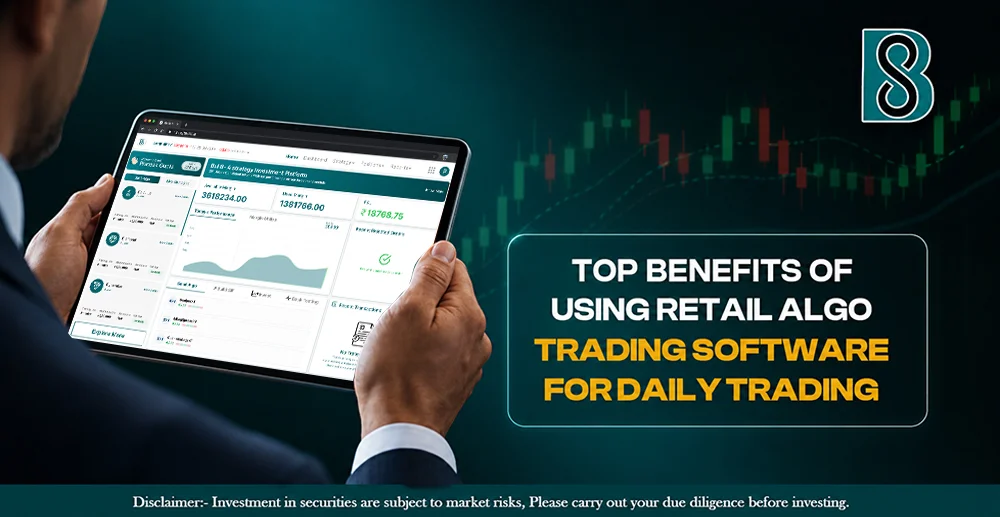
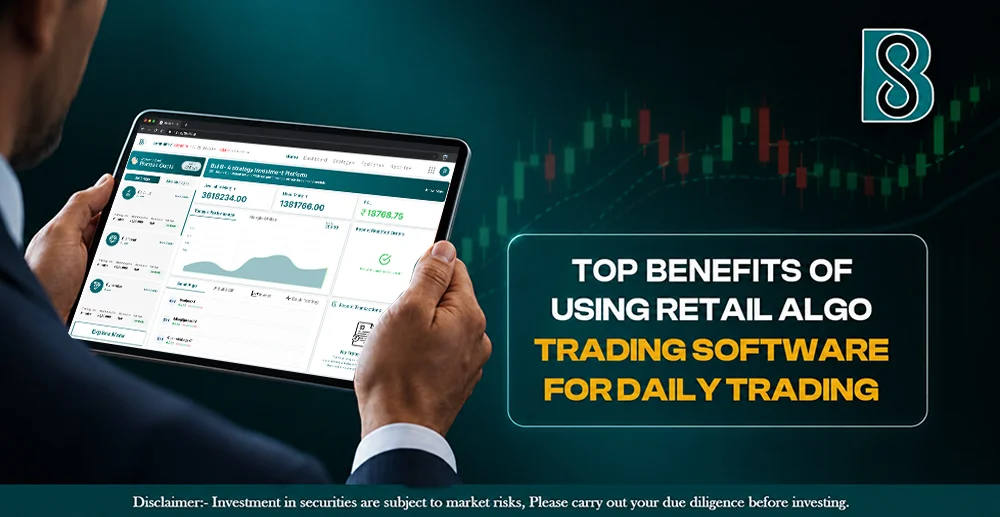
Live Monitoring Dashboard
A centralised dashboard allows users to monitor the following:
- Open positions
- Profit and loss
- Strategy status
- Trade activity
- Portfolio performance
Having access to live information helps traders stay informed while their strategies are running.
Suitable for Different Experience Levels
Bull8 is designed to support the following:
- Beginners exploring automation.
- Working professionals with limited market time.
- Active options traders.
- Experienced systematic traders.
The platform’s simplified workflow allows users to focus more on strategy selection and risk management rather than manual execution.
Built for the Indian Market
Bull8 is designed specifically for Indian retail market participants, with support for trading workflows relevant to domestic exchanges and broker integrations.
Continuous Platform Improvement
Financial markets evolve continuously.
Modern algorithmic trading platforms should regularly improve:
- Stability
- Performance
- User experience
- Risk controls
- Strategy support
Continuous enhancement helps platforms adapt to changing market conditions and user expectations.
Why Retail Traders Prefer Automated Trading
Retail participation in Indian financial markets continues to grow.
Several factors are driving increased adoption of automation:
More Working Professionals Are Trading
Many traders cannot monitor the markets throughout the day.
Automation allows predefined strategies to execute while users focus on their professional responsibilities, provided they continue to monitor performance appropriately.
Faster Market Movements
Today’s markets respond quickly to the following:
- Economic announcements
- Corporate earnings
- Global events
- Interest rate decisions
- Policy changes
Automated systems help reduce delays associated with manual order placement.
Growing Awareness of Risk Management
Retail traders are increasingly recognising that successful trading depends not only on identifying opportunities but also on controlling risk.
Modern platforms support this through built-in risk management tools.
Better Technology Access
Cloud infrastructure, secure APIs, and improved trading software have made automation more accessible than ever before.
Technology that was once available mainly to institutional participants is now increasingly available to retail traders.
The Future of Retail Algo Trading in India
The Indian trading ecosystem is evolving rapidly.
Several long-term trends are likely to influence the future of retail algorithmic trading.
Increased Automation
Automation is expected to become a standard part of retail trading rather than a niche capability.
As platforms become more intuitive, more traders are likely to adopt rule-based execution.
- Artificial Intelligence and Data Analytics
AI and advanced analytics are increasingly being used to support:
- Pattern recognition
- Market analysis
- Strategy optimization
- Risk assessment
- Portfolio monitoring
These technologies can enhance decision support, though they do not eliminate uncertainty or guarantee trading success.
- Smarter Risk Management
Future platforms are expected to include more adaptive risk controls, such as:
- Dynamic position sizing
- Volatility-based exposure adjustments
- Portfolio-level monitoring
- Automated alerts
- Scenario analysis
These tools can help traders respond more effectively to changing market conditions.
- Greater Regulatory Maturity
As retail algorithmic trading grows, the regulatory environment is also expected to evolve.
Continued emphasis on:
- Investor protection
- Transparency
- Secure API usage
- Operational safeguards
can strengthen confidence in the broader ecosystem.
- Better User Experience
Future trading platforms are likely to focus on:
- Simpler interfaces
- Improved onboarding
- Mobile-first experiences
- Better educational resources
- More intuitive strategy deployment
Ease of use will remain an important factor for wider adoption.
FAQs
What is Retail Algo Trading?
Retail Algo Trading is the use of predefined algorithms to automatically execute trades based on specific market conditions, reducing manual intervention while following a rule-based trading approach.
Is retail algo trading legal in India?
Yes. Retail algorithmic trading is permitted within the applicable regulatory framework. Traders should always use compliant platforms, supported broker integrations, and follow relevant exchange and regulatory requirements.
Do I need coding knowledge to start algo trading?
Not necessarily. Many modern platforms, including plug-and-play solutions, allow users to deploy predefined strategies without writing code.
Is algo trading suitable for beginners?
Beginners can explore algorithmic trading after understanding the basics of financial markets, trading strategies, and risk management. Starting with smaller capital and learning gradually is generally advisable.
Does Bull8 execute trades automatically?
Yes. Bull8 supports automated execution for configured strategies, subject to the platform’s features, broker integration, and user-defined settings.
Can algo trading eliminate trading losses?
No. No trading method can eliminate market risk. Algorithmic trading helps improve execution discipline, but profits and losses remain dependent on market conditions and strategy performance.
What markets can be traded using retail algo platforms?
Supported markets depend on the broker and platform but may include equities, futures, options, and other exchange-supported segments.
How important is risk management in algo trading?
Risk management is essential. Position sizing, stop-losses, daily loss limits, and capital allocation are key elements of responsible algorithmic trading.
Can working professionals use Bull8?
Yes. Bull8 is designed to support traders who may not be able to monitor markets continuously during trading hours.
Is backtesting enough before using a strategy?
Backtesting is valuable for evaluating historical performance, but it does not guarantee future results. Strategies should also be monitored in live market conditions and reviewed regularly.
Can I run multiple strategies simultaneously?
Many retail algorithmic trading platforms support multiple strategies, depending on platform capabilities, broker integration, and available capital.
What should I consider before choosing an algo trading platform?
Evaluate factors such as:
- Security
- Broker compatibility
- Risk management features
- Reliability
- Customer support
- Ease of use
- Performance monitoring
- Transparent pricing
Is algorithmic trading only for large institutions?
No. Advances in technology have made algorithmic trading accessible to retail traders through user-friendly platforms and broker APIs.
Can I monitor my trades after automation starts?
Yes. Modern platforms provide dashboards that display live positions, order status, and portfolio performance, allowing traders to supervise their strategies.
What is the biggest advantage of retail algo trading?
One of the biggest advantages is disciplined, rule-based execution. By following predefined trading rules consistently, traders can reduce emotional decision-making and improve operational efficiency.
Final Thoughts
Retail trading is entering a new era where technology plays an increasingly important role in how strategies are executed. While automation does not guarantee profits, it offers significant advantages in terms of speed, consistency, discipline, and operational efficiency.
The long-term success of any trader depends on several key principles:
- Building a well-defined trading plan.
- Using appropriate risk management.
- Selecting reliable technology.
- Monitoring strategy performance.
- Continuously learning and adapting to market conditions.
Algorithmic trading should be viewed as a disciplined framework for executing strategies—not as a shortcut to guaranteed returns.
Why Bull8 Is a Strong Choice for Retail Algo Trading
Bull8 combines automation, user-friendly workflows, and structured risk management to help retail traders adopt a systematic approach to the markets.
With features such as plug-and-play strategies, rule-based execution, live monitoring, and integrated risk controls, Bull8 is designed to simplify the adoption of retail algo trading while supporting disciplined trading practices.
Whether you are just beginning your automation journey or looking to improve consistency in your existing trading process, Bull8 provides a platform built to support modern retail traders.
