
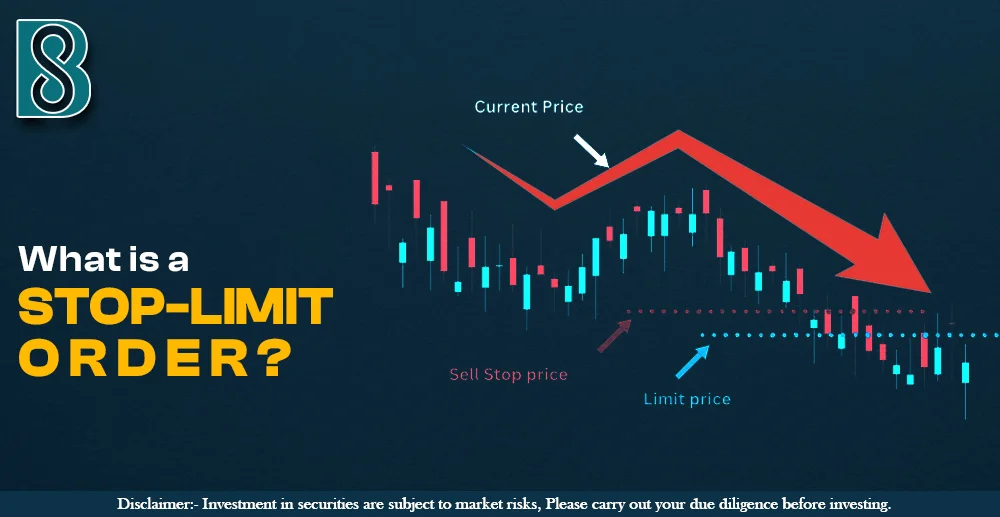
Introduction: Why Order Types Matter More Than Strategy
Most traders lose money not because their analysis is wrong… but because their execution is weak.
You might have the perfect setup—strong breakout, ideal entry level, solid risk-reward—but still end up with losses. Why? Because the way you place your order determines whether your strategy actually works in the real market.
In fast-moving markets like Nifty, Bank Nifty, or even liquid stocks, prices change in milliseconds. You plan to enter at ₹100, but your order gets executed at ₹102. You plan to exit at ₹95, but panic leads you to sell at ₹92. This gap between planned price and executed price is called slippage, and it silently eats into profits.
Another major problem traders face is missed entries. You wait for confirmation, but by the time you act manually, the opportunity is already gone. Add emotions like fear, greed, and hesitation—and execution becomes inconsistent.
This is where order types come into play.
Professional traders don’t just rely on analysis—they rely on precision execution tools. Among these tools, one of the most powerful yet misunderstood is the Stop-Limit Order.
A Stop-Limit Order gives you control over both trigger and execution price. It allows you to define:
When your order should activate
The exact price range in which it should execute
In simple words, it’s like telling the market:
I want to trade only under these exact conditions—nothing more, nothing less.”
In today’s trading environment, where speed and discipline matter more than ever, tools like Stop-Limit Orders become essential—especially when combined with automated trading systems like Bull8.
With Bull8, you don’t have to manually watch charts or worry about timing. The system executes trades based on pre-defined rules, ensuring that your stop-limit logic is applied with speed, precision, and zero emotional interference.
Because in trading, one truth remains constant:
A good strategy can fail with poor execution… but a well-executed strategy can consistently win.”
What is a Stop-Limit Order? (Beginner Explanation)
A Stop-Limit Order is a type of order that combines two important elements:
Stop Price (Trigger Price) → The level at which your order becomes active
Limit Price → The price at which your order is actually executed
This means your trade will only happen if both conditions are satisfied.
Simple Definition:
A Stop-Limit Order is an instruction to buy or sell a stock (or option) once a specific trigger price is reached, but only within a defined price limit.
Understanding the Two Components
Stop Price (Trigger)
This is the price that activates your order.
Until the market reaches this level, your order stays inactive.
Limit Price (Execution Boundary)
Once triggered, your order will execute only at the limit price or better—not worse.
Example (Stock Trade)
Let’s say a stock is currently trading at ₹95.
You expect a breakout above ₹100 and want to enter—but only if the price doesn’t go too high.
So you set:
Stop Price = ₹100
Limit Price = ₹101
What happens?
If price reaches ₹100 → Order is activated
The system will try to buy between ₹100 and ₹101
If price jumps to ₹102 → No execution
Example (Options Trade – Nifty)
Nifty Call Option is trading at ₹120.
You believe momentum will come if it crosses ₹130, but you don’t want to chase higher prices.
So:
Stop Price = ₹130
Limit Price = ₹132
Result:
Order triggers at ₹130
Executes only if price is ≤ ₹132
If it spikes to ₹135 → trade is skipped
Real-Life Analogy
Think of it like placing an order at a shop:
“I’ll buy this product if the price reaches ₹100… but only if I can get it at ₹101 or less.”
You are not desperate to buy.
You are disciplined and controlled.
Why Traders Use Stop-Limit Orders
To avoid overpaying during breakouts
To control entry and exit prices
To manage risk in volatile markets
To execute trades based on logic, not emotion
Stop-Limit Orders are especially popular among:
Intraday traders
Options traders
Algo traders
Because they provide something every trader needs:
Precision + Control
How a Stop-Limit Order Works (Step-by-Step)
Understanding the mechanics of a Stop-Limit Order is crucial because many traders confuse triggering with execution.
Let’s break it down step by step.
Step-by-Step Process
Step 1: Set the Stop Price
This is the level where your order becomes active.
Until this level is reached, nothing happens.
Step 2: Set the Limit Price
This defines the acceptable price range for execution.
You are telling the system:
Execute my order, but only within this range.”
Step 3: Market Reaches Stop Price
Once the market hits the stop price:
Your order is triggered
It becomes a limit order
Step 4: Execution Happens (or Doesn’t)
Now the system checks:
Is the price within your limit range?
If YES → Order executes
If NO → Order remains pending or unfilled
Trigger vs Execution (Important Difference)
| Concept | Meaning |
| Trigger (Stop Price) | Activates the order |
| Execution (Limit Price) | Controls the final trade price |
Many traders assume that once triggered, execution is guaranteed.
That’s wrong.
In Stop-Limit Orders, execution is NOT guaranteed.
Real-Time Example
Let’s say:
Current price = ₹200
Stop Price = ₹210
Limit Price = ₹212
Scenario 1:
Price moves:
₹200 → ₹205 → ₹210 → ₹211 → ₹212
Order triggers at ₹210
Executes between ₹210–₹212
Scenario 2:
Price gaps:
₹200 → ₹215
Order triggers
But price is above ₹212
No execution
Visual Flow (Simple Understanding)
Price below stop → Order inactive
Price hits stop → Order activated
Price within limit → Trade executed
Price beyond limit → Trade skipped
Why This Matters
This mechanism gives traders:
Protection from bad pricing
Control over entries/exits
Discipline in execution
But it also introduces:
Risk of missing trades
That’s why understanding Stop-Limit Orders deeply is essential before using them in live markets.
Role of Speed in Execution
In manual trading:
You react after price moves
You may miss the ideal entry
In automated systems like Bull8:
Orders are placed instantly
Stop-Limit logic executes in milliseconds
No delay, no hesitation
Because in today’s markets:
Stop-Limit Order vs Stop-Market Order
One of the biggest confusions among traders is the difference between a Stop-Limit Order and a Stop-Market Order.
At first glance, both seem similar—they activate when a certain price (stop price) is reached. But the execution behavior is completely different, and this difference can impact your profits significantly.
Key Comparison Table
| Feature | Stop-Limit Order | Stop-Market Order |
| Execution Control | High | Low |
| Slippage Risk | Low | High |
| Execution Guarantee | No | Yes |
| Price Certainty | Yes | No |
| Best For | Controlled entries/exits | Emergency exits |
| Used By | Advanced & algo traders | Beginners / quick exits |
Core Difference Explained
Stop-Limit Order → You control the execution price
Stop-Market Order → Market controls the execution price
In simple terms:
Stop-Limit = Control but no guarantee
Stop-Market = Guarantee but no control
Example: Stop-Market Order
Let’s say:
Stock price = ₹100
You set Stop Price = ₹95 (to exit loss)
If price drops to ₹95:
Order triggers and becomes a market order
Now:
If liquidity is low or price is falling fast
You might get executed at ₹94, ₹93, or even ₹90
This is called slippage
Example: Stop-Limit Order
Same scenario:
Stop Price = ₹95
Limit Price = ₹94
What happens?
Order triggers at ₹95
Executes only between ₹95–₹94
If price falls to ₹92 suddenly:
No execution
You are still holding the position
Risk vs Control Trade-Off
This is the biggest decision traders must make:
| Choice | Benefit | Risk |
| Stop-Market | Guaranteed exit | Poor price |
| Stop-Limit | Better price control | No execution |
Practical Scenarios
Scenario 1: Highly Volatile Market (e.g., News Event)
Prices move rapidly
Gaps are common
Best Choice: Stop-Market Order
Because exiting is more important than price control
Scenario 2: Planned Entry Trade (Breakout Strategy)
You want to enter at a controlled price
Avoid chasing
Best Choice: Stop-Limit Order
Scenario 3: Options Trading (Nifty/Bank Nifty)
Premiums move quickly
Slippage can destroy risk-reward
Smart traders prefer Stop-Limit Orders
What Professionals Prefer
Experienced traders and algo traders usually:
Use Stop-Limit Orders for entries
Use Stop-Market Orders for emergency exits
Because they understand:
Entry needs precision
Exit needs protection
Role of Algo Trading (Bull8 Advantage)
Manual trading:
Delay in placing orders
Emotional decisions
Slippage due to reaction time
With Bull8
Orders are placed instantly
Stop-Limit logic executes automatically
No hesitation, no delay
This ensures:
Better price control
Faster execution
Consistent discipline
Final Thought
There is no “better” order type universally.
It depends on:
Market condition
Strategy
Risk tolerance
But one thing is clear:
👉 If you want control, Stop-Limit is your weapon.
👉 If you want certainty, Stop-Market is your safety net.
Why Stop-Limit Orders Are Important in Trading
In trading, success is not just about identifying the right opportunity—it’s about executing it at the right price.
This is where Stop-Limit Orders become extremely powerful.
Helps Avoid Overpaying or Underselling
In fast markets:
Prices spike quickly during breakouts
Traders often enter at inflated prices
With a Stop-Limit Order:
You define the maximum price you are willing to pay
This ensures:
No emotional chasing
No overpayment
Better Risk Control
Risk management is the backbone of trading.
Stop-Limit Orders allow you to:
Control entry price
Control exit price
Maintain risk-reward ratio
This is critical in strategies like:
Breakout trading
Options trading
Intraday setups
Works Well in Volatile Markets
Markets like:
Nifty
Bank Nifty
Midcap stocks
…can move very fast.
Without control:
You enter too late
You exit too early
Stop-Limit Orders help you:
Trade within a defined price zone
Promotes Disciplined Trading
Most traders fail due to:
Impulsive decisions
Emotional reactions
Stop-Limit Orders force you to:
Plan your trade in advance
Stick to predefined conditions
This builds consistency
Used by Professional & Algo Traders
Institutional traders and algorithms rarely:
Click buy/sell manually
Instead, they:
Use rule-based execution
Define price conditions
Stop-Limit Orders are a core part of:
👉 Algorithmic trading systems
Perfect Fit for Automated Trading (Bull8)
With Bull8:
Strategies are pre-defined
Entry & exit conditions are automated
Stop-Limit Orders are used to:
Trigger trades at the right moment
Execute within safe price ranges
Result:
No emotional errors
No delay
Consistent execution
Real-Life Example
Manual trader:
Sees breakout
Hesitates
Enters late
Bull8 system:
Detects breakout
Triggers instantly
Executes within defined range
👉 That difference = Profit vs Missed Trade
Key Takeaway
Stop-Limit Orders are not just a feature.
They are:
👉 A control mechanism
👉 A risk management tool
👉 A discipline enforcer
🚀 Why It Matters in 2026
Markets are becoming:
Faster
More competitive
More automated
Traders who rely only on:
Manual execution
Market orders
…will struggle to compete.
🧠 Final Thought
👉 “In trading, price matters—but execution price matters even more.”
Stop-Limit Orders give you the ability to:
Trade with precision
Protect your capital
Execute like a professional
Advantages of Stop-Limit Orders
Stop-Limit Orders are powerful because they give traders something that most other order types don’t:
👉 Control over execution
In a market where prices move rapidly, this level of control can make a huge difference in your overall profitability and consistency.
Let’s explore the key advantages.
🎯 1. Precise Price Control
The biggest benefit of a Stop-Limit Order is that you decide:
When your trade should activate
The exact price range in which it should execute
This means:
👉 You are never forced to accept a bad price
Unlike market orders, where execution can happen at any available price, Stop-Limit Orders ensure:
You don’t overpay while buying
You don’t undersell while exiting
📉 2. Reduced Slippage
Slippage is one of the hidden enemies in trading.
Example:
You plan to buy at ₹100
But due to volatility, your order executes at ₹103
That ₹3 difference can destroy your risk-reward ratio.
With Stop-Limit Orders:
👉 Execution happens only within your defined range
Result:
Slippage is minimized
Profit calculations remain accurate
📊 3. Ideal for Strategic Entries
Stop-Limit Orders are widely used in:
Breakout trading
Momentum trading
Trend confirmation setups
Instead of entering randomly, you can say:
👉 “Enter only when the breakout is confirmed—but don’t chase the price.”
This ensures:
Better entry timing
Higher probability trades
⚡ 4. Works Extremely Well in Options Trading
In options trading (Nifty, Bank Nifty, Sensex):
Premiums move very fast
Even ₹2–₹5 difference matters
Stop-Limit Orders help you:
Enter at planned premium levels
Avoid paying inflated prices
👉 This is crucial for strategies like:
Intraday option selling
Scalping
Breakout option buying
🧠 5. Encourages Discipline
When you use Stop-Limit Orders:
You must plan your trade in advance
You define entry, exit, and risk
This reduces:
Impulsive decisions
Emotional trading
👉 Over time, this builds professional-level discipline
🤖 6. Perfect for Algorithmic Trading
Stop-Limit logic is a core part of algo trading systems.
Platforms like Bull8 use Stop-Limit Orders to:
Trigger trades automatically
Execute within safe price ranges
👉 Benefits:
No delay
No emotional interference
Consistent execution
⏱️ 7. Better Control in Fast Markets
In volatile conditions:
Prices move quickly
Manual traders react late
Stop-Limit Orders ensure:
You enter/exit only within your defined price zone
👉 This prevents:
Panic buying
Panic selling
💡 Summary of Advantages
✔ Full control over execution price
✔ Reduced slippage
✔ Better strategy alignment
✔ Ideal for options trading
✔ Improves discipline
✔ Perfect for automation
🧠 Final Insight
👉 “A trader without price control is just reacting to the market.”
Stop-Limit Orders turn you from a reactive trader into a planned executor.
🔹 7. Disadvantages & Risks of Stop-Limit Orders
While Stop-Limit Orders offer great control, they are not perfect.
In fact, many traders misuse them and end up missing opportunities or facing unexpected risks.
Understanding these limitations is critical before using them in live trading.
⚠️ 1. No Execution Guarantee
This is the biggest drawback.
Even if your stop price is triggered:
👉 Your order may NOT execute
Why?
Because:
Price must stay within your limit range
If it moves beyond:
❌ Order remains unfilled
📉 2. Missed Opportunities
In fast-moving markets:
Prices can jump quickly
Example:
Stop Price = ₹100
Limit Price = ₹101
Price moves:
₹99 → ₹105
👉 Result:
Order triggered
But no execution
You miss the entire trade.
⚡ 3. Risk in Highly Volatile Markets
During:
News events
Budget announcements
Global market shocks
Prices can:
Gap up
Gap down
Stop-Limit Orders may fail because:
👉 Price skips your limit range entirely
📊 4. Gap Up / Gap Down Problem
This is very common in stocks.
Example:
Yesterday close = ₹100
You set Stop-Limit Buy at ₹105–₹106
Next day:
Stock opens at ₹110
👉 Result:
❌ No execution
You miss the move completely.
🧠 5. Requires Proper Planning
Stop-Limit Orders are not beginner-friendly if used blindly.
You need to:
Understand volatility
Choose correct gap between stop & limit
Analyze market conditions
👉 Wrong setup = failed execution
⚠️ 6. Not Ideal for Emergency Exits
If your goal is:
👉 “Exit at any cost”
Stop-Limit is not the right choice.
Because:
It may not execute in falling markets
👉 In such cases, Stop-Market Orders are safer
📉 7. Liquidity Risk
In low-volume stocks or illiquid options:
Orders may not find buyers/sellers
Even if price is within range:
❌ Execution may still not happen
🤯 8. Confusion Between Trigger & Execution
Many traders think:
👉 “If price hits stop, my order will execute.”
This misunderstanding leads to:
Unexpected open positions
Increased losses
🤖 9. Manual Execution Limitations
When using Stop-Limit Orders manually:
Reaction time matters
Mistakes in price entry are common
With platforms like Bull8:
Orders are predefined
Execution is automatic
Errors are minimized
💡 Summary of Risks
❌ No execution guarantee
❌ Missed trades in fast markets
❌ Gap risk
❌ Requires planning
❌ Not suitable for urgent exits
⚖️ Balanced View
Stop-Limit Orders are powerful—but only when used correctly.
👉 They are NOT for:
Blind trading
Emotional decisions
👉 They ARE for:
Planned strategies
Controlled execution
🧠 Final Insight
👉 “Control comes with responsibility.”
If you use Stop-Limit Orders without understanding the risks, they can hurt your performance.
But if used correctly:
👉 They become one of the most powerful tools in your trading system.
🔹 8. Real Trading Examples (Stocks & Options)
To truly understand Stop-Limit Orders, let’s look at practical trading scenarios.
These examples will show:
When orders execute
When they fail
How price movement impacts outcomes
📊 Example 1: Stock Breakout Trade
Stock: XYZ Ltd
Current Price: ₹480
You expect breakout above ₹500.
You set:
Stop Price = ₹500
Limit Price = ₹505
Scenario A (Smooth Breakout):
Price moves:
₹480 → ₹495 → ₹500 → ₹502 → ₹504
✅ Order triggers at ₹500
✅ Executes between ₹500–₹505
👉 Successful entry
Scenario B (Sharp Breakout):
Price moves:
₹480 → ₹510
❌ Order triggers
❌ But no execution
👉 Missed opportunity
📈 Example 2: Intraday Nifty Options Trade
Nifty Call Option
Current Premium = ₹120
You expect momentum above ₹130.
Set:
Stop Price = ₹130
Limit Price = ₹133
Scenario A:
₹120 → ₹128 → ₹130 → ₹132
✅ Trigger + Execution
Scenario B:
₹120 → ₹135
❌ No execution
👉 Lesson:
Narrow range = better control
But higher chance of missing trade
📉 Example 3: Stop-Loss Protection
You bought a stock at ₹200.
You want to limit loss.
Set:
Stop Price = ₹190
Limit Price = ₹188
Scenario A:
₹200 → ₹195 → ₹190 → ₹189
✅ Order executes
Scenario B:
₹200 → ₹180
❌ Order triggers
❌ No execution
👉 Loss increases
🤖 How Bull8 Improves These Scenarios
Manual trading:
Delay in placing orders
Emotional mistakes
Wrong price inputs
With Bull8:
Orders are predefined
Stop-Limit logic executes instantly
Strategies run automatically
⚡ Example with Bull8
Instead of:
Watching charts manually
Bull8:
Detects breakout
Triggers instantly
Executes within defined range
👉 No delay
👉 No hesitation
🧠 Key Learnings from Examples
Stop-Limit gives control
But execution is conditional
Market speed matters
Planning is critical
How Beginners Should Use Stop-Limit Orders
For beginners, Stop-Limit Orders can feel confusing at first—but when used correctly, they can significantly improve trading discipline and outcomes.
The key is to start simple and build gradually.
🧠 1. Start with Basic Trades
Don’t jump into complex strategies immediately.
Begin with:
Simple breakout trades
Basic support/resistance setups
👉 Example:
Buy only if price crosses resistance
Use Stop-Limit to control entry
💰 2. Use Small Capital Initially
When learning:
Focus on understanding execution
Not on making big profits
👉 Trade with small quantities to:
Observe how orders behave
Learn from real market conditions
📊 3. Understand Market Volatility
Before placing a Stop-Limit Order, ask:
👉 “How fast does this stock or option move?”
High volatility → Keep wider limit range
Low volatility → Keep tighter range
⚠️ 4. Avoid Over-Complication
Many beginners try to:
Add too many indicators
Use multiple conditions
👉 This leads to confusion
Instead:
Keep your setup clean
Focus on price action + levels
📉 5. Practice Stop vs Limit Logic
Always remember:
Stop Price = trigger
Limit Price = execution
👉 Practice this difference until it becomes natural
🤖 6. Use Pre-Built Strategies (Smart Approach)
Instead of building everything from scratch, beginners can:
Use tested strategies
Follow predefined rules
With Bull8:
You don’t need deep technical knowledge
Strategies are already structured
Stop-Limit logic is applied automatically
👉 This reduces beginner mistakes
⏱️ 7. Observe Execution Behavior
After placing trades:
Check if order executed
If not, understand why
👉 This learning loop is critical
📌 8. Focus on Discipline, Not Prediction
Stop-Limit Orders are not about:
❌ Predicting the market
They are about:
✔ Controlling your execution
🧠 Final Advice for Beginners
👉 “Don’t try to be perfect—try to be consistent.”
Master execution first. Strategy can come later.
🔹 14. Future of Order Execution in India (2026 & Beyond)
Trading in India is evolving rapidly.
From manual trading to mobile apps… and now to fully automated systems, the future is clearly moving toward speed, data, and precision.
📈 1. Rise of Algorithmic Trading
Algo trading is no longer limited to institutions.
Today:
Retail traders are adopting automation
Platforms like Bull8 are making it accessible
👉 Future trend:
More traders will shift to rule-based systems
📱 2. Mobile-Based Execution
Earlier:
Trading required desktops
Now:
Everything runs on mobile
Future:
👉 Entire trading systems will run from your phone
🤖 3. AI + Rule-Based Trading
Artificial Intelligence is being integrated with:
Technical analysis
Market prediction
Risk management
But execution will still depend on:
👉 Structured order types like Stop-Limit
⚡ 4. Speed Will Be the Biggest Advantage
Markets are becoming:
Faster
More competitive
In the future:
👉 Milliseconds will decide profitability
Manual traders will struggle because:
Human reaction is slow
Algo systems will dominate because:
Execution is instant
🔁 5. Shift from Emotional to System-Based Trading
Traditional trading:
Based on gut feeling
Influenced by emotions
Future trading:
Based on data
Executed by systems
🏦 6. Broker & Platform Evolution
Stock brokers like Lares Algotech are already:
Supporting API-based trading
Enabling algo integrations
Future platforms will focus on:
Speed
Automation
Smart execution tools
🚀 7. Why Stop-Limit Orders Will Stay Relevant
Even in advanced systems:
Execution control is essential
Stop-Limit Orders will remain:
👉 A core building block of trading systems
🧠 Final Insight
👉 “The future belongs to traders who combine strategy with execution technology.”
🔹 15. Conclusion: Control Your Trades, Control Your Results
Trading success is not just about finding the right opportunity.
It’s about:
👉 Executing that opportunity with precision.
Stop-Limit Orders give you:
Control over entry and exit
Protection from bad pricing
Discipline in execution
But they also require:
Understanding
Planning
Proper usage
When used correctly, they can transform your trading from:
❌ Random and emotional
➡️ Structured and professional
⚡ The Reality of Modern Trading
Markets today are:
Fast
Competitive
Data-driven
Manual trading alone is no longer enough.
🤖 The Bull8 Edge
With Bull8 Algo Trading:
Your trades follow rules
Execution is automatic
Stop-Limit logic works in real-time
👉 No hesitation
👉 No delay
👉 No emotional mistakes
Final Takeaway
👉 “Don’t just trade… trade with structure.”
Because in the end:
👉 “When you control your execution, you control your results.”
FAQs
What is a stop-limit order in trading?
A stop-limit order is a type of order that combines a stop price (trigger) and a limit price (execution boundary). The order activates when the stop price is reached but executes only within the specified limit range.
How is a stop-limit order different from a stop-market order?
A stop-limit order provides price control but no execution guarantee, while a stop-market order guarantees execution but may result in poor pricing due to slippage.
When should I use a stop-limit order?
You should use a stop-limit order when you want controlled execution, such as during breakout trades or when entering positions at specific price levels.
Can a stop-limit order fail to execute?
Yes, if the market price moves beyond your limit range after triggering, the order may not execute.
What is the ideal gap between stop and limit price?
The gap depends on volatility. In highly volatile markets, a wider gap is recommended, while in stable markets, a tighter gap can work.
Are stop-limit orders good for intraday trading?
Yes, they are useful for intraday trading, especially for breakout strategies and options trading where price control is important.
How do stop-limit orders work in options trading?
In options trading, stop-limit orders help traders enter or exit positions at controlled premium levels, avoiding slippage in fast-moving markets.
Is a stop-limit order safer than a market order?
It depends. Stop-limit orders offer better price control, while market orders provide guaranteed execution. Each serves a different purpose.
Can beginners use stop-limit orders?
Yes, beginners can use them, but they should start with simple setups and small capital to understand how they work.
How does algo trading use stop-limit orders?
Algo trading systems use stop-limit orders to automate trade execution based on predefined rules, ensuring faster, more disciplined, and emotion-free trading.
