
What is a Stop-Limit Order copy.jpg

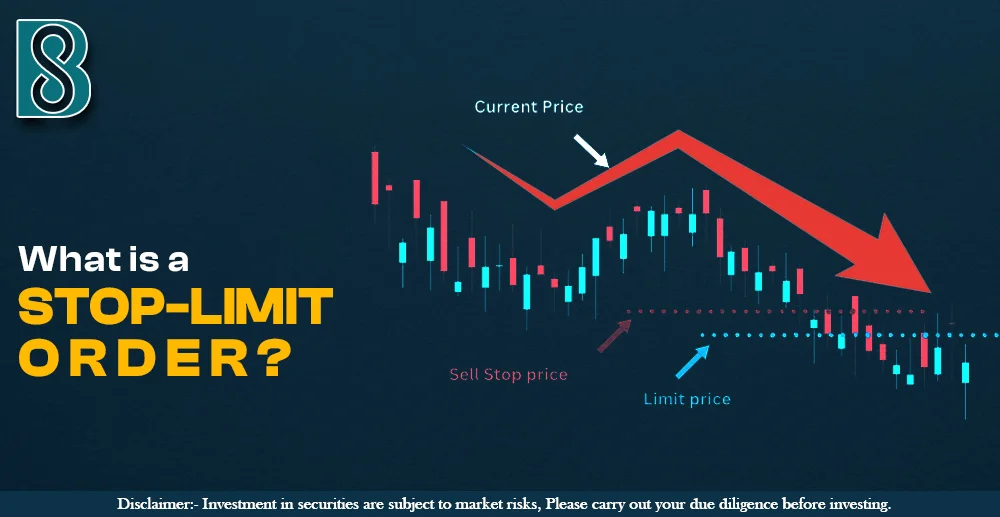
What is a Stop-Limit Order?
What is a Stop-Limit Order copy.jpg

Introduction: Why Order Types Matter More Than Strategy

Most traders lose money not because their analysis is wrong… but because their execution is weak.

You might have the perfect setup—strong breakout, ideal entry level, solid risk-reward—but still end up with losses. Why? Because the way you place your order determines whether your strategy actually works in the real market.

In fast-moving markets like Nifty, Bank Nifty, or even liquid stocks, prices change in milliseconds. You plan to enter at ₹100, but your order gets executed at ₹102. You plan to exit at ₹95, but panic leads you to sell at ₹92. This gap between planned price and executed price is called slippage, and it silently eats into profits.

Another major problem traders face is missed entries. You wait for confirmation, but by the time you act manually, the opportunity is already gone. Add emotions like fear, greed, and hesitation—and execution becomes inconsistent.

This is where order types come into play.

Professional traders don’t just rely on analysis—they rely on precision execution tools. Among these tools, one of the most powerful yet misunderstood is the Stop-Limit Order.

A Stop-Limit Order gives you control over both trigger and execution price. It allows you to define:

When your order should activate

The exact price range in which it should execute

In simple words, it’s like telling the market:
I want to trade only under these exact conditions—nothing more, nothing less.”

In today’s trading environment, where speed and discipline matter more than ever, tools like Stop-Limit Orders become essential—especially when combined with automated trading systems like Bull8.

With Bull8, you don’t have to manually watch charts or worry about timing. The system executes trades based on pre-defined rules, ensuring that your stop-limit logic is applied with speed, precision, and zero emotional interference.

Because in trading, one truth remains constant:

A good strategy can fail with poor execution… but a well-executed strategy can consistently win.”

What is a Stop-Limit Order? (Beginner Explanation)

A Stop-Limit Order is a type of order that combines two important elements:

Stop Price (Trigger Price) → The level at which your order becomes active

Limit Price → The price at which your order is actually executed

This means your trade will only happen if both conditions are satisfied.

Simple Definition:

A Stop-Limit Order is an instruction to buy or sell a stock (or option) once a specific trigger price is reached, but only within a defined price limit.

Understanding the Two Components

Stop Price (Trigger)

This is the price that activates your order.

Until the market reaches this level, your order stays inactive.

Limit Price (Execution Boundary)

Once triggered, your order will execute only at the limit price or better—not worse.

Example (Stock Trade)

Let’s say a stock is currently trading at ₹95.

You expect a breakout above ₹100 and want to enter—but only if the price doesn’t go too high.

So you set:

Stop Price = ₹100

Limit Price = ₹101

What happens?

If price reaches ₹100 → Order is activated

The system will try to buy between ₹100 and ₹101

If price jumps to ₹102 → No execution

Example (Options Trade – Nifty)

Nifty Call Option is trading at ₹120.

You believe momentum will come if it crosses ₹130, but you don’t want to chase higher prices.

So:

Stop Price = ₹130

Limit Price = ₹132

Result:

Order triggers at ₹130

Executes only if price is ≤ ₹132

If it spikes to ₹135 → trade is skipped

Real-Life Analogy

Think of it like placing an order at a shop:

“I’ll buy this product if the price reaches ₹100… but only if I can get it at ₹101 or less.”

You are not desperate to buy.
You are disciplined and controlled.

Why Traders Use Stop-Limit Orders

To avoid overpaying during breakouts

To control entry and exit prices

To manage risk in volatile markets

To execute trades based on logic, not emotion

Stop-Limit Orders are especially popular among:

Intraday traders

Options traders

Algo traders

Because they provide something every trader needs:

Precision + Control

How a Stop-Limit Order Works (Step-by-Step)

Understanding the mechanics of a Stop-Limit Order is crucial because many traders confuse triggering with execution.

Let’s break it down step by step.

Step-by-Step Process

Step 1: Set the Stop Price

This is the level where your order becomes active.

Until this level is reached, nothing happens.

Step 2: Set the Limit Price

This defines the acceptable price range for execution.

You are telling the system:
Execute my order, but only within this range.”

Step 3: Market Reaches Stop Price

Once the market hits the stop price:

Your order is triggered

It becomes a limit order

Step 4: Execution Happens (or Doesn’t)

Now the system checks:

Is the price within your limit range?

If YES → Order executes
If NO → Order remains pending or unfilled

Trigger vs Execution (Important Difference)

Concept Meaning
Trigger (Stop Price) Activates the order
Execution (Limit Price) Controls the final trade price

Many traders assume that once triggered, execution is guaranteed.

That’s wrong.

In Stop-Limit Orders, execution is NOT guaranteed.

Real-Time Example

Let’s say:

Current price = ₹200

Stop Price = ₹210

Limit Price = ₹212

Scenario 1:

Price moves:
₹200 → ₹205 → ₹210 → ₹211 → ₹212

Order triggers at ₹210
Executes between ₹210–₹212

Scenario 2:

Price gaps:
₹200 → ₹215

Order triggers
But price is above ₹212
No execution

Visual Flow (Simple Understanding)

Price below stop → Order inactive

Price hits stop → Order activated

Price within limit → Trade executed

Price beyond limit → Trade skipped

Why This Matters

This mechanism gives traders:

Protection from bad pricing

Control over entries/exits

Discipline in execution

But it also introduces:

Risk of missing trades

That’s why understanding Stop-Limit Orders deeply is essential before using them in live markets.

Role of Speed in Execution

In manual trading:

You react after price moves

You may miss the ideal entry

In automated systems like Bull8:

Orders are placed instantly

Stop-Limit logic executes in milliseconds

No delay, no hesitation

Because in today’s markets:

Stop-Limit Order vs Stop-Market Order

One of the biggest confusions among traders is the difference between a Stop-Limit Order and a Stop-Market Order.

At first glance, both seem similar—they activate when a certain price (stop price) is reached. But the execution behavior is completely different, and this difference can impact your profits significantly.

Key Comparison Table

Feature Stop-Limit Order Stop-Market Order
Execution Control High Low
Slippage Risk Low High
Execution Guarantee No Yes
Price Certainty Yes No
Best For Controlled entries/exits Emergency exits
Used By Advanced & algo traders Beginners / quick exits

Core Difference Explained

Stop-Limit Order → You control the execution price

Stop-Market Order → Market controls the execution price

In simple terms:

Stop-Limit = Control but no guarantee

Stop-Market = Guarantee but no control

Example: Stop-Market Order

Let’s say:

Stock price = ₹100

You set Stop Price = ₹95 (to exit loss)

If price drops to ₹95:
Order triggers and becomes a market order

Now:

If liquidity is low or price is falling fast

You might get executed at ₹94, ₹93, or even ₹90

This is called slippage

Example: Stop-Limit Order

Same scenario:

Stop Price = ₹95

Limit Price = ₹94

What happens?

Order triggers at ₹95

Executes only between ₹95–₹94

If price falls to ₹92 suddenly:
No execution
You are still holding the position

Risk vs Control Trade-Off

This is the biggest decision traders must make:

Choice Benefit Risk
Stop-Market Guaranteed exit Poor price
Stop-Limit Better price control No execution

Practical Scenarios

Scenario 1: Highly Volatile Market (e.g., News Event)

Prices move rapidly

Gaps are common

Best Choice: Stop-Market Order
Because exiting is more important than price control

Scenario 2: Planned Entry Trade (Breakout Strategy)

You want to enter at a controlled price

Avoid chasing

Best Choice: Stop-Limit Order

Scenario 3: Options Trading (Nifty/Bank Nifty)

Premiums move quickly

Slippage can destroy risk-reward

Smart traders prefer Stop-Limit Orders

What Professionals Prefer

Experienced traders and algo traders usually:

Use Stop-Limit Orders for entries

Use Stop-Market Orders for emergency exits

Because they understand:
Entry needs precision
Exit needs protection

Role of Algo Trading (Bull8 Advantage)

Manual trading:

Delay in placing orders

Emotional decisions

Slippage due to reaction time

With Bull8

Orders are placed instantly

Stop-Limit logic executes automatically

No hesitation, no delay

This ensures:

Better price control

Faster execution

Consistent discipline

Final Thought

There is no “better” order type universally.

It depends on:

Market condition

Strategy

Risk tolerance

But one thing is clear:

👉 If you want control, Stop-Limit is your weapon.
👉 If you want certainty, Stop-Market is your safety net.

Why Stop-Limit Orders Are Important in Trading

In trading, success is not just about identifying the right opportunity—it’s about executing it at the right price.

This is where Stop-Limit Orders become extremely powerful.

Helps Avoid Overpaying or Underselling

In fast markets:

Prices spike quickly during breakouts

Traders often enter at inflated prices

With a Stop-Limit Order:
You define the maximum price you are willing to pay

This ensures:

No emotional chasing

No overpayment

Better Risk Control

Risk management is the backbone of trading.

Stop-Limit Orders allow you to:

Control entry price

Control exit price

Maintain risk-reward ratio

This is critical in strategies like:

Breakout trading

Options trading

Intraday setups

Works Well in Volatile Markets

Markets like:

Nifty

Bank Nifty

Midcap stocks

…can move very fast.

Without control:

You enter too late

You exit too early

Stop-Limit Orders help you:
Trade within a defined price zone

Promotes Disciplined Trading

Most traders fail due to:

Impulsive decisions

Emotional reactions

Stop-Limit Orders force you to:

Plan your trade in advance

Stick to predefined conditions

This builds consistency

Used by Professional & Algo Traders

Institutional traders and algorithms rarely:

Click buy/sell manually

Instead, they:

Use rule-based execution

Define price conditions

Stop-Limit Orders are a core part of:
👉 Algorithmic trading systems

Perfect Fit for Automated Trading (Bull8)

With Bull8:

Strategies are pre-defined

Entry & exit conditions are automated

Stop-Limit Orders are used to:

Trigger trades at the right moment

Execute within safe price ranges

Result:

No emotional errors

No delay

Consistent execution

Real-Life Example

Manual trader:

Sees breakout

Hesitates

Enters late

Bull8 system:

Detects breakout

Triggers instantly

Executes within defined range

👉 That difference = Profit vs Missed Trade

Key Takeaway

Stop-Limit Orders are not just a feature.

They are:
👉 A control mechanism
👉 A risk management tool
👉 A discipline enforcer

🚀 Why It Matters in 2026

Markets are becoming:

Faster

More competitive

More automated

Traders who rely only on:

Manual execution

Market orders

…will struggle to compete.

🧠 Final Thought

👉 “In trading, price matters—but execution price matters even more.”

Stop-Limit Orders give you the ability to:

Trade with precision

Protect your capital

Execute like a professional

Advantages of Stop-Limit Orders

Stop-Limit Orders are powerful because they give traders something that most other order types don’t:

👉 Control over execution

In a market where prices move rapidly, this level of control can make a huge difference in your overall profitability and consistency.

Let’s explore the key advantages.

🎯 1. Precise Price Control

The biggest benefit of a Stop-Limit Order is that you decide:

When your trade should activate

The exact price range in which it should execute

This means:
👉 You are never forced to accept a bad price

Unlike market orders, where execution can happen at any available price, Stop-Limit Orders ensure:

You don’t overpay while buying

You don’t undersell while exiting

📉 2. Reduced Slippage

Slippage is one of the hidden enemies in trading.

Example:

You plan to buy at ₹100

But due to volatility, your order executes at ₹103

That ₹3 difference can destroy your risk-reward ratio.

With Stop-Limit Orders:
👉 Execution happens only within your defined range

Result:

Slippage is minimized

Profit calculations remain accurate

📊 3. Ideal for Strategic Entries

Stop-Limit Orders are widely used in:

Breakout trading

Momentum trading

Trend confirmation setups

Instead of entering randomly, you can say:

👉 “Enter only when the breakout is confirmed—but don’t chase the price.”

This ensures:

Better entry timing

Higher probability trades

4. Works Extremely Well in Options Trading

In options trading (Nifty, Bank Nifty, Sensex):

Premiums move very fast

Even ₹2–₹5 difference matters

Stop-Limit Orders help you:

Enter at planned premium levels

Avoid paying inflated prices

👉 This is crucial for strategies like:

Intraday option selling

Scalping

Breakout option buying

🧠 5. Encourages Discipline

When you use Stop-Limit Orders:

You must plan your trade in advance

You define entry, exit, and risk

This reduces:

Impulsive decisions

Emotional trading

👉 Over time, this builds professional-level discipline

🤖 6. Perfect for Algorithmic Trading

Stop-Limit logic is a core part of algo trading systems.

Platforms like Bull8 use Stop-Limit Orders to:

Trigger trades automatically

Execute within safe price ranges

👉 Benefits:

No delay

No emotional interference

Consistent execution

⏱️ 7. Better Control in Fast Markets

In volatile conditions:

Prices move quickly

Manual traders react late

Stop-Limit Orders ensure:

You enter/exit only within your defined price zone

👉 This prevents:

Panic buying

Panic selling

💡 Summary of Advantages

✔ Full control over execution price

✔ Reduced slippage

✔ Better strategy alignment

✔ Ideal for options trading

✔ Improves discipline

✔ Perfect for automation

🧠 Final Insight

👉 “A trader without price control is just reacting to the market.”

Stop-Limit Orders turn you from a reactive trader into a planned executor.

🔹 7. Disadvantages & Risks of Stop-Limit Orders

While Stop-Limit Orders offer great control, they are not perfect.

In fact, many traders misuse them and end up missing opportunities or facing unexpected risks.

Understanding these limitations is critical before using them in live trading.

⚠️ 1. No Execution Guarantee

This is the biggest drawback.

Even if your stop price is triggered:
👉 Your order may NOT execute

Why?

Because:

Price must stay within your limit range

If it moves beyond:
❌ Order remains unfilled

📉 2. Missed Opportunities

In fast-moving markets:

Prices can jump quickly

Example:

Stop Price = ₹100

Limit Price = ₹101

Price moves:
₹99 → ₹105

👉 Result:

Order triggered

But no execution

You miss the entire trade.

3. Risk in Highly Volatile Markets

During:

News events

Budget announcements

Global market shocks

Prices can:

Gap up

Gap down

Stop-Limit Orders may fail because:
👉 Price skips your limit range entirely

📊 4. Gap Up / Gap Down Problem

This is very common in stocks.

Example:

Yesterday close = ₹100

You set Stop-Limit Buy at ₹105–₹106

Next day:

Stock opens at ₹110

👉 Result:
❌ No execution

You miss the move completely.

🧠 5. Requires Proper Planning

Stop-Limit Orders are not beginner-friendly if used blindly.

You need to:

Understand volatility

Choose correct gap between stop & limit

Analyze market conditions

👉 Wrong setup = failed execution

⚠️ 6. Not Ideal for Emergency Exits

If your goal is:
👉 “Exit at any cost”

Stop-Limit is not the right choice.

Because:

It may not execute in falling markets

👉 In such cases, Stop-Market Orders are safer

📉 7. Liquidity Risk

In low-volume stocks or illiquid options:

Orders may not find buyers/sellers

Even if price is within range:
❌ Execution may still not happen

🤯 8. Confusion Between Trigger & Execution

Many traders think:
👉 “If price hits stop, my order will execute.”

This misunderstanding leads to:

Unexpected open positions

Increased losses

🤖 9. Manual Execution Limitations

When using Stop-Limit Orders manually:

Reaction time matters

Mistakes in price entry are common

With platforms like Bull8:

Orders are predefined

Execution is automatic

Errors are minimized

💡 Summary of Risks

❌ No execution guarantee

❌ Missed trades in fast markets

❌ Gap risk

❌ Requires planning

❌ Not suitable for urgent exits

⚖️ Balanced View

Stop-Limit Orders are powerful—but only when used correctly.

👉 They are NOT for:

Blind trading

Emotional decisions

👉 They ARE for:

Planned strategies

Controlled execution

🧠 Final Insight

👉 “Control comes with responsibility.”

If you use Stop-Limit Orders without understanding the risks, they can hurt your performance.

But if used correctly:
👉 They become one of the most powerful tools in your trading system.

🔹 8. Real Trading Examples (Stocks & Options)

To truly understand Stop-Limit Orders, let’s look at practical trading scenarios.

These examples will show:

When orders execute

When they fail

How price movement impacts outcomes

📊 Example 1: Stock Breakout Trade

Stock: XYZ Ltd
Current Price: ₹480

You expect breakout above ₹500.

You set:

Stop Price = ₹500

Limit Price = ₹505

Scenario A (Smooth Breakout):

Price moves:
₹480 → ₹495 → ₹500 → ₹502 → ₹504

✅ Order triggers at ₹500
✅ Executes between ₹500–₹505

👉 Successful entry

Scenario B (Sharp Breakout):

Price moves:
₹480 → ₹510

❌ Order triggers
❌ But no execution

👉 Missed opportunity

📈 Example 2: Intraday Nifty Options Trade

Nifty Call Option
Current Premium = ₹120

You expect momentum above ₹130.

Set:

Stop Price = ₹130

Limit Price = ₹133

Scenario A:

₹120 → ₹128 → ₹130 → ₹132

✅ Trigger + Execution

Scenario B:

₹120 → ₹135

❌ No execution

👉 Lesson:

Narrow range = better control

But higher chance of missing trade

📉 Example 3: Stop-Loss Protection

You bought a stock at ₹200.

You want to limit loss.

Set:

Stop Price = ₹190

Limit Price = ₹188

Scenario A:

₹200 → ₹195 → ₹190 → ₹189

✅ Order executes

Scenario B:

₹200 → ₹180

❌ Order triggers
❌ No execution

👉 Loss increases

🤖 How Bull8 Improves These Scenarios

Manual trading:

Delay in placing orders

Emotional mistakes

Wrong price inputs

With Bull8:

Orders are predefined

Stop-Limit logic executes instantly

Strategies run automatically

Example with Bull8

Instead of:

Watching charts manually

Bull8:

Detects breakout

Triggers instantly

Executes within defined range

👉 No delay
👉 No hesitation

🧠 Key Learnings from Examples

Stop-Limit gives control

But execution is conditional

Market speed matters

Planning is critical

How Beginners Should Use Stop-Limit Orders

For beginners, Stop-Limit Orders can feel confusing at first—but when used correctly, they can significantly improve trading discipline and outcomes.

The key is to start simple and build gradually.

🧠 1. Start with Basic Trades

Don’t jump into complex strategies immediately.

Begin with:

Simple breakout trades

Basic support/resistance setups

👉 Example:

Buy only if price crosses resistance

Use Stop-Limit to control entry

💰 2. Use Small Capital Initially

When learning:

Focus on understanding execution

Not on making big profits

👉 Trade with small quantities to:

Observe how orders behave

Learn from real market conditions

📊 3. Understand Market Volatility

Before placing a Stop-Limit Order, ask:

👉 “How fast does this stock or option move?”

High volatility → Keep wider limit range

Low volatility → Keep tighter range

⚠️ 4. Avoid Over-Complication

Many beginners try to:

Add too many indicators

Use multiple conditions

👉 This leads to confusion

Instead:

Keep your setup clean

Focus on price action + levels

📉 5. Practice Stop vs Limit Logic

Always remember:

Stop Price = trigger

Limit Price = execution

👉 Practice this difference until it becomes natural

🤖 6. Use Pre-Built Strategies (Smart Approach)

Instead of building everything from scratch, beginners can:

Use tested strategies

Follow predefined rules

With Bull8:

You don’t need deep technical knowledge

Strategies are already structured

Stop-Limit logic is applied automatically

👉 This reduces beginner mistakes

⏱️ 7. Observe Execution Behavior

After placing trades:

Check if order executed

If not, understand why

👉 This learning loop is critical

📌 8. Focus on Discipline, Not Prediction

Stop-Limit Orders are not about:
❌ Predicting the market

They are about:
✔ Controlling your execution

🧠 Final Advice for Beginners

👉 “Don’t try to be perfect—try to be consistent.”

Master execution first. Strategy can come later.

🔹 14. Future of Order Execution in India (2026 & Beyond)

Trading in India is evolving rapidly.

From manual trading to mobile apps… and now to fully automated systems, the future is clearly moving toward speed, data, and precision.

📈 1. Rise of Algorithmic Trading

Algo trading is no longer limited to institutions.

Today:

Retail traders are adopting automation

Platforms like Bull8 are making it accessible

👉 Future trend:

More traders will shift to rule-based systems

📱 2. Mobile-Based Execution

Earlier:

Trading required desktops

Now:

Everything runs on mobile

Future:
👉 Entire trading systems will run from your phone

🤖 3. AI + Rule-Based Trading

Artificial Intelligence is being integrated with:

Technical analysis

Market prediction

Risk management

But execution will still depend on:
👉 Structured order types like Stop-Limit

4. Speed Will Be the Biggest Advantage

Markets are becoming:

Faster

More competitive

In the future:
👉 Milliseconds will decide profitability

Manual traders will struggle because:

Human reaction is slow

Algo systems will dominate because:

Execution is instant

🔁 5. Shift from Emotional to System-Based Trading

Traditional trading:

Based on gut feeling

Influenced by emotions

Future trading:

Based on data

Executed by systems

🏦 6. Broker & Platform Evolution

Stock brokers like Lares Algotech are already:

Supporting API-based trading

Enabling algo integrations

Future platforms will focus on:

Speed

Automation

Smart execution tools

🚀 7. Why Stop-Limit Orders Will Stay Relevant

Even in advanced systems:

Execution control is essential

Stop-Limit Orders will remain:
👉 A core building block of trading systems

🧠 Final Insight

👉 “The future belongs to traders who combine strategy with execution technology.”

🔹 15. Conclusion: Control Your Trades, Control Your Results

Trading success is not just about finding the right opportunity.

It’s about:
👉 Executing that opportunity with precision.

Stop-Limit Orders give you:

Control over entry and exit

Protection from bad pricing

Discipline in execution

But they also require:

Understanding

Planning

Proper usage

When used correctly, they can transform your trading from:
❌ Random and emotional
➡️ Structured and professional

The Reality of Modern Trading

Markets today are:

Fast

Competitive

Data-driven

Manual trading alone is no longer enough.

🤖 The Bull8 Edge

With Bull8 Algo Trading:

Your trades follow rules

Execution is automatic

Stop-Limit logic works in real-time

👉 No hesitation
👉 No delay
👉 No emotional mistakes

Final Takeaway

👉 “Don’t just trade… trade with structure.”

Because in the end:

👉 “When you control your execution, you control your results.”

FAQs

What is a stop-limit order in trading?

A stop-limit order is a type of order that combines a stop price (trigger) and a limit price (execution boundary). The order activates when the stop price is reached but executes only within the specified limit range.

How is a stop-limit order different from a stop-market order?

A stop-limit order provides price control but no execution guarantee, while a stop-market order guarantees execution but may result in poor pricing due to slippage.

When should I use a stop-limit order?

You should use a stop-limit order when you want controlled execution, such as during breakout trades or when entering positions at specific price levels.

Can a stop-limit order fail to execute?

Yes, if the market price moves beyond your limit range after triggering, the order may not execute.

What is the ideal gap between stop and limit price?

The gap depends on volatility. In highly volatile markets, a wider gap is recommended, while in stable markets, a tighter gap can work.

Are stop-limit orders good for intraday trading?

Yes, they are useful for intraday trading, especially for breakout strategies and options trading where price control is important.

How do stop-limit orders work in options trading?

In options trading, stop-limit orders help traders enter or exit positions at controlled premium levels, avoiding slippage in fast-moving markets.

Is a stop-limit order safer than a market order?

It depends. Stop-limit orders offer better price control, while market orders provide guaranteed execution. Each serves a different purpose.

Can beginners use stop-limit orders?

Yes, beginners can use them, but they should start with simple setups and small capital to understand how they work.

How does algo trading use stop-limit orders?

Algo trading systems use stop-limit orders to automate trade execution based on predefined rules, ensuring faster, more disciplined, and emotion-free trading.

Fully Automated Trading Software in India copy

Fully Automated Trading Software in India

Fully Automated Trading Software in India copy

1️ Introduction: Why Fully Automated Trading Is Gaining Momentum in India

India’s retail trading ecosystem has undergone a massive transformation over the past few years. The post-COVID era marked an unprecedented surge in new retail traders entering the stock market. Low-cost trading apps, instant demat account openings, and constant exposure to stock market content on YouTube, Instagram, Telegram, and Twitter made trading appear accessible and exciting. Millions of first-time traders believed that market participation alone was enough to generate consistent income.

However, the reality turned out to be very different.

While participation increased rapidly, consistency and profitability did not. A large portion of retail traders struggled with discipline, emotional decision-making, and repeated capital erosion. Many began their journey with manual trading, relying on chart patterns, news headlines, or instinctive judgment. When results failed to meet expectations, traders moved toward tip-based Telegram and WhatsApp groups, hoping that expert calls would deliver easy profits. Instead, this often amplified losses due to poor risk control and blind execution.
The next shift came in the form of semi-automated tools—alerts, scanners, indicators, and signal dashboards. These tools promised structure but still required traders to manually execute trades. As a result, emotional overrides, hesitation, and delayed execution continued to sabotage outcomes.

The fundamental problems never changed.

Indian retail traders still face:

  • Emotional buying and selling driven by fear and greed
  • Missed entries and late exits during fast-moving markets
  • Inconsistent stop-loss execution
  • Overtrading and revenge trading after losses
  • Absence of a repeatable, rule-based process

Modern Indian markets are faster, more volatile, and deeply influenced by global cues, algorithmic flows, and event-driven movements. Human reaction time and emotional control are no longer sufficient. Manual execution simply cannot keep pace with today’s trading environment.
This is why fully automated trading software in India is gaining serious momentum—not as a profit shortcut, but as a process upgrade.
Fully automated trading removes emotions from execution. Trades are placed strictly based on predefined rules, not opinions or impulses. Risk management is embedded into the system rather than left to human discipline. Consistency is enforced automatically.
Bull8 enters this evolving landscape with a clear and uncompromising philosophy:
No tips. No predictions. Only rules.
Built as a structured, rule-driven, risk-first automation platform, Bull8 is designed specifically for Indian retail traders—bringing institutional-level discipline into everyday trading decisions.

2️ What Is Fully Automated Trading Software? (India-Focused Explanation)

Fully automated trading software is a technology-driven system that executes trades automatically based on predefined strategies, rules, and risk parameters—without requiring manual intervention during live market conditions. Unlike traditional trading methods, where decisions are influenced by emotions or hesitation, fully automated trading software follows logic exactly as designed.
To understand this clearly, it is important to distinguish between the three dominant trading approaches used by Indian traders today.

Manual Trading

In manual trading, the trader personally analyzes charts, tracks news, and places orders. While this method offers control, it also introduces emotional bias. Entries, exits, and stop-loss decisions are often influenced by fear, greed, or overconfidence. Execution delays are common, and discipline varies from day to day.

Semi-Automated Trading

Semi-automated systems provide alerts or signals when certain conditions are met. However, the trader still decides whether to execute the trade. This keeps emotions firmly in the loop. Traders hesitate, override signals, or enter trades late—leading to inconsistent execution and poor risk management.

Fully Automated Trading Systems

Fully automated trading software eliminates manual execution entirely. The trader selects a strategy in advance, defines capital allocation and risk limits, and the system handles everything else. Entry, exit, stop-loss, and position sizing rules are executed automatically. There is no emotional override during live markets.
In simple terms, “fully automated” means the system executes the trade—not the trader.
In the Indian market context, fully automated trading software operates with:

  • NSE-based execution frameworks
  • Retail-friendly capital deployment
  • Strategies aligned with Indian market volatility and liquidity
  • Predefined position sizing and risk management rules

Bull8 has been designed to make fully automated trading software in India accessible to retail traders without requiring coding skills, expensive infrastructure, or institutional-level resources. It simplifies automation while preserving control, transparency, and discipline.

3️ Evolution of Trading in India: From Manual Orders to Automation

The evolution of trading in India reflects a gradual shift from access-driven participation to discipline-driven execution. Each phase brought greater convenience—but also new challenges.

Phone-Based Trading Era

In the early days, orders were placed through brokers over phone calls. Execution was slow, brokerage costs were high, and participation was limited to a small segment of investors. While discipline existed due to high friction, opportunities were restricted.

Online Trading & Discount Brokers

The arrival of online platforms and discount brokers transformed the market. Trading became affordable and accessible to millions. However, ease of access also meant ease of overtrading. Many traders entered markets without understanding risk, discipline, or capital management.

Chart-Based Trading Apps

Advanced charting tools empowered traders with technical analysis. While analysis improved, execution remained manual. Emotional decision-making still dominated, especially during volatile sessions.

Entry of Automation & Algorithms

As Indian markets became more volatile and event-driven, automation emerged as a solution. Initially adopted by institutions, automation gradually reached retail traders. The purpose was not just speed—but discipline, consistency, and risk control.
Today’s markets react instantly to:

  • Global economic news
  • Central bank decisions
  • Algorithmic order flows
  • Sudden volatility spikes

Human reaction time and emotional control are increasingly inadequate. Automation has become a necessity, not a luxury.
Fully automated trading software in India represents the natural evolution of market participation—shifting the focus from prediction to process.

4️ Why Manual Trading Fails Most Retail Traders in India

Most retail traders in India do not fail due to lack of intelligence or effort. They fail due to the absence of a structured process. Manual trading exposes traders to psychological biases that compound losses over time.

Common issues include:

  • Overtrading after losses in an attempt to recover quickly
  • Ignoring stop-losses due to hope or fear
  • Increasing position sizes emotionally
  • Chasing breakouts after moves are already exhausted

Psychological biases such as fear, greed, and confirmation bias dominate manual trading decisions. Traders often exit profitable trades early and hold losing trades too long. This creates a capital erosion cycle, where occasional wins are wiped out by uncontrolled losses.

The core truth is simple

Markets reward consistency and discipline, not predictions.
Fully automated trading software in India directly addresses these challenges by removing emotional execution from the equation. Rules are defined before the market opens. Trades are executed exactly as planned. Risk management is enforced automatically.
Bull8 enables traders to shift from emotional decision-making to process-driven execution, solving the very problems that cause most manual traders to fail.

5️ Core Components of a Fully Automated Trading System

A fully automated trading software in India is only as strong as the components that power it. Automation is not simply about placing trades automatically—it is about building a complete decision-to-execution ecosystem where every action is governed by logic, data, and risk control. Missing even one component can turn automation into a dangerous tool instead of a disciplined system.
At the core lies the strategy logic engine. This is the brain of the system. It defines when to enter a trade, why that entry exists, and under what conditions the trade should be exited. In fully automated trading software in India, this logic must be designed specifically for Indian market behavior, volatility patterns, and liquidity conditions. Random or loosely defined strategies lead to inconsistent results.
Next comes market data feeds. Automation depends on real-time, accurate data. Delayed or unreliable data can result in incorrect entries, slippage, or missed exits. A robust automated system ensures that decisions are based on live NSE market data, not lagging indicators or delayed price updates.
Entry and exit rules form the execution layer. These rules remove subjectivity. Trades are not entered because a trader “feels confident” or exits because of fear. Instead, predefined conditions determine every action. This is where fully automated trading software in India begins to outperform manual and semi-automated approaches—because rules do not hesitate.
The risk management layer is the most critical component. This includes stop-loss rules, maximum drawdown limits, and exposure controls. Without embedded risk management, automation magnifies losses just as quickly as it executes trades.
Position sizing ensures capital is allocated logically, not emotionally. Many traders fail not because of poor entries, but because they overexpose capital. Automated systems prevent this.
Finally, the order execution system ensures trades are placed instantly and efficiently without human delay.
Bull8 integrates all these components into a single, controlled ecosystem—ensuring that fully automated trading software in India operates as a complete, disciplined system rather than a fragmented toolset.

6️ Risk Management: The Backbone of Automated Trading

In trading, strategy attracts attention—but risk management determines survival. This truth becomes even more critical in fully automated trading software in India, where execution speed is high and markets can shift rapidly.
Many retail traders believe losses occur due to poor strategies. In reality, most losses stem from inadequate risk control. Manual traders frequently ignore stop-losses, average losing positions, or increase exposure emotionally. Even traders who understand risk rules often fail to follow them consistently under pressure.
Fully automated trading software in India solves this problem by removing discretion from risk decisions. Risk rules are enforced automatically, without emotional override.
Bull8 embeds risk management directly into the trading system. This includes maximum drawdown limits, which prevent traders from losing beyond a predefined threshold. Once a limit is reached, the system restricts further exposure—protecting capital from emotional revenge trading.
Fixed and trailing stop-loss mechanisms ensure losses are capped and profits are protected. These are applied consistently across trades, eliminating the temptation to “wait and hope.”
Capital allocation rules ensure that no single trade or strategy dominates the portfolio. This diversification of risk is critical in volatile Indian markets, especially in derivatives trading.
Another key aspect is exposure control per strategy. Even if a strategy performs well historically, overexposure can be dangerous. Automation enforces balance.
The most powerful advantage of fully automated trading software in India is not that it predicts markets better—but that it forces discipline when traders are weakest emotionally. Bull8 transforms risk management from a guideline into a rule—executed without exception.

7️ Indian Regulatory Landscape for Automated Trading

Automation without compliance is not innovation—it is risk. In India, the regulatory environment around trading emphasizes transparency, accountability, and responsible participation. This makes choosing the right fully automated trading software in India critically important.
SEBI maintains a cautious but structured approach toward algorithmic trading. While institutional algos are heavily regulated, retail-facing automation platforms must operate responsibly within broker-integrated frameworks. The biggest risk for retail traders comes from grey-area bots—unregulated tools that promise unrealistic returns without compliance or transparency.
Such systems often bypass proper broker integration, lack audit trails, and expose traders to legal and financial risk. Many operate in regulatory blind spots, leaving users vulnerable.
Bull8 adopts a compliance-first mindset. It avoids shortcuts and focuses on structured, responsible automation aligned with Indian market norms. Strategies are rule-based, execution is transparent, and users retain visibility and control over capital deployment.
In the Indian ecosystem, responsible automation means:

  • Clear strategy logic
  • Transparent execution rules
  • Broker-aligned workflows
  • Risk disclosures and education

Fully automated trading software in India must be designed not just for performance—but for long-term sustainability within a regulated market. Bull8 positions itself as a platform built for serious traders who value compliance as much as consistency.

8️ Fully Automated Trading vs Semi-Automated Tools

Many traders believe semi-automation is “good enough.” In reality, semi-automated tools often fail at the most critical moment—when emotions take over.
Semi-automated systems typically provide alerts or signals. However, the trader must still confirm execution. This small manual step reintroduces hesitation, fear, and emotional bias. Traders delay entries, skip signals, or override exits based on market noise.
This defeats the purpose of discipline.
Fully automated trading software in India removes this weak link. Once a strategy is selected and parameters are set, the system executes trades automatically—without hesitation or second-guessing. There is no emotional override during live market conditions.
Key advantages of fully automated trading over semi-automation include:

  • Consistency: Every trade follows the same rules
  • Speed: No delay in execution
  • Zero hesitation: Rules execute instantly
  • Emotional neutrality: Fear and greed are eliminated

Semi-automation may suit traders who still want manual control. Fully automated trading is ideal for traders who value process over impulse and discipline over excitement.
Bull8 is designed for traders who want automation to do what humans struggle with most—execute rules flawlessly, every single time.

9️ Asset Classes Supported by Fully Automated Trading Software in India

One of the most important considerations when choosing fully automated trading software in India is understanding which asset classes are best suited for automation. Not all market segments behave the same way, and automation works best where liquidity, structure, and rule-based price behavior exist.
In the Indian context, fully automated trading software is most effective across equity cash, index options, and index futures.

Equity Cash Segment

Equity cash trading offers transparency, relatively lower leverage, and strong liquidity in large-cap and actively traded stocks. Automated strategies in equity cash often focus on momentum, trend-following, or breakout-based logic. Because price movements are driven by supply-demand dynamics and institutional flows, rule-based execution performs better than emotional decision-making. Fully automated trading software in India helps traders avoid overtrading and random stock selection in this segment.

Index Options

Index options are one of the most popular segments among Indian retail traders—and also one of the most dangerous when traded manually. Rapid time decay, volatility spikes, and emotional decision-making lead to frequent losses. This is where fully automated trading software in India becomes especially powerful. Options strategies require strict entry timing, predefined exits, and disciplined risk control. Automation ensures these rules are followed without hesitation.

Index Futures

Index futures offer high liquidity and predictable behavior during trending markets. Automated systems can execute futures strategies efficiently, especially when volatility is elevated. Fully automated trading software in India helps manage leverage responsibly, something manual traders often fail to do.
Across all asset classes, liquidity and volume are critical. Indian indices such as Nifty and Bank Nifty are ideal for automation due to consistent participation and institutional involvement. Bull8 focuses on asset classes where rule-based automation adds real value—rather than encouraging random or speculative trading.

 Strategy-Driven Trading: Why Algorithms Must Follow Rules

At the heart of every successful fully automated trading software in India lies one core principle: rules matter more than predictions. Many traders believe automation is about building complex models that forecast the market. In reality, sustainable automated trading is about executing simple, logical rules consistently.
A good automated strategy is not defined by how often it wins—but by how well it manages risk across market conditions. Rule-based strategies focus on:

  • Clearly defined entry conditions
  • Objective exit rules
  • Predefined stop-loss logic
  • Controlled position sizing

In manual trading, even well-designed strategies fail because traders override rules emotionally. Fear causes early exits. Greed causes delayed exits. Losses trigger impulsive trades. Fully automated trading software in India removes this inconsistency by executing strategies exactly as designed.
Another critical element is backtesting. Strategies must be tested across historical Indian market data to understand behavior during different volatility regimes. However, backtesting alone is not enough. Forward testing ensures that strategies perform reasonably in live conditions, accounting for slippage and market noise.
One of the biggest mistakes traders make is chasing “high return” strategies. These systems often ignore drawdowns and risk exposure. Bull8 promotes a discipline-over-returns mindset, where capital preservation and consistency are prioritized over aggressive profit targets.
Automation does not make strategies smarter—it makes execution disciplined. Bull8 ensures that strategies follow rules relentlessly, which is exactly what most manual traders struggle to achieve.

1️1️ How Bull8 Works as a Fully Automated Trading Software in India

Bull8 is built on a simple but powerful belief:
Trading success comes from structure, not predictions.
Unlike platforms that push tips or discretionary signals, Bull8 operates as a fully automated trading software in India that emphasizes clarity, discipline, and control.

Bull8’s Core Philosophy

Bull8 does not sell excitement. It does not promise guaranteed profits. Instead, it focuses on:

  • No tips
  • No discretionary trading
  • Only predefined, rule-based strategies

This philosophy is critical for retail traders who want consistency rather than randomness.

Automation Flow Inside Bull8

The Bull8 workflow is designed to be simple yet structured:

  1. The trader selects a pre-built strategy aligned with their risk profile
  2. Capital allocation is defined clearly
  3. Risk limits and exposure controls are set
  4. The system executes trades automatically
  5. Rules are enforced consistently without emotional interference

Everything happens within a transparent framework. Traders know what the strategy does, how risk is managed, and how execution occurs.
Bull8 is designed specifically for retail traders, not institutions. It avoids complexity for complexity’s sake and focuses on usability, transparency, and control. Traders do not need coding skills or advanced technical knowledge to use the platform effectively.
By acting as a process partner rather than a prediction engine, Bull8 redefines what fully automated trading software in India should look like—disciplined, accessible, and sustainable.

1️2️ Benefits of Using Fully Automated Trading Software for Indian Traders

The benefits of fully automated trading software in India go far beyond convenience. At its core, automation transforms how traders behave, not just how trades are executed.

Time Freedom

Automation frees traders from staring at screens all day. Once strategies and risk parameters are set, the system handles execution. This makes automated trading ideal for working professionals and business owners.

Emotion-Free Execution

Fear, greed, and hesitation are eliminated. Fully automated trading software in India ensures that trades are executed exactly according to predefined rules—no second-guessing.

Consistency

Consistency is the biggest edge in trading. Automation ensures the same logic is applied every day, regardless of market noise or emotional state.

Scalability

Manual trading does not scale well. Automation allows traders to manage multiple strategies or asset classes without increasing emotional load.

Better Capital Discipline

Position sizing, exposure control, and drawdown limits are enforced automatically. This protects traders from catastrophic losses.
Bull8 embeds each of these benefits directly into its system design. They are not marketing promises—they are enforced mechanisms. This is why fully automated trading software in India, when built correctly, becomes a long-term process advantage rather than a short-term experiment.

1️3️ Common Myths About Automated Trading in India

As interest in fully automated trading software in India grows, so do misconceptions. Many of these myths come from unrealistic marketing, unregulated bots, and a general misunderstanding of what automation is actually designed to do. Clearing these myths is essential for traders who want to approach automation with the right expectations and mindset.

Myth 1: Automated trading guarantees profits

This is the most dangerous misconception. No trading system—manual or automated—can guarantee profits. Markets are uncertain by nature. What automation guarantees is discipline and consistency, not outcomes. Fully automated trading software in India ensures that rules are followed exactly as designed, but it cannot eliminate market risk. Bull8 is transparent about this reality and focuses on process integrity rather than profit promises.

Myth 2: Only institutions can use algorithms

Historically, automation was limited to large institutions due to cost and complexity. Today, technology has made automation accessible to retail traders. In fact, retail traders often benefit more from automation because it protects them from emotional mistakes. Bull8 is built specifically for Indian retail traders, not institutional desks.

Myth 3: Automation is risky

Automation itself is not risky—poorly designed automation is. The real risk lies in undisciplined manual trading, where stop-losses are ignored and emotions dominate. Fully automated trading software in India, when built with proper risk controls, actually reduces risk by enforcing rules consistently.

Myth 4: Manual traders are smarter than algorithms

Human intuition can be valuable, but it is unreliable under pressure. Algorithms are not “smarter” than humans—they are simply more consistent. Bull8 combines human-designed logic with machine-level discipline, creating a balanced and realistic approach to trading automation.
Bull8 actively focuses on education and realistic expectations, helping traders understand that automation is a process tool, not a magic solution.

1️4 Who Should Use Fully Automated Trading Software?

Fully automated trading software in India is not meant for everyone. It is most effective for traders who value structure, discipline, and long-term consistency over excitement and impulsive decision-making.

Ideal users include:

Traders who have full-time jobs or businesses often cannot monitor markets continuously. Automation allows them to participate in markets without constant screen time, while still maintaining discipline.

Consistency-focused traders

Some traders understand strategies well but struggle with execution. Fully automated trading software in India removes emotional interference and ensures consistent application of rules.

Risk-aware traders

Traders who prioritize capital preservation over aggressive returns benefit significantly from automation. Built-in risk management protects against catastrophic losses.

System builders

Traders who think in terms of process, probability, and long-term performance rather than daily profits are ideal candidates for automation.

Who should NOT use automation?

Automation is not suitable for impulse traders, tip-chasers, or those seeking instant profits. Traders who frequently override rules or chase market excitement will find automation restrictive.
Bull8 is designed for traders who are ready to treat trading as a structured activity, not a speculative game. It rewards patience, discipline, and respect for risk.

1️5 The Future of Fully Automated Trading in India (2026–2030)

The future of fully automated trading software in India is closely tied to the evolution of technology, regulation, and retail trader maturity. Between 2026 and 2030, automation is expected to move from an “edge” to a standard requirement for serious traders.
One major development will be the deeper integration of AI with rule-based automation. Rather than replacing rules, AI will enhance strategy evaluation, volatility assessment, and risk calibration. Automation will become smarter—but still rule-driven.
Retail adoption is set to increase significantly. As more traders experience the limitations of manual and semi-automated trading, the demand for disciplined systems will rise. Fully automated trading software in India will increasingly be viewed as a risk management tool rather than a profit engine.
Regulatory frameworks are also expected to mature. Clearer guidelines will help eliminate grey-area bots and promote responsible platforms. Compliance-first systems like Bull8 will gain trust as traders become more aware of long-term sustainability.
Early adopters of automation gain a process advantage. They learn to think in probabilities, manage risk systematically, and detach emotions from execution. Bull8 is built to be future-ready, scalable, and aligned with India’s evolving market structure.

Conclusion: Automation Is About Process, Not Profits

Fully automated trading software in India is not about chasing guaranteed returns or replacing human intelligence. It is about building a disciplined, repeatable, and risk-aware process that can survive across market cycles.
Markets will always be uncertain. Volatility, news events, and global factors are beyond any trader’s control. What traders can control is how they execute decisions, manage risk, and respond to losses.
Automation enforces this control.
Bull8 is not a shortcut.
It is not a tip provider.
It is not a prediction engine.
Bull8 is a system—a process partner for serious Indian traders who understand that long-term success comes from discipline, structure, and consistency.
In a market where emotions destroy capital faster than bad strategies, fully automated trading software in India represents the natural evolution of trading itself—and Bull8 stands at the centre of that evolution.

FAQs

FAQ 1: What is fully automated trading software in India?

Fully automated trading software in India is a system that executes trades automatically based on predefined strategies, rules, and risk parameters, without requiring manual intervention during live market hours. Once a trader selects a strategy and sets capital and risk limits, the software handles entries, exits, stop-losses, and position sizing automatically. Unlike manual or semi-automated trading, emotions such as fear and greed do not influence execution. The primary purpose of fully automated trading software in India is not to predict markets, but to enforce discipline, consistency, and structured risk management across changing market conditions.

FAQ 2: How is fully automated trading software different from semi-automated trading?

Semi-automated trading tools provide alerts or signals but still require the trader to manually place orders. This reintroduces emotional decision-making, hesitation, and execution delays. Fully automated trading software in India removes this manual step entirely. Trades are executed automatically based on predefined rules, ensuring consistency and speed. There is no emotional override during live markets. While semi-automation assists decision-making, full automation enforces discipline. For traders who struggle with execution consistency and emotional control, fully automated trading software in India offers a more reliable, process-driven approach.

FAQ 3: Is fully automated trading software in India legal and safe to use?

Yes, fully automated trading software in India can be legal and safe when it operates within regulatory guidelines and uses proper broker-integrated execution. The risk arises from unregulated or grey-area bots that promise guaranteed returns without transparency or compliance. Responsible platforms focus on rule-based strategies, clear risk disclosures, and structured execution. Traders should always choose compliance-first systems and avoid tools that bypass broker frameworks. Fully automated trading software in India is safest when it emphasises discipline, transparency, and risk control rather than unrealistic profit claims.

FAQ 4: Can fully automated trading software in India guarantee profits?

No. Fully automated trading software in India does not and should not guarantee profits. Markets are inherently uncertain, and no system can eliminate risk. What automation guarantees is discipline and consistency, not outcomes. By removing emotional decision-making and enforcing predefined rules, automated systems help traders avoid common mistakes such as overtrading, ignoring stop-losses, or revenge trading. Platforms like Bull8 focus on process integrity rather than profit promises, helping traders build sustainable trading habits instead of chasing unrealistic returns.

FAQ 5: Who should use fully automated trading software in India?

Fully automated trading software in India is ideal for traders who value structure, discipline, and long-term consistency. This includes busy professionals who cannot monitor markets full-time, traders who struggle with emotional execution, and risk-aware individuals who prioritize capital preservation. It is also suitable for traders who think in terms of systems and probabilities rather than daily profits. However, automation is not suitable for impulse traders, tip-chasers, or those seeking instant gains. Automation rewards patience and respect for rules.

FAQ 6: Which asset classes work best with fully automated trading software in India?

Fully automated trading software in India works best in asset classes with high liquidity, clear structure, and predictable behavior. These include equity cash (large-cap and actively traded stocks), index futures, and index options. Indian indices like Nifty and Bank Nifty are especially suited for automation due to strong volume and institutional participation. Automation performs poorly in illiquid or highly speculative instruments. Platforms like Bull8 focus on asset classes where rule-based execution and risk control provide genuine advantages.

FAQ 7: How important is risk management in fully automated trading software in India?

Risk management is the most critical component of fully automated trading software in India. Even the best strategies fail without proper risk control. Automated systems enforce stop-losses, position sizing, maximum drawdown limits, and exposure rules consistently—something most manual traders struggle to do. Automation removes emotional overrides that lead to large losses. The goal is not to avoid losses entirely, but to control them. Fully automated trading software in India succeeds when risk management is embedded into execution, not treated as an afterthought.

FAQ 8: Does fully automated trading software in India require coding knowledge?

No. Modern fully automated trading software in India is designed to be retail-friendly and does not require coding or advanced technical skills. Traders typically select pre-built strategies, define capital allocation, and set risk parameters through simple interfaces. The complexity is handled by the system in the background. This makes automation accessible to traders who understand markets but do not have programming expertise. Platforms like Bull8 focus on simplicity and transparency, ensuring traders can use automation without technical barriers.

FAQ 9: Is fully automated trading suitable for beginners in India?

Fully automated trading software in India can be suitable for beginners—but only if they approach it with realistic expectations. Beginners should understand that automation is not a shortcut to profits. It is a learning tool that enforces discipline and risk control. New traders benefit by avoiding emotional mistakes and developing structured trading habits early. However, beginners should still focus on education, understand how strategies work, and start with controlled capital. Automation works best when combined with a long-term learning mindset.

FAQ 10: Why is fully automated trading software in India becoming more popular?

Fully automated trading software in India is gaining popularity because markets have become faster, more volatile, and emotionally demanding. Manual trading struggles to keep up with event-driven movements, algorithmic flows, and rapid price changes. Automation offers consistency, speed, and emotional neutrality—qualities increasingly essential. As retail traders experience the limitations of manual and semi-automated approaches, they turn toward systems that prioritise process over prediction. This shift reflects a broader maturity in how Indian traders approach markets.