Best Algorithmic Trading Software for Beginners.

Best Algorithmic Trading Software for Beginners
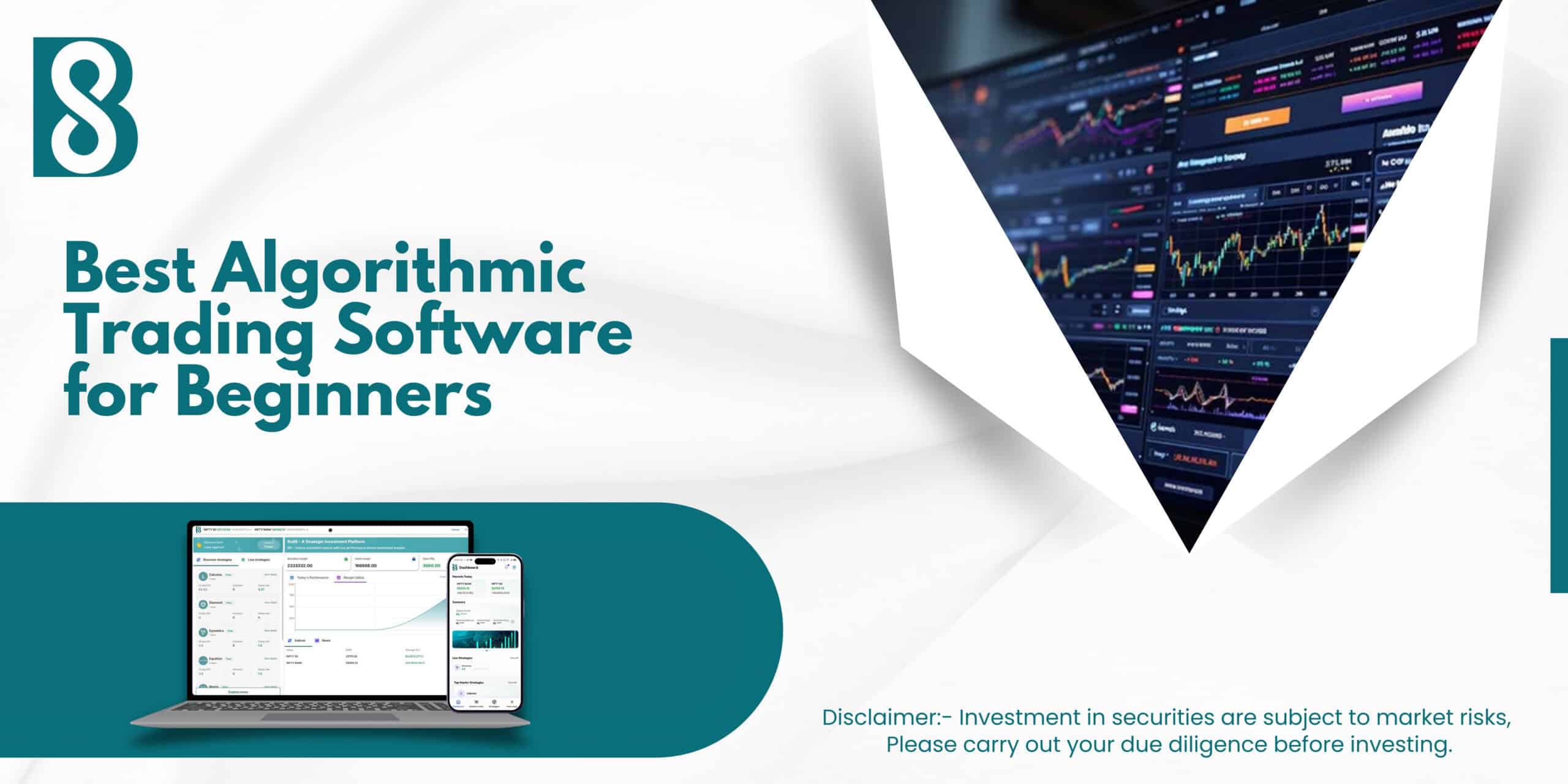
Best Algorithmic Trading Software for Beginners.

But this shift has also created confusion.

Many beginners are searching for the best algorithmic trading software, yet they don’t always know what “best” actually means. Some assume algorithmic trading software is a money-printing machine. Others think automation removes the need for learning, discipline, or risk control.

Both assumptions are wrong.

This guide is written for beginners who want clarity—not shortcuts.
In this blog, we will break down:

  • What algorithmic trading software actually is (and what it is not)
  • Who should and should not use it as a beginner
  • The different types of algo trading software beginners encounter
  • A detailed checklist of must-have features
  • How to choose the best algorithmic trading software for beginners step by step
  • Common beginner mistakes and how good software prevents them
  • Why risk management matters more than returns
  • How beginners should approach their first 30 days using algo software

This is not a sales pitch.

This is an education-first, safety-first guide designed to help beginners survive—and then grow.
1) Why Beginners Are Switching From Manual Trading to Algorithmic Trading (300–500 Words)
Most beginners enter trading with enthusiasm but quickly encounter the same problems:

  • Emotional decision-making
  • Inconsistent execution
  • Overtrading
  • Revenge trades
  • Fear during drawdowns
  • Greed after wins

Manual trading demands perfect discipline at all times—something even professionals struggle with.
Algorithmic trading appeals to beginners because it offers structure.
When beginners search for the best algorithmic trading software for beginners, what they are really looking for is:

  • Discipline without emotional interference
  • Rule-based execution
  • Faster, more consistent order placement
  • Reduced psychological pressure

However, automation does not mean “easy money.”

Algorithmic trading software does one primary job:
It executes predefined rules with consistency.
It does not predict markets.
It does not guarantee profits.
It does not remove risk.
Good algo software enforces discipline.
Bad algo software sells illusions.

This blog will help you understand the difference—and help you choose wisely.

2) What Is Algorithmic Trading Software? (350–450 Words)

In simple language, algorithmic trading software is a system that:

  • Follows predefined trading rules
  • Automatically places, manages, and exits trades
  • Executes decisions without emotional interference

What Algo Trading Software Is NOT

For beginners, it’s important to clear some confusion.

Algo software is not:

  • A “tip service”
  • An auto-buy/sell signal app
  • A guaranteed profit tool
  • A replacement for risk management

Algo Software vs Trading Apps

A normal trading app allows manual execution.
Algorithmic trading software executes rules automatically.

Algo Software vs Auto Tips

Auto tips tell you what to buy or sell.
Algo software tells the system how and when to trade—based on logic.

Algo Software vs Broker Tools

Many brokers provide basic automation tools.
Dedicated algo software focuses on strategy execution, testing, monitoring, and risk control.

Beginner Takeaway

Algorithmic trading software executes rules.
You still need logic, patience, and risk discipline.
The best algorithmic trading software for beginners makes this clear upfront.

3) Who Should Use Algo Trading as a Beginner? (300–450 Words)

Algorithmic trading is not for everyone.

Beginners Who Are a Good Fit

  • Busy professionals who cannot watch markets all day
  • Systematic learners who prefer rules over instincts
  • Risk-first traders who value capital protection
  • Emotionally reactive traders who want discipline enforced
  • Beginners willing to learn slowly

Beginners Who Should Avoid Algo Trading

  • Those chasing quick profits
  • Traders who ignore stop-losses
  • People with no capital plan
  • Anyone expecting “set and forget” income
  • Traders unwilling to study strategy logic

Minimum Expectations for Beginners

  • Learning curve is real
  • Drawdowns will happen
  • Results are uneven initially
  • Patience is non-negotiable

The best algorithmic trading software for beginners filters users who are not ready—and protects those who are.

4) Types of Algo Trading Software Beginners Will See (500–700 Words)

Beginners will encounter several categories of algo trading software. Understanding these prevents costly mistakes.

No-Code Strategy Builders

  • Drag-and-drop logic
  • Visual rule creation
  • Beginner-friendly but limited
  • Risk of shallow strategies

Pre-Built Strategy Platforms

  • Ready-to-deploy strategies
  • Built by experienced designers
  • Best for beginners when logic is transparent
  • Ideal for disciplined learning

API-Based Platforms

  • Connect via broker APIs
  • Powerful but technical
  • Requires understanding execution flow

Coding-First Platforms

  • Python / JavaScript frameworks
  • High flexibility
  • Not suitable for beginners without programming background

Strategy Marketplaces / Copy Apps

  • High risk for beginners
  • Blind copying without understanding logic
  • Often optimized for marketing, not survival

For beginners, pre-built strategy platforms with strong risk controls are usually the safest starting point.

5) Beginner Requirements: Must-Have Features Checklist (700–900 Words)

This section defines what truly makes the best algorithmic trading software for beginners.

Simple UI & Guided Setup

Beginners should not struggle with technical complexity.

Paper Trading / Simulation

Essential for learning without capital risk.

Pre-Built Strategies With Clear Logic

Strategies must explain:

  • Why entries occur
  • When exits happen
  • What conditions invalidate trades

Risk Management Controls (Non-Negotiable)

  • Stop-loss enforcement
  • Position sizing rules
  • Max loss per day
  • Drawdown limits

Backtesting + Forward Testing

Backtests alone are not enough.

Slippage & Cost Simulation

Real markets are not frictionless.

Execution Quality Monitoring

Order fills, latency, rejections must be tracked.

Logs & Trade Reports

Audit trails help learning and accountability.

Safety Features

  • Kill switches
  • Margin checks
  • Order validation

Education & Support

Documentation, videos, and onboarding matter.
If any of these are missing, beginners should be cautious.

6) What Makes Algo Software Truly Beginner-Friendly? (400–600 Words)

Beginner-friendly does not mean “dumbed down.”
It means:

  • Strategy logic explained clearly
  • Guardrails to prevent reckless behavior
  • Presets that prioritize safety
  • Clear feedback on mistakes

The best algorithmic trading software for beginners teaches discipline—not dependency.

7) How to Choose the Best Algorithmic Trading Software (Step-by-Step) (600–900 Words)

Step 1: Define Your Goal

Intraday, swing, or positional?

Step 2: Choose Market

Equity, options, futures, or crypto.

Step 3: Decide Approach

Pre-built vs build-your-own.

Step 4: Evaluate Risk Controls

If risk is optional, walk away.

Step 5: Check Testing Methodology

Backtest + forward test alignment matters.

Step 6: Understand Costs

Platform fees, brokerage, slippage.

Step 7: Start Small

Paper → small capital → scale gradually.

8) Strategy Types Beginners Should Start With (500–800 Words)

Trend-Following Strategies
Simple, slow, forgiving.

Breakout With Volatility Filters

Avoid false breakouts.

Mean Reversion (With Strict Stops)

High discipline required.

Time-Based Entry/Exit Models

Removes emotional discretion.

Options Warning for Beginners

Options algos carry higher risk. Conservative exposure only.

9) Common Beginner Mistakes (And How Software Should Prevent Them) (500–700 Words)

  • Over-optimizing backtests
  • Ignoring execution costs
  • Using too many indicators
  • Strategy hopping
  • Oversizing positions
  • Treating automation as passive income

Good software actively prevents these behaviors.

10) Backtesting vs Forward Testing (Beginner Explanation) (400–650 Words)

Backtesting shows possibility.
Forward testing shows reality.
Beginners must understand:

  • Why backtests lie
  • Why observation periods matter
  • Why live data behaves differently

11) Risk Management: The Section Beginners Need the Most (600–900 Words)

Risk management is survival.
Key principles:

  • Position sizing
  • Daily loss limits
  • Drawdown control
  • Capital preservation mindset

The best algorithmic trading software for beginners is risk-first, not return-first.

12) Security, Compliance & Safety (350–500 Words)

  • API permission control
  • Data privacy
  • Avoid guaranteed returns
  • Transparent disclosures

Trust comes from transparency—not promises.

13) “Best” Criteria: A Scoring Framework (500–800 Words)

Create a scoring model:

  • Ease of use
  • Strategy logic clarity
  • Testing depth
  • Risk controls
  • Reliability
  • Reporting
  • Support
  • Cost transparency

This framework helps beginners evaluate platforms objectively.

14) Beginner Roadmap: First 30 Days With Algo Software (400–650 Words)

Week 1: Learn + paper trade
Week 2: Run one strategy only
Week 3: Review logs, improve risk
Week 4: Deploy small capital, follow rules

Final Thoughts

The search for the best algorithmic trading software for beginners should not begin with returns.
It should begin with:

  • Safety
  • Discipline
  • Transparency
  • Learning

Automation is not about removing effort.
It is about removing emotion.
Survive first.
Then grow.

FAQ

FAQ 1: What is the best algorithmic trading software for beginners?

The best algorithmic trading software for beginners is one that prioritizes discipline, risk control, and clarity over aggressive profit promises. For beginners, “best” does not mean highest returns—it means easy setup, transparent strategy logic, strong risk management, and proper testing tools. Good beginner software should support paper trading, offer pre-built strategies with clear explanations, and include safeguards like stop-loss limits and daily loss caps. Beginners should avoid platforms that advertise guaranteed profits or require large capital upfront. The best algorithmic trading software for beginners focuses on long-term learning, consistency, and capital protection rather than short-term excitement.

FAQ 2: Is algorithmic trading safe for beginners?

Algorithmic trading can be safe for beginners if the right software and mindset are used. The best algorithmic trading software for beginners includes built-in risk management features such as position sizing, maximum drawdown limits, and emergency stop controls. Safety depends less on automation itself and more on how rules are designed and followed. Beginners who use algo trading responsibly—starting with paper trading, small capital, and conservative strategies—can actually reduce emotional mistakes common in manual trading. However, unsafe practices like over-leveraging, strategy hopping, or trusting unverified systems can increase risk significantly.

FAQ 3: How much capital do beginners need for algorithmic trading?

There is no fixed minimum capital requirement, but beginners should start small. The best algorithmic trading software for beginners allows users to begin with paper trading or low capital to understand execution behavior before scaling. Starting with limited capital helps beginners learn about slippage, brokerage costs, and drawdowns without emotional stress. Many beginners fail by deploying too much capital too early. A gradual approach—testing first, then scaling slowly—is far more effective. Capital size matters less than position sizing discipline and risk control, both of which good beginner-friendly algo software enforces automatically.

FAQ 4: Can beginners make profits using algorithmic trading software?

Yes, beginners can make profits, but expectations must be realistic. The best algorithmic trading software for beginners is designed to manage risk first, profits second. Early stages often involve learning, small gains, or even controlled losses. Profits usually come after understanding strategy behavior across different market conditions. Beginners who expect instant income often misuse automation and overtrade. Algorithmic trading rewards patience, consistency, and discipline. Beginners should focus on process quality—execution accuracy, drawdown control, and rule adherence—rather than short-term profit numbers. Sustainable profitability takes time, even with automation.

FAQ 5: What features should beginners look for in algo trading software?

The best algorithmic trading software for beginners must include paper trading, pre-built strategies with clear logic, strong risk controls, and detailed trade reports. Beginners should look for stop-loss enforcement, maximum daily loss limits, and drawdown protection. Backtesting combined with forward testing is critical to avoid false confidence. A beginner-friendly interface, educational support, and transparent performance metrics are equally important. Software that hides strategy logic or focuses only on returns should be avoided. For beginners, safety features and learning tools matter far more than advanced customization or complex indicators.

FAQ 6: Is coding required to use algorithmic trading software?

No, coding is not mandatory for beginners. The best algorithmic trading software for beginners usually offers no-code or pre-built strategy options, allowing users to trade systematically without programming knowledge. Coding-based platforms exist, but they are better suited for advanced traders or developers. Beginners should focus on understanding strategy logic, risk management, and execution behavior rather than writing code. No-code platforms help beginners avoid technical complexity while still benefiting from automation. Learning the logic behind strategies is far more important than knowing how to code when starting with algorithmic trading.

FAQ 7: How long does it take to learn algorithmic trading as a beginner?

Learning algorithmic trading is a gradual process. With the best algorithmic trading software for beginners, most users need at least 4–8 weeks to understand basics such as strategy behavior, drawdowns, and execution costs. True confidence develops over months of observation and disciplined practice. Beginners should spend initial weeks on paper trading, studying logs, and reviewing mistakes. Algorithmic trading is not about speed of learning but quality of understanding. Those who rush capital deployment usually face losses. A slow, structured learning curve leads to better long-term outcomes.

FAQ 8: Are pre-built strategies better for beginners?

Yes, pre-built strategies are often better for beginners—if their logic is transparent. The best algorithmic trading software for beginners provides pre-built strategies designed by experienced professionals and explains how and why trades are taken. This allows beginners to learn systematically instead of guessing indicator combinations. However, blindly copying strategies without understanding risk is dangerous. Beginners should use pre-built strategies as learning tools, not shortcuts. Platforms that combine pre-built strategies with strong risk controls and educational explanations offer the safest entry into algorithmic trading.

FAQ 9: What mistakes should beginners avoid in algo trading?

Common beginner mistakes include over-optimizing backtests, ignoring slippage and brokerage costs, switching strategies frequently, and risking too much capital per trade. The best algorithmic trading software for beginners actively prevents these mistakes through guardrails like position limits, drawdown caps, and execution monitoring. Beginners should also avoid treating automation as “set and forget.” Algo trading still requires review, discipline, and patience. Software should support learning by providing logs, reports, and performance analysis rather than encouraging reckless experimentation or unrealistic expectations.

FAQ 10: How do beginners know if algo trading software is trustworthy?

Trustworthy software is transparent, realistic, and risk-focused. The best algorithmic trading software for beginners never promises guaranteed returns and clearly explains strategy logic, risks, and limitations. Beginners should check whether the platform offers audit trails, clear reporting, secure API permissions, and proper disclosures. Education and support availability also indicate credibility. Platforms that rely heavily on marketing claims, screenshots, or aggressive profit messaging should raise red flags. For beginners, trust comes from clarity, consistency, and honesty—not from flashy performance numbers.
10 Reasons to Use Pre-Built Algos for Algorithmic Trading

10 Reasons to Use Pre-Built Algos for Algorithmic Trading

10 Reasons to Use Pre-Built Algos for Algorithmic Trading

Introduction: Why Pre-Built Algos Are Gaining Serious Attention

Algorithmic trading is no longer a niche reserved for global hedge funds or high-frequency trading desks. Over the last two decades, its journey has followed a clear progression: from large institutions to proprietary trading firms, and now steadily into the hands of retail traders. This shift has not happened because markets have become easier. It has happened because markets have become faster, noisier, and far less forgiving of human inconsistency.
Retail participation has expanded dramatically, but results have not followed the same curve. Despite access to advanced charting tools, indicators, and educational content, most retail traders still struggle with the same core problems—emotional decision-making, inconsistent execution, and poor risk control. The issue is not a lack of information. It is a lack of process discipline.
In response to this gap, pre-built algorithmic trading strategies have begun attracting serious attention. Unlike early retail automation attempts—which often relied on fragile indicator combinations or copy-paste logic—modern pre-built algos are increasingly designed with professional market understanding, research discipline, and risk frameworks at their core.
At the same time, the idea that every trader should “build their own algo” has been widely misunderstood. While custom strategy development may appeal intellectually, it demands deep statistical knowledge, market experience, infrastructure awareness, and continuous monitoring—requirements that most retail traders neither have nor realistically need. For many, the attempt to build from scratch becomes another form of overconfidence rather than a path to consistency.
Pre-built algos offer a different promise: process over prediction. They focus on executing a defined logic consistently rather than forecasting market outcomes. They prioritize capital protection, execution quality, and repeatability over excitement or short-term gains.
This article is written for traders who are serious about longevity rather than thrill—retail traders, semi-professional participants, and discipline-focused market operators who want structure without illusion. It explains what pre-built algos are, what they are not, and why they represent a meaningful evolution in how retail trading is practiced today.

2️ What Are Pre-Built Algos? (And What They Are NOT)

Pre-built algos are algorithmic trading strategies that are designed, tested, and deployed by experienced professionals before being made available for execution. They are not raw indicators, signals, or discretionary tools. They are structured systems that define when to enter, how to size positions, when to exit, and how to manage risk—without requiring moment-to-moment human decision-making.
At their core, pre-built algos encode market logic into executable rules. These rules may be based on price behavior, volatility conditions, liquidity dynamics, or market structure—but they are always framed as if-then decisions, not opinions. Once deployed, the strategy executes as designed, regardless of emotion, news bias, or trader mood.
It is important to distinguish pre-built algos from other commonly confused approaches:

  • Pre-built algos vs manual trading

    Manual trading relies on discretionary judgment at the moment of execution. Even when rules exist on paper, enforcement often breaks down under stress. Pre-built algos enforce rules mechanically.

  • Pre-built algos vs DIY coding

    DIY algos place the burden of design, testing, execution logic, and maintenance entirely on the trader. Most retail traders underestimate this complexity and overestimate their edge.

  • Pre-built algos vs tip-based automation

    Tip-based automation simply executes external signals automatically. There is no embedded market logic or risk framework—only faster execution of someone else’s opinion.

Several myths must also be addressed:

❌ Pre-built algos are not guaranteed profit systems
❌ They are not “set and forget” forever
❌ They are not shortcuts to market mastery
Their value lies not in promise, but in discipline. In algorithmic trading, design logic matters more than indicator count. A simple, well-reasoned structure applied consistently will always outperform a complex system built on curve-fitted assumptions.

3️Reason #1: Built by Research Analysts, Not Guesswork

One of the defining strengths of serious pre-built algos is who builds them. Professionally designed strategies are created by research analysts who understand markets beyond surface-level indicators. Their work is rooted in studying how markets behave—not how charts look in hindsight.
Certified research analysts approach strategy creation by first understanding market structure: how price moves through liquidity, how participants behave during different volatility regimes, and how execution impacts outcomes. They focus on questions like:

  • Where does liquidity cluster?
  • How does volatility expand and contract?
  • When do trends persist versus mean-revert?

This perspective is fundamentally different from retail experimentation, where strategies often emerge from indicator stacking—adding RSI, MACD, Bollinger Bands, and filters until the backtest “looks good.” Such approaches tend to overfit historical data and collapse in live conditions.
Experience matters because markets are adaptive systems. Analysts who have observed multiple cycles understand that no indicator works universally, but certain behaviors repeat under similar conditions. This understanding allows strategies to be designed around logic rather than coincidence.
Pre-built algos reflect accumulated experience. They are not theoretical exercises; they are structured responses to observed market behavior across years of trading environments. That experience cannot be replicated quickly through trial and error.

4️ Reason #2: Extensive Backtesting Across Market Cycles

Backtesting is often misunderstood. Many retail traders treat it as a validation tool—if a strategy made money historically, it must work going forward. In reality, backtesting is a stress-testing tool, not a promise generator.

Serious pre-built algos undergo extensive backtesting across multiple market cycles:

  • Strong bull markets
  • Prolonged bear phases
  • Sideways and range-bound periods
  • Event-driven volatility spikes

Testing across only one favorable period creates false confidence. A strategy optimized for trending markets may collapse in sideways conditions. One designed for calm environments may fail during volatility expansion.
Another critical issue is backtest bias. When parameters are adjusted repeatedly to improve historical results, the strategy begins fitting noise rather than signal. Such systems often perform exceptionally on paper and disappoint quickly in reality.

Professional backtesting focuses less on peak returns and more on:

  • Drawdown behavior
  • Consistency across regimes
  • Sensitivity to parameter changes

Pre-built algos that survive this scrutiny are not designed to impress—they are designed to endure.

5️ Reason #3: Forward Testing in Live Market Conditions

Historical testing alone is never sufficient. Live markets introduce variables that cannot be fully simulated—slippage, latency, partial fills, and behavioral differences among participants.
Forward testing places a strategy in real market conditions without scaling capital aggressively. It allows designers to observe:

  • Execution quality
  • Slippage impact
  • Performance drift versus backtest expectations

A minimum observation period—often a full quarter—helps filter out fragile strategies. If live results diverge significantly from historical behavior, the strategy is either refined or rejected.
This step is where many retail DIY systems fail. They move directly from backtest to full deployment, only to discover that real markets behave differently than historical data suggested.
Forward testing enforces humility. It acknowledges that markets do not owe consistency to any model.

6️ Reason #4: Emotion-Free Execution (The Biggest Edge)

Most trading losses are not caused by lack of knowledge. They are caused by emotional interference:

  • Fear-driven early exits
  • Greed-driven over-positioning
  • Revenge trading after losses

Pre-built algos remove these variables by enforcing rule-based execution. Entries occur when conditions are met. Exits occur when rules dictate. Position sizing remains consistent regardless of recent outcomes.
This does not eliminate risk—but it eliminates chaos. The psychological relief of knowing that decisions are executed mechanically allows traders to focus on monitoring systems rather than battling impulses.
Emotion-free execution is not about removing responsibility. It is about removing self-sabotage.

7️ Reason #5: Built-In Risk Management Framework

In professional trading, risk management is not an afterthought—it is the foundation. Pre-built algos embed risk controls directly into their logic:

  • Pre-defined stop-loss mechanisms
  • Maximum drawdown limits
  • Exposure caps per strategy
  • Capital allocation rules

Most retail traders underestimate risk because losses feel abstract during good periods. But markets eventually enforce discipline through drawdowns. Systems without embedded controls rarely survive that phase.
Pre-built algos prioritize capital protection before returns. This orientation may appear conservative, but it is the reason such systems remain deployable across cycles.

8️ Reason #6: Time Efficiency & Decision Fatigue Reduction

Manual trading demands constant attention. Charts must be watched, decisions evaluated, and executions managed—all while resisting emotional impulses. Over time, this creates decision fatigue, reducing judgment quality.
Pre-built algos remove the need for continuous monitoring. Traders shift from reactive execution to supervisory oversight. This not only improves consistency but also restores balance between trading and life.
Efficiency is not laziness—it is sustainability.

9️ Reason #7: Designed for Real-World Constraints

Many DIY strategies fail because they ignore real-world constraints:

  • Margin requirements
  • Broker execution rules
  • Capital limitations
  • Network latency

Professional pre-built algos account for these realities. They model execution costs, market depth, and realistic order behavior. This grounding prevents unpleasant surprises during deployment.
Markets do not reward theoretical perfection. They reward operational realism.

🔟 Reason #8: Continuous Monitoring & Strategy Review

No strategy remains optimal forever. Market structure evolves, participants change, and edges decay.
Pre-built algos are monitored continuously for:

  • Performance drift
  • Slippage changes
  • Regime shifts

When conditions change, strategies may be adjusted, paused, or retired. This oversight protects traders from blindly trusting outdated logic.
Automation without monitoring is negligence—not discipline.

1️1 Reason #9: Transparency & Realistic Expectations

Any system promising guaranteed returns is fundamentally dishonest. Serious pre-built algos communicate:

  • Expected drawdowns
  • Historical variability
  • Risk-return tradeoffs

Transparency builds trust and allows traders to align expectations with reality. Long-term consistency matters more than short-term excitement.

1️2 Reason #10: Faster Learning Curve for Retail Traders

Pre-built algos are not black boxes. They serve as learning systems, helping traders understand:

  • Why trades trigger
  • When strategies underperform
  • How risk is controlled

Disciplined users evolve faster by observing structured decision-making rather than reacting emotionally.

1️3 Pre-Built Algos vs Manual Trading vs DIY Coding

Factor Pre-Built Algos Manual Trading DIY Coding
Skill Requirement Moderate High Very High
Emotional Load Low Very High High
Risk Management Embedded Inconsistent User-dependent
Time Investment Low Very High Very High
Scalability High Low Moderate
Consistency High Low Variable

Pre-built algos offer the most balanced trade-off for disciplined retail traders.

1️4Who Should Use Pre-Built Algos (And Who Shouldn’t)

Ideal for:

  • Working professionals
  • Risk-aware traders
  • Discipline-focused participants

Not ideal for:

  • Gamblers
  • Tip seekers
  • Unrealistic return chasers

1️5 Final Thoughts: Automation With Accountability

Pre-built algos do not remove risk. They remove disorder. They replace emotional reaction with structured execution and convert trading from impulse into process.
The future of retail trading is not prediction-driven—it is discipline-driven. Pre-built algos represent a maturation of participation, where accountability replaces excitement and consistency replaces hope.
In that sense, automation is not the edge. Discipline is.

FAQ

FAQ 1: Are pre-built algos suitable for beginners in algorithmic trading?

Pre-built algos can be suitable for beginners, but only for those who approach trading with the right expectations. They are not shortcuts to quick profits or replacements for basic market understanding. Instead, they act as structured systems that help beginners avoid the most common early mistakes—overtrading, emotional decision-making, and poor risk control. By observing how a pre-built algo enters, exits, and manages risk, beginners gain practical exposure to disciplined trading behavior. However, users must still understand that losses are part of trading and that algos do not eliminate risk. Beginners who are patient, risk-aware, and willing to learn from performance data benefit far more than those seeking excitement or instant results.

FAQ 2: Do pre-built algos guarantee consistent profits over time?

No legitimate pre-built algo guarantees consistent profits. Markets are dynamic, and no strategy performs well in all conditions. Any platform or system promising fixed or guaranteed returns is ignoring market reality. Professionally designed pre-built algos focus instead on managing risk, controlling drawdowns, and maintaining consistency over multiple market cycles. Their objective is not to win every trade, but to survive adverse phases and compound gradually during favorable conditions. Performance naturally fluctuates based on volatility, liquidity, and market regime changes. Traders should evaluate algos based on long-term behavior, risk-adjusted returns, and transparency rather than short-term performance spikes. Consistency comes from discipline, not certainty.

FAQ 3: How do pre-built algos handle market volatility and sudden events?

Pre-built algos are designed with predefined rules that account for volatility expansion and contraction. Many incorporate filters that adjust behavior during abnormal market conditions, such as event-driven volatility or liquidity shocks. This may include reduced position sizing, stricter stop-loss enforcement, or complete inactivity during unsuitable conditions. Unlike discretionary traders, algos do not panic or overreact to news headlines. However, they are not immune to sudden market gaps or extreme events. That is why professional systems focus on damage control rather than prediction. The goal is to limit exposure during turbulent phases, preserve capital, and re-engage when conditions stabilize, rather than attempting to trade every market move.

FAQ 4: Can traders modify or override pre-built algo decisions?

In most disciplined algo frameworks, manual intervention is intentionally limited. The purpose of a pre-built algo is to enforce consistency and remove emotional interference. Frequent overrides defeat that purpose and reintroduce discretionary bias. While traders may control higher-level decisions—such as capital allocation, strategy selection, or pausing deployment—individual trade-level interference is discouraged. Allowing algos to execute their logic without interruption ensures that performance reflects the strategy design rather than human impulse. Traders who repeatedly override systems often experience worse outcomes than manual trading because they combine automation with emotional decision-making, creating inconsistency rather than discipline.

FAQ 5: How important is risk management in pre-built algos compared to returns?

Risk management is more important than returns in professional algorithmic trading. Returns are a function of surviving long enough to benefit from favorable market phases. Pre-built algos embed risk controls such as stop-losses, drawdown limits, exposure caps, and capital allocation rules directly into execution logic. These mechanisms prevent a single bad phase from causing irreversible damage. Retail traders often focus on maximizing returns while underestimating downside risk. Professional systems reverse that priority—protecting capital first and allowing returns to emerge over time. Without robust risk management, even profitable strategies eventually fail. Longevity, not aggression, defines sustainable trading performance.

FAQ 6: How often should pre-built algos be monitored by traders?

Although algos automate execution, they still require regular monitoring. Traders should review performance periodically to understand drawdowns, execution quality, and alignment with expectations. Monitoring does not mean reacting to every losing streak; it means ensuring the strategy behaves within its documented risk parameters. Professional monitoring also evaluates whether market conditions remain suitable for the strategy. Over-monitoring leads to unnecessary interference, while neglect leads to blind trust. The balance lies in disciplined observation—tracking metrics, understanding deviations, and allowing systems to play out over appropriate timeframes rather than making emotional adjustments based on short-term outcomes.

FAQ 7: What is the role of forward testing in pre-built algos?

Forward testing validates whether a strategy behaves in live markets as expected based on historical testing. Unlike backtests, forward tests reveal real-world issues such as slippage, latency, and execution constraints. Professional pre-built algos are observed for a meaningful period—often several months—before being considered stable. This process filters out strategies that appear profitable historically but fail under live conditions. Forward testing also helps estimate realistic drawdowns and performance variability. Traders benefit because they are not exposed to unproven logic. Forward testing reinforces accountability by requiring strategies to demonstrate robustness beyond theoretical simulations.

FAQ 8: Are pre-built algos better than building your own trading algorithm?

For most retail traders, pre-built algos are more practical than building custom systems. Developing a reliable algo requires statistical knowledge, programming skills, market experience, and continuous maintenance. Many retail-built algos fail due to overfitting, unrealistic assumptions, or lack of monitoring. Pre-built algos leverage professional research, testing infrastructure, and risk frameworks that individual traders rarely replicate efficiently. This does not mean learning is discouraged—traders can still study strategy logic and behavior. However, starting with professionally designed systems reduces unnecessary experimentation and allows traders to focus on execution discipline rather than technical complexity.

FAQ 9: What type of trader should avoid using pre-built algos?

Pre-built algos are not suitable for traders who seek excitement, instant gratification, or guaranteed profits. Gamblers, tip-followers, and traders unwilling to accept drawdowns typically struggle with algorithmic systems. Algos demand patience, trust in process, and respect for risk controls. Traders who frequently interfere, chase performance, or change strategies impulsively undermine the system’s integrity. Algorithmic trading rewards discipline more than intuition. Those unwilling to follow rules consistently or who treat trading as entertainment rather than a structured activity are better served by reassessing their approach before adopting automation.

FAQ 10: How do pre-built algos help traders develop long-term discipline?

Pre-built algos act as behavioral training tools. By enforcing predefined rules, they demonstrate what disciplined trading looks like in practice. Traders observe how losses are handled, how risk is controlled, and why patience matters during drawdowns. Over time, this exposure helps traders internalize process-oriented thinking rather than outcome obsession. Instead of reacting emotionally, users learn to evaluate performance statistically and over appropriate horizons. This mindset shift is critical for long-term survival in markets. Pre-built algos do not just automate execution—they encourage maturity, accountability, and respect for market uncertainty.

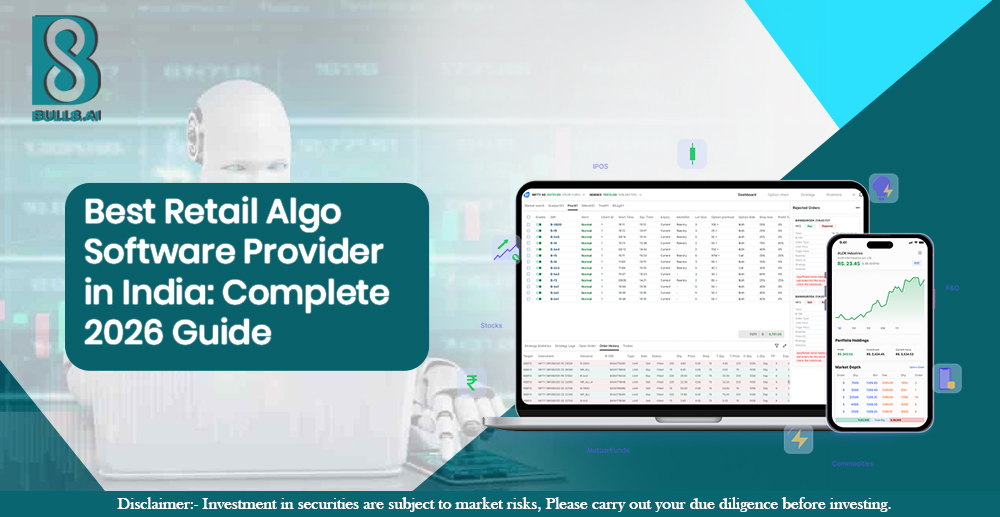
Best Retail Algo Software Provider in India Complete 2026 Guide.

Best Retail Algo Software Provider in India: Complete 2026 Guide

Best Retail Algo Software Provider in India Complete 2026 Guide.
Best Retail Algo Software Provider in India: Complete 2026 Guide.

Introduction: The Retail Trading Revolution in India

Retail trading in India has undergone a massive transformation over the last decade. What once started as tip-based trading driven by WhatsApp messages, Telegram channels, and word-of-mouth recommendations has gradually evolved into indicator-heavy discretionary trading. Retail traders began learning charts, candlestick patterns, RSI, MACD, and dozens of other technical indicators in the hope of improving consistency. But despite increased access to tools and education, the core problems of retail trading remained unchanged—emotions, over-trading, and inconsistent execution. As markets became faster and more volatile, discretionary trading began exposing its limitations. Manual execution struggled to keep pace with rapid price movements. Decision fatigue increased. Stop-loss discipline broke down during high-pressure situations. The result was predictable: even knowledgeable traders found it difficult to remain consistent.

The year 2026 marks a decisive turning point for Indian retail traders.

Three forces are driving this shift:
  • The formalization of SEBI’s retail algo trading framework
  • A sharp rise in retail market participation
  • Markets that reward discipline and punish hesitation
In this environment, speed alone is not the advantage—execution discipline is. Retail traders are no longer asking which stock will move next. They are asking how to trade systematically, control risk, and remove emotional errors from their decision-making process.

This naturally leads to one critical question:

Which is the best retail algo software provider in India for 2026?

The answer is not about flashy dashboards or unrealistic profit claims. It lies in platforms that understand retail psychology, regulatory realities, and the need for structured, rule-based trading systems. Bull8 emerges in this context as a platform designed specifically for retail traders who want discipline, control, and scalability—without complexity or hype.

What Is Retail Algo Trading? (Concept Explained Simply)

Retail algo trading refers to the use of pre-defined rules and automated execution systems that allow retail traders to trade without manual intervention once a strategy is deployed. Unlike discretionary trading, where decisions are made moment-to-moment based on emotions or judgment, algo trading follows logic that is set in advance. At its core, retail algo trading is not about predicting markets. It is about executing decisions consistently. It is important to distinguish between institutional algos and retail algos. Institutional algorithms operate with massive capital, ultra-low latency infrastructure, and complex quantitative models. Retail algos, on the other hand, are designed to simplify trading for individual participants with limited capital and time.

Retail algo trading typically automates:

  • Entry rules based on predefined logic
  • Exit conditions including stop-loss and profit targets
  • Position sizing
  • Risk limits per trade and per day
What retail algo trading does not do is equally important. It does not guarantee profits. It does not eliminate losses. It does not act as a magical prediction engine.

A simple way to understand retail algo trading is through this flow:

Strategy → Rules → Automation → Execution → Risk Control The quality of the outcome depends not on how complex the strategy is, but on how well the rules are defined and how strictly they are executed. This is where a reliable retail algo platform becomes critical.

Why Retail Traders Are Moving Away from Manual Trading

Manual trading places the trader at the center of every decision. While this may appear flexible, it exposes traders to psychological and structural weaknesses that become costly over time.

Common retail trading problems include:

  • Entering trades late after confirmation
  • Exiting early due to fear
  • Holding losses due to hope
  • Revenge trading after drawdowns
  • Missing stop-losses during volatility
Human limitations become more pronounced in modern markets. Machines execute instantly. Humans hesitate. Markets move faster than reaction times, especially during news-driven volatility or intraday momentum bursts.

By 2026, market conditions have intensified:

  • Higher volatility
  • Narrower profit margins
  • Faster stop-loss hunting
  • Increased algorithmic participation
In such an environment, manual execution is no longer competitive. Retail traders are realizing that automation is not about replacing intelligence—it is about protecting discipline. Retail algo software has shifted from being a convenience to becoming essential trading infrastructure.

Key Features of the Best Retail Algo Software in India (2026 Benchmark)

Choosing the best retail algo trading software for retail traders in India requires focusing on fundamentals rather than marketing promises. In 2026, certain features are non-negotiable.

Rule-Based Strategy Execution

Once a strategy is deployed, execution must be purely rule-based. There should be no room for emotional overrides or discretionary interference. Discipline is effective only when it is enforced by the system.

Risk Management at Strategy Level

Risk management must be embedded at the strategy level, not left to user judgment. This includes fixed stop-losses, trailing stop-losses, maximum loss limits per day, and controlled capital allocation. Survival comes before profitability.

One-Click Deployment for Retail Users

Retail traders should not be burdened with coding, server setup, or VPS configurations. The platform must abstract complexity and allow strategies to be deployed with minimal technical friction.

Multi-Asset Support

The platform should support key retail instruments such as equities, index options, and futures where applicable. Fragmented platforms lead to fragmented discipline.

Clean Dashboard and Control

A single dashboard showing real-time positions, P&L, and risk exposure is critical. Retail traders must see what is happening without navigating multiple tools.

Compliance-Ready Architecture

With SEBI regulations shaping the future, platforms must operate with broker-linked execution, transparent logs, and clear disclosures. Grey-area automation is no longer sustainable. These are not premium features. They are the baseline requirements for any platform claiming to be the best retail algo software provider in India in 2026.

SEBI Regulations and Retail Algo Trading in 2026

SEBI’s involvement in retail algo trading is not a restriction—it is a correction. For years, unregulated automation operated in grey areas, exposing traders to risks they often did not understand.

The regulator’s objectives are clear:

  • Transparency in strategy logic
  • Broker-level execution control
  • Mandatory risk disclosures
  • Elimination of misleading profit guarantees
Retail traders must understand the difference between compliant platforms and informal automation setups. Any system that bypasses broker oversight or hides strategy logic poses long-term risk. In 2026, trust is built through regulation alignment, not avoidance. Platforms like Bull8 are designed to work within regulatory frameworks, ensuring sustainability and trader protection rather than chasing short-term loopholes.

Institutional Algo vs Retail Algo: Why Retail Needs a Different Approach

Institutional trading systems are built for scale, speed, and complexity. Retail traders require simplicity, discipline, and risk containment. Institutions focus on execution speed advantages. Retail traders benefit more from execution consistency. Institutions absorb drawdowns as part of portfolio strategy. Retail traders must prioritize capital preservation. Retail traders do not fail because they lack intelligence. They fail because tools were never designed for their constraints. A retail-first platform recognizes this difference and builds systems accordingly.

What Makes Bull8 the Best Retail Algo Software Provider in India

Bull8 is not a white-labeled institutional product repurposed for retail. It is built from the ground up for retail traders. The platform follows a strategy-first philosophy. Instead of overwhelming users with indicators, it focuses on structured strategies that are tested, rule-based, and risk-managed. Emotion-free execution is central to Bull8’s design. Once deployed, the system executes trades without hesitation or fear. Risk management is embedded, not optional. Bull8 emphasizes loss control before profit chasing. This aligns with how successful traders actually survive long-term. The concept of One App. All Trading. reflects Bull8’s unified approach. Retail traders do not need multiple platforms for signals, execution, and monitoring. Everything operates from a single, coherent dashboard. Importantly, Bull8 scales with the trader. Beginners can start small, while experienced traders can expand logically without changing systems. Discipline remains constant regardless of scale.

Bull8 vs Traditional Algo Providers (Approach Comparison)

Traditional providers often rely on:
  • Coding-heavy workflows
  • Signal-selling models
  • Profit-focused marketing
  • Fragmented tools
Bull8 focuses on:
  • No-code execution
  • System-driven discipline
  • Risk-first frameworks
  • Unified trading infrastructure
This difference in philosophy defines outcomes.

Who Should Use Retail Algo Trading Software in 2026

Retail algo trading software is suitable for:
  • Beginners who want structure
  • Working professionals with limited screen time
  • Part-time traders seeking consistency
  • Disciplined investors transitioning to automation
However, algos are not meant for gamblers or shortcut seekers. Automation amplifies discipline—not recklessness.

Common Myths About Retail Algo Trading

One common myth is that algo trading guarantees profits. In reality, it guarantees consistency, not outcomes. Another misconception is that only coders can use algos. Modern retail platforms eliminate this barrier. Some believe algo trading is risky, while manual trading is safer. In truth, unmanaged discretion is often the highest risk. Flexibility without discipline leads to chaos. Structure creates freedom.

How to Choose the Best Retail Algo Software Provider in India

Retail traders must evaluate platforms based on:
  • Strategy transparency
  • Embedded risk controls
  • Broker-level execution
  • Educational support
  • Ease of use
  • Regulatory readiness
If a platform does not prioritize risk control, it is not an algo—it is a gamble.

The Future of Retail Algo Trading in India (2026–2030 Outlook)

The next phase of Indian markets will favor disciplined participants. Tip culture will decline. Regulation will tighten. Platforms will become the backbone of trading behavior. Retail traders who adapt early will gain consistency. Those who resist structure will struggle. Bull8 is built not only for today’s market conditions but for tomorrow’s regulatory and behavioral realities.

Final Verdict: Why Bull8 Stands Out in 2026

The search for the best retail algo software provider in India is ultimately a search for discipline, transparency, and sustainability. Bull8 stands out because it prioritizes:
  • Risk before reward
  • Logic before hype
  • Simplicity before complexity
  • Retail needs before institutional leftovers
In 2026, winning is no longer about predicting markets. It is about executing systems with discipline. Bull8 delivers exactly that—making it one of the strongest choices for retail traders looking to trade smarter, safer,

FAQ

What does “Best Retail Algo Software Provider in India” actually mean?

The term Best Retail Algo Software Provider in India refers to a platform that is specifically designed for individual traders, not institutions. Such a provider focuses on rule-based execution, built-in risk management, ease of use, and compliance with Indian regulations. Unlike generic or institutional-grade systems, retail algo software prioritizes simplicity, capital protection, and discipline. The best platforms help traders automate strategies without coding, avoid emotional decisions, and maintain consistency across market conditions. In 2026, the “best” provider is defined less by profit claims and more by transparency, risk control, and long-term sustainability.

How is retail algo trading different from manual trading in India?

Retail algo trading removes emotional decision-making by executing trades strictly based on predefined rules. Manual trading depends heavily on human judgment, which is often affected by fear, greed, and hesitation. The best retail algo software provider in India offers automated execution, real-time risk control, and consistent discipline—something manual trading struggles to maintain, especially in fast-moving markets. In 2026, when volatility and algorithmic participation are higher, retail algo trading provides an edge by ensuring timely entries, disciplined exits, and controlled losses without constant screen monitoring.

Is retail algo trading legal in India in 2026?

Yes, retail algo trading is legal in India when conducted within the framework defined by SEBI. The regulator emphasizes transparency, broker-level execution, and proper risk disclosures. The best retail algo software provider in India operates in alignment with these guidelines, ensuring that strategies are clear, execution is compliant, and traders are aware of risks. Platforms that bypass brokers or operate in grey areas may expose traders to regulatory and operational risks. In 2026, legality and compliance are key factors when choosing a retail algo trading platform.

Do I need coding knowledge to use retail algo trading software?

No, coding knowledge is not required when using a modern retail-focused platform. The best algo trading software for retail traders in India is designed as a no-code or low-complexity system where traders can deploy strategies with minimal technical effort. The platform handles execution logic, order placement, and risk controls automatically. This allows traders to focus on understanding strategy behavior and risk management rather than programming. In 2026, accessibility is a defining feature of the best retail algo software providers.

Can beginners use retail algo trading software safely?

Yes, beginners can use retail algo trading software safely—provided the platform is built for retail users. The best retail algo software provider in India offers predefined strategies, built-in risk limits, and structured execution, which actually reduces beginner mistakes. Instead of relying on intuition or tips, beginners learn disciplined trading through systems. However, beginners should avoid platforms that promise guaranteed profits. In 2026, safe retail algo trading is about learning consistency, managing risk, and growing gradually rather than chasing quick returns.

Does retail algo trading guarantee profits?

No, retail algo trading does not guarantee profits. Any platform claiming guaranteed returns should be avoided. The best retail algo software provider in India focuses on consistency, risk management, and disciplined execution—not profit promises. Algo trading helps remove emotional errors and improve execution quality, but market risk always exists. Losses are a natural part of trading. In 2026, successful retail traders understand that algos are tools for control and structure, not shortcuts to guaranteed income.

How does risk management work in retail algo trading software?

Risk management is the foundation of effective retail algo trading. The best retail algo software provider in India embeds risk controls directly into each strategy. This includes predefined stop-loss levels, trailing stops, daily loss limits, and controlled capital allocation. Unlike manual trading, where traders often override risk rules, algo systems enforce discipline automatically. In 2026’s high-volatility environment, such built-in risk management helps traders survive drawdowns and protect capital, which is more important than chasing aggressive profits.

What should I check before choosing a retail algo software provider in India?

Before selecting a platform, traders should evaluate transparency, risk controls, broker integration, and regulatory readiness. The best retail algo software provider in India clearly explains strategy logic, avoids unrealistic profit marketing, and operates within SEBI guidelines. Ease of use, customer support, and educational resources are also important. In 2026, traders should avoid platforms that rely on signal selling or manual intervention. A good retail algo platform prioritizes execution discipline and long-term trader protection.

Is AI-powered trading software suitable for Indian retail traders?

AI-powered trading software can be useful when it is logic-driven and rule-based rather than hype-driven. The best retail algo software provider in India may use AI elements to enhance execution or analysis, but it still relies on transparent rules and risk management. Retail traders should be cautious of platforms that market AI as a prediction engine. In 2026, effective retail algo trading focuses on structured systems, where technology supports discipline instead of replacing trader responsibility.

Why is 2026 an important year for retail algo trading in India?

The year 2026 is significant due to increased retail participation, tighter regulations, and faster market dynamics. Manual trading is becoming less effective in handling volatility and execution pressure. The best retail algo software provider in India helps traders adapt to this new environment by offering compliant, rule-based, and risk-managed automation. As SEBI frameworks mature and markets evolve, retail traders who adopt disciplined systems early are better positioned for long-term consistency and survival.
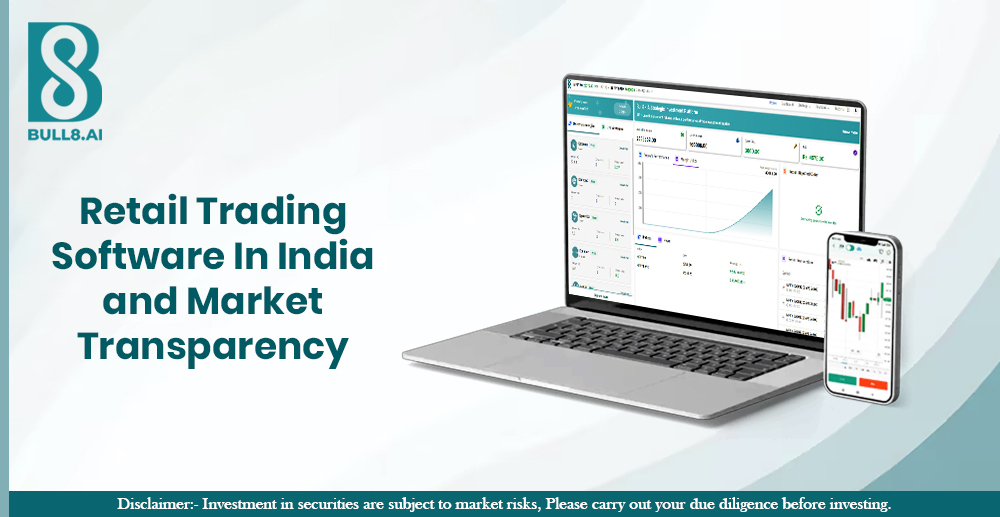
Retail Trading Software In India and Market Transparency

Retail Trading Software in India

Retail Trading Software In India and Market Transparency

Retail Trading Software in India & Market Transparency: How Bull8 Helps Traders Trade With Clarity (2026)

Retail participation in India’s stock market has grown fast—and that’s a good thing. More people are learning how markets work, building long-term wealth, and exploring trading as a skill. But growth also brings challenges: information overload, noisy “tips”, emotional decision-making, and confusion about what’s real vs what’s hype.

That’s where market transparency becomes the difference between smart trading and stressful trading.

In simple words, market transparency means you can see what you’re doing, why you’re doing it, and how your decisions impact risk and outcomes. And in 2026, one of the biggest drivers of transparency is the rise of retail trading software in India—platforms designed to turn messy market data into clear, rule-based actions.

In this blog, we’ll explore how modern retail trading software supports transparency—and how Bull8 is built to help Indian retail traders trade with discipline, control, and confidence.

What Market Transparency Actually Means for Retail Traders

Most people think transparency is only about exchanges showing prices and volumes. But for a retail trader, transparency is broader. It includes:

  • Clear data visibility (price, volume, trend, volatility)
  • Clear trade logic (why an entry happened, why an exit happened)
  • Clear risk (how much you can lose if the trade fails)
  • Clear performance (what strategy works, what doesn’t, and why)

When transparency is missing, traders fall into common traps:

  • Following random calls without understanding the “why”
  • Holding losers too long due to hope
  • Exiting winners too early due to fear
  • Overtrading after a few wins
  • Changing strategy every week

Transparency brings you back to basics: data, rules, and repeatable processes.

Why Retail Traders Often Struggle With Transparency in India

Even though market data is more accessible than ever, clarity is harder than it looks. Here’s why:

1) Too Much Information, Too Little Structure

News apps, Telegram groups, Twitter threads, YouTube videos—everything pushes “signals”. But the retail trader often lacks a system to filter what matters.

2) Emotion Replaces Logic

A fast-moving market triggers fear, greed, and urgency. Without a structured process, decisions become reactions.

3) Most Trading Is Not Tracked Properly

Many traders don’t journal trades. They don’t know what works for them. They only remember big wins or painful losses.

4) Risk Is Treated Like an Afterthought

A lot of retail traders focus on “targets” but don’t define:

  • stop-loss logic
  • position sizing
  • maximum daily loss
  • drawdown control

And without risk transparency, even a decent setup can blow up an account.

How Retail Trading Software in India Improves Market Transparency

Modern retail trading software isn’t just about placing orders. The best platforms help traders build transparency into every step of the process.

1) Data-to-Decision Clarity

A strong platform turns raw data into meaningful signals—trend, momentum, volatility, and confirmation. This reduces guesswork.

2) Rule-Based Trading Over “Tip-Based Trading”

Instead of “Buy this now”, software can guide decisions through conditions:

  • If price breaks a level + volume confirms → entry
  • If trend flips or SL hits → exit

This creates a logical audit trail.

3) Backtesting & Strategy Validation

Transparency improves when you can test a strategy on historical data before risking real money. It answers:

  • Does this strategy work in sideways markets?
  • How does it behave in volatility?
  • What is the worst drawdown?

4) Risk Controls That Force Discipline

This is crucial: good software doesn’t just “suggest” risk management—it makes it part of the system.

5) Performance Tracking & Reporting

Traders improve faster when they can see:

  • win rate
  • average profit vs average loss
  • best timeframes
  • best setups
  • mistakes repeated

Bull8: Built for Transparent, Rule-Based Retail Trading

Bull8 is designed around a simple belief: retail traders don’t need more noise—they need more clarity. That’s why Bull8 focuses on rule-based workflows, safer execution, and transparency-driven tools that support consistent decision-making.

Here’s how Bull8 supports market transparency in practical, trader-friendly ways:

1) Strategy-First Trading: Clear Logic Before Execution

Bull8 encourages traders to define their trading approach first—then execute it. This helps eliminate “random entries” and builds a clearer connection between:

  • market condition
  • strategy logic
  • entry/exit rules
  • outcome

When you trade based on logic, your results become explainable—and that’s transparency.

2) Rule-Based Automation to Reduce Emotional Trading

One of the biggest transparency killers is emotional execution:

  • entering late because of FOMO
  • exiting early due to fear
  • doubling down to recover losses

Bull8 supports structured, rule-based execution that helps traders stay aligned with their plan. Instead of relying on mood and impulse, trades follow pre-set conditions.

3) Clear Risk Framework: Control Before Profit

In transparent trading, risk is visible before you place the trade. Bull8 is positioned around safer retail participation by promoting:

  • predefined risk rules
  • risk-managed execution
  • disciplined position behavior

This matters because transparency isn’t only about “seeing profits”—it’s about seeing downside clearly.

4) Backtesting Mindset: Validate Before You Trade

Retail traders often jump into strategies after watching a video. Bull8 promotes a more professional approach—test ideas, validate logic, and understand performance across market phases.

Even if you’re not an expert, this mindset creates transparency:

  • You know what you’re trading
  • You know what conditions suit your strategy
  • You know what to expect during drawdowns

5) Cleaner Decision-Making: Fewer Trades, Better Trades

Transparency improves when you avoid noise. A strategy-based platform helps you focus on higher-quality trades rather than “trading all day”.

Bull8 is built for retail traders who want:

  • more discipline
  • fewer emotional errors
  • more consistency

Not just “more trades.”

Market Transparency Isn’t Only for Pros—It’s for Beginners Too

Many beginners assume transparency is something they’ll achieve “after experience.” But the opposite is true: beginners need transparency the most, because early mistakes often come from confusion, not lack of intelligence.

With the right retail trading software in India, a beginner can learn faster because:

  • decisions are structured
  • results are measurable
  • mistakes become visible
  • risk becomes controlled

That’s why Bull8 is positioned as beginner-friendly: it supports a system-based trading journey instead of chaotic trial-and-error.

What to Look for in Retail Trading Software in India (2026 Checklist)

If you’re choosing a platform in 2026, use this transparency-focused checklist:

  • Does it support rule-based strategies (not just manual trading)?
  • Can you define entry/exit clearly?
  • Does it encourage proper risk management?
  • Can you track and review your performance?
  • Does it reduce emotional decision-making?
  • Is the experience clean, simple, and beginner-friendly?

The best platforms don’t make trading “easy.”
They make trading clearer—and that’s what creates long-term consistency.

Final Thoughts: Transparency Is the Real Edge in Modern Trading

Markets will always have uncertainty. No software can remove risk completely. But the right platform can remove avoidable mistakes—especially the ones caused by emotional execution, unclear strategy, and poor risk structure.

That’s why market transparency matters so much for Indian retail traders in 2026. It’s not a “bonus feature.” It’s the foundation of sustainable trading.

Bull8 is built to support that foundation—through rule-based trading, disciplined execution, and a transparency-first approach that helps retail traders stay in control.

If your goal is to trade smarter—not louder—start with transparency.
Because when your strategy is clear, your risk is defined, and your actions are rule-based… you’re no longer guessing. You’re trading with purpose.


The Best Algo Software in India for Retail Traders

Algorithmic trading is no longer limited to institutions or high-frequency trading  desks. In India, retail traders are increasingly adopting algo trading platforms to gain discipline, speed, and consistency. Among the growing ecosystem of algo platforms, Bull8 has positioned itself as one of the best algo software solutions in India—built specifically for retail traders who want automation without complexity.

This blog explains why Bull8 stands out, how retail algo trading works, and what makes Bull8 a preferred choice for Indian traders in 2026.

What Is Retail Algo Trading?

Retail algo trading refers to the use of automated strategies that execute trades based on predefined rules—without manual intervention. These rules can be based on:

  • Price action
  • Technical indicators
  • Time-based conditions
  • Risk-management parameters

Once activated, an algo system monitors markets continuously and executes trades with speed and precision. This helps retail traders avoid emotional decisions, late entries, and inconsistent execution.

Why Algo Trading Is Becoming Essential for Indian Retail Traders

Indian markets have become faster, more volatile, and more competitive. Retail traders face challenges such as emotional losses, over-trading, and inconsistent discipline. Algo trading addresses these issues directly.

Key Reasons for Algo Adoption:

  • Markets move faster than human reaction time
  • Emotional decision-making leads to losses
  • Manual trading lacks consistency
  • Risk management is often ignored in live trading
  • Retail traders need scalable, rule-based systems

This is where platforms like Bull8 play a critical role.

What Makes Bull8 One of the Best Algo Software in India

Bull8 is designed as a strategy-based retail algo trading platform that focuses on simplicity, discipline, and automation. Instead of forcing traders to learn coding or complex systems, Bull8 offers a structured, user-friendly approach to algo trading.

Zero-Coding Algo Trading

Bull8 allows retail traders to deploy algorithmic strategies without writing a single line of code. This makes algo trading accessible even to beginners.

Pre-Built, Expert-Designed Strategies

Users can choose from ready-to-use trading strategies that are designed with predefined logic, risk controls, and execution rules.

  1. Emotion-Free Trading Execution

Once a strategy is activated, Bull8 executes trades automatically. This removes fear, greed, hesitation, and over-trading—common reasons retail traders lose money.

  1. Built-In Risk Management

Bull8 emphasizes risk-first trading with controls such as:

  • Defined position sizing
  • Capital allocation limits
  • Strategy-level risk boundaries
  • Automated exits

This aligns well with disciplined, long-term trading success.

  1. Real-Time Monitoring and Transparency

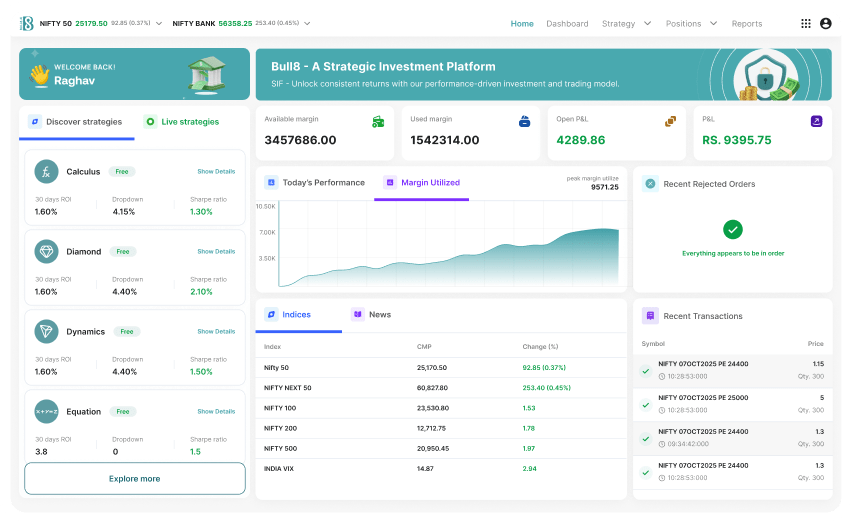
Traders can track strategy performance, open positions, and overall portfolio health in real time, ensuring clarity and control.

How Bull8 Works: Step-by-Step

Step 1: Account Setup
Create an account and complete onboarding.

Step 2: Capital Allocation
Allocate capital based on your comfort and risk appetite.

Step 3: Strategy Selection
Choose from available algorithmic strategies designed for different market conditions.

Step 4: Activate Automation
Once activated, the strategy executes trades automatically based on predefined rules.

Step 5: Monitor & Review
Track performance, review outcomes, and make data-driven decisions.

Who Should Use Bull8?

Bull8 is ideal for:

  • Retail traders who struggle with emotional losses
  • Beginners who want algo trading without coding
  • Working professionals who cannot track markets all day
  • Traders looking for structured, rule-based execution
  • Investors seeking technology-driven discipline

It is especially suitable for traders who want automation with control, not blind speculation.

Bull8 vs Traditional Manual Trading

Aspect Manual Trading Bull8 Algo Trading
Decision Making Emotional & inconsistent Rule-based & systematic
Execution Speed Slow Instant
Discipline Hard to maintain Built-in
Risk Control Often ignored Pre-defined
Scalability Limited High

This comparison highlights why algo trading platforms like Bull8 are becoming essential tools for retail traders in India.

Common Algo Strategies Used on Retail Platforms

While Bull8 focuses on strategy-driven automation, typical retail algo strategies include:

  • Trend-following strategies
  • Breakout-based strategies
  • Time-based execution strategies
  • Volatility-adjusted strategies
  • Risk-controlled positional strategies

The key is not just the strategy, but consistent execution, which Bull8 ensures.

Risk Awareness: Algo Trading Is Not Risk-Free

Algo trading reduces emotional errors, but it does not eliminate market risk. Traders must understand:

  • Markets can behave unpredictably
  • No strategy works in all conditions
  • Over-allocation increases risk
  • Discipline is required even with automation

Bull8 encourages responsible trading by focusing on controlled deployment rather than aggressive speculation.

Why Bull8 Fits India’s Retail Trading Future

India’s retail trading ecosystem is evolving rapidly with increasing focus on transparency, automation, and discipline. Platforms that combine compliance-friendly design, simplicity, and risk management are best positioned for the future.

Bull8 aligns with this evolution by offering:

  • Retail-friendly automation
  • Strategy-based execution
  • Technology-driven discipline
  • Focus on long-term sustainability

Final Verdict: Is Bull8 the Best Algo Software in India?

For retail traders looking to enter algo trading without coding, without emotional stress, and with structured risk control, Bull8 stands out as one of the best algo software platforms in India in 2026.

It bridges the gap between institutional-grade automation and retail simplicity—making disciplined trading achievable for everyday traders.

Bull8 Democratizing Algorithmic Trading for the Modern Investor

For too long, the world of high-finance trading has been an exclusive club. Wall Street giants with supercomputers and teams of quants have dominated the markets, while the retail trader was left to rely on gut feelings and fragmented information. That era is over.

Bull8 isn’t just a trading platform, it’s a movement toward financial freedom for retail traders. In a world where traditional investing often feels out of reach, Bull8 bridges the gap between cutting-edge technology and accessible, rule-based trading strategies. Our mission is simple: to empower everyday investors with the tools, infrastructure, and intelligence once reserved for institutions.

From Manual to Machine: The Evolution is Here

The trading landscape has fundamentally evolved from manual, intuition-based decisions to automated, rule-based systems. Bull8 embraces this shift by offering a platform where strategies are not only customizable but also grounded in institutional-grade research and execution logic. When rules are well-designed and consistently followed, they create a measurable edge and that’s exactly what Bull8 delivers.

This is why Bull8 is a powerful companion to retail traders and passive investors. It provides a simple yet powerful interface to monitor and control your automated trading strategies, finely crafted to make your financial journey robust. You choose and build your trading portfolio, and let Bull8 take care of everything for you executing trades in your own account as opportunities arise. It trades across all asset classes and ensures your money works for you across multiple time zones, maximizing your potential for returns.

Rethinking Risk: From Chaos to Clarity

Trading has long been viewed as a high-risk endeavor, especially for retail participants. Bull8 challenges that narrative by introducing a process-driven, algorithmic approach. Through rigorous research, backtesting, and built-in portfolio management, we help users move from guesswork to strategy turning trading into a disciplined investment tool.

The Bull8 Engine: Quant + Tech for Unmatched Access

At our core, we combine the analytical depth of quantitative finance with the scalability of modern technology. Our platform is designed for passive investors, working professionals, and anyone seeking smarter investment avenues.

But what truly sets Bull8 apart is its unmatched technology stack. We bring the power of institutional execution engines and low-latency infrastructure directly to you. This is institutional infrastructure with retail access, supporting advanced trading models that are typically too complex for conventional systems. It’s high-performance algorithmic trading, made accessible to everyone.

The Bull8 Promise: Your Partner in Profitability

Bull8 is more than a platform—it’s a partner in your financial journey. Whether you’re a seasoned trader or just starting out, our goal is to help you trade smarter, manage risk better, and pursue consistent profitability through automation and intelligence.

Ready to trade like a quant?

Stop leaving money on the table and start leveraging the power of automation. Explore Bull8 today and unlock the future of retail algorithmic trading.


Never miss
another article

    How to Start Algorithmic Trading in India

    For years, the high-tech world of algorithmic trading was the exclusive domain of institutional giants on Wall Street and Dalal Street. Armed with supercomputers, elite quant teams, and ultra-low-latency infrastructure, they dominated the markets while retail traders were left navigating with little more than charts, instincts, and hope.
    But that’s changing—fast.

    In recent years, algorithmic trading in India has undergone a quiet revolution. What was once a niche reserved for hedge funds and proprietary desks is now becoming a powerful tool for everyday investors. Whether you’re a working professional, a part-time trader, or someone exploring alternative investments, algo trading is now within your reach.
    If you’ve ever wondered how to harness this power, you’re in the right place. This guide will walk you through what algorithmic trading is, how it’s evolved in India, and how you can get started plus how Bull8 is making this journey seamless for retail traders like you.

    What is Algorithmic Trading?

    Automatic Execution: Set your rules once, and the algorithm takes care of the rest. Data-Driven Decisions: It says yes to logic and facts and no to emotional guesswork. High Speed & 24/7 Monitoring: Reacts to market opportunities in milliseconds, even while you sleep. Error-Free & Consistent: Drastically reduces manual errors and ensures disciplined execution.

    Key Features that Make it Powerful:

    • Automatic Execution: Set your rules once, and the algorithm takes care of the rest.
    • Data-Driven Decisions: It says yes to logic and facts and no to emotional guesswork.
    • High Speed & 24/7 Monitoring: Reacts to market opportunities in milliseconds, even while you sleep.
    • Error-Free & Consistent: Drastically reduces manual errors and ensures disciplined execution.

    The Evolution of Algo Trading in India

    1. Technological Advancements: Brokers offering robust APIs.
    2. Regulatory Framework: SEBI has established clear guidelines, ensuring a safe and structured environment for its growth.
    3. Growing Awareness: Traders are realizing that in a fast-moving market, automation is the need of the day to avoid missing small, fleeting opportunities.

    Your Step-by-Step Guide to Start Algo Trading in India

    While the concept sounds technical, getting started is more straightforward than you think. Here’s your roadmap.

    1

    Step 1: Learn the Basics

    Your viewer is only as good as the data it receives. Can it handle formats like Revit, SolidWorks, or IFC? Can it process assemblies and preserve metadata? A robust backend CAD conversion flow is critical.

    2

    Step 2: Pick Your Approach (Coding vs. Codeless)

    Traditionally, you’d need to learn a language like Python. But what if you’re not a programmer? This is the biggest hurdle for most Indian retail traders.

    3

    Step 3: Select a Platform and Broker

    This is the most critical choice. You need a SEBI-registered broker that supports API-based trading. This is where Bull8 changes the game.

    4

    Step 4: Build and Backtest Your Strategy

    Start with a simple strategy—like trend-following or mean reversion. The golden rule is to backtest it rigorously on historical data to see how it would have performed.

    5

    Step 5: Try Paper Trading

    Before risking real capital, test your strategy in a simulated environment with virtual money. This builds confidence and helps iron out any kinks.

    6

    Step 6: Go Live and Monitor

    Start small, deploy your strategy with limited capital, and monitor its performance closely.

    The Pros and Cons of Algorithmic Trading

    Pros:

    • Emotion-Free, Disciplined Trading: It eliminates fear and greed from your decisions.
    • Speed and Efficiency: Executes trades faster than any human can.
    • Systematic Methodology: This is far superior to discretionary or recommendation-based trading, which is often prone to bias and delay.
    • Multi-Tasking: Manage multiple strategies or assets simultaneously.

    Cons:

    • Technical Overload: The complexity of building, testing, and deploying systems can be overwhelming.
    • Risk of Over-Optimization: Creating a strategy that works perfectly in the past but fails in live markets.
    • System Dependency: Relies on a stable internet connection and robust software.

    How Bull8 Empowers Your Indian Algo Trading Journey

    This is where we solve the core challenges faced by an Indian retail trader. Bull8 is not just another platform; it’s your bridge to institutional-grade trading.

    1

    No Coding Required, Just Logic.

    Bull8 eliminates Step 2’s biggest hurdle. You don’t need to be a Python expert. Our intuitive platform and pre-built, quant-validated strategies allow you to deploy sophisticated algorithms with a few clicks. You focus on the strategy, we handle the code.

    2

    Institutional-Grade Infrastructure for Retail.

    Your trading decisions deserve the best execution. Bull8 provides the powerful, low-latency technology stack that institutions use, ensuring your orders are filled quickly and efficiently, giving you a real edge.

    3

    Trade in Your Own Account, Safely.

    A common fear is transferring money to a third party. With Bull8, you trade in your own Demat and trading account with your preferred broker. Your capital never moves to a risky destination; we simply connect via secure API to execute trades on your behalf.

    4

    Built-In Backtesting and Paper Trading.

    Bull8 integrates crucial Steps 4 and 5 directly into its platform. You can backtest strategies against years of Indian market data and then paper trade them risk-free, all within a single, unified interface.

    5

    Overcoming Retail Trading Challenges.

    Bull8 addresses the key cons of algo trading. We manage the technical complexity, provide vetted strategies to avoid over-optimization, and offer a reliable platform, so you can focus on what matters—growing your wealth.

    Ready to Start Your Algorithmic Journey?

    Algorithmic trading is the future of retail investing in India. It’s about making your money work smarter, not harder. With Bull8, you are not alone in this journey. We provide the tools, the infrastructure, and the intelligence to help you trade with discipline and precision.

    Start your journey with Bull8 today—and trade like a pro, without the complexity.

    Never miss
    another article

      Retail Algorithmic Journey- Activating Bull8 Intelligence fo…

      The financial markets are a relentless, 24/7 torrent of data. For the retail trader, navigating this flood to find a consistent edge can feel like a full-time job, one fought with an informational disadvantage. While institutional players have long used algorithms and high-tech infrastructure to act on insights in real-time, the retail trader has been left with delayed news, emotional decision-making, and execution lag.

      This era of imbalance is over.

      Discover how Bull8 and its quant team unite data intelligence and automation so retail can act on insights in real time turning intelligence into measurable, end-to-end financial outcomes.

      The Modern Trading Mandate: Why Automation is Non-Negotiable

      In today’s volatile, high-speed markets, hesitation is a cost and emotional trading is a liability. The need for algorithmic trading and automation stems from a simple truth: machines are

      1. Testable: You can backtest the strategy on years of historical data to validate its logic.
      2. Repeatable: The system executes the same way, every time, removing human error.
      3. Measurable: Every outcome can be analyzed, allowing for continuous refinement.

      Bull8 embeds this systematic philosophy into its core. Our quant team designs, backtests, and refines strategies, giving you a vetted, rule-based system to automate.

      Your Capital, Your Control: The Bull8 Safety Principle

      In an age of uncertainty, the security of your capital is paramount. A common fear with automated solutions is having to transfer funds to a third party. Bull8 eliminates this risk entirely.

      We allow you to trade in your own trading account without you to place money to any risky destination.

      Your capital stays securely with your preferred broker. Bull8 simply connects via secure APIs to execute the pre-defined strategies you have chosen and control. You retain full ownership and visibility of your funds at all times.

      Overcoming Retail Trading Challenges with Quant Intelligence

      The retail trading challenges are clear: limited time, information asymmetry, and emotional bias. The solution is equally clear: complementing your goals with the automation and intelligence of machine and quant power.

      Bull8 acts as your personal quant team. We merge the computational power of machines with the strategic depth of human financial expertise. This synergy allows you to:

      • Act in Real-Time: Capture opportunities the moment our systems identify them.
      • Manage Risk Systematically: Pre-defined stop-loss and position-sizing rules protect your capital automatically.
      • Achieve Consistency: Remove the highs and lows of emotional trading and aim for a smoother equity curve.

      Activate Your Bull8 Journey Today

      The future of retail trading is not about working harder; it’s about working smarter. It’s about leveraging a system designed for success in the modern era.

      Stop struggling against the tide. It’s time to equip yourself with the same intelligence, infrastructure, and institutional-grade methodology that the pros use.

      Never miss
      another article