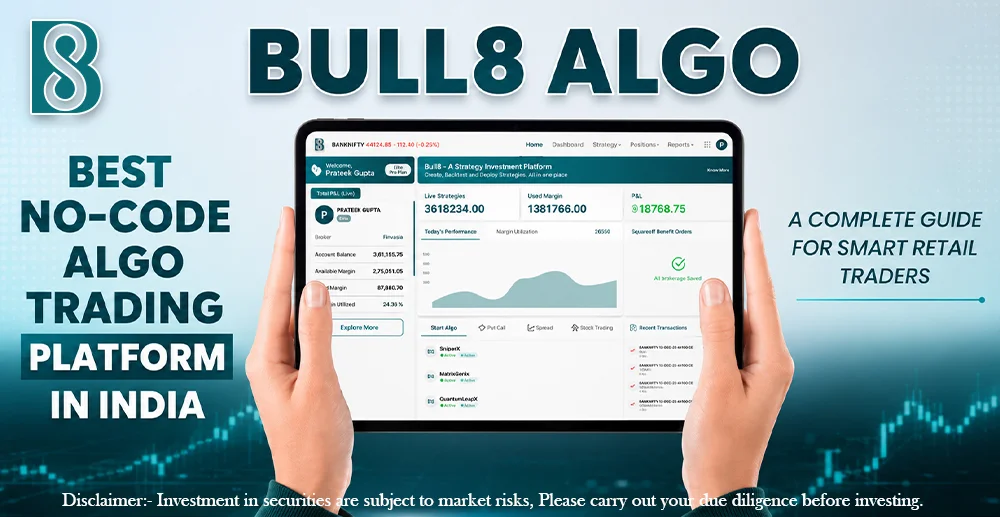
Best No-Code Algo Trading Platform in India – A Complete Guide for Smart Retail Traders.jpg
Introduction
The Indian stock market has evolved significantly over the past few years. Faster internet, improved trading infrastructure, and advanced broker APIs have made algorithmic trading accessible to retail traders. What was once reserved for hedge funds and institutional investors is now available to individual traders through modern no-code trading platforms.
The best no-code algo trading platform in India allows traders to automate strategies without writing a single line of code. Whether you trade options, futures, equities, or indices, no-code platforms help remove emotional decisions while improving execution speed and consistency.
Instead of manually monitoring charts throughout the day, traders can define rules, activate strategies, manage risk automatically, and receive real-time performance updates.
This guide explains everything you need to know about choosing the right no-code platform, its benefits, must-have features, and why modern traders are increasingly adopting automation.
What is a No-Code Algo Trading Platform?
A no-code algo trading platform enables traders to automate buying and selling decisions without programming knowledge.
Instead of Python, Java, or complex coding, traders simply:
Select a strategy
Configure trading parameters
Set risk limits
Connect their broker
Start automated execution
The platform continuously monitors live market conditions and executes trades according to predefined rules.
This makes algorithmic trading accessible even for beginners.
Why No-Code Trading is Becoming Popular in India
Retail participation in India’s stock market has grown rapidly. Along with this growth comes the need for disciplined execution.
Many traders struggle with:
Emotional trading
Fear during market volatility
Missing trade entries
Delayed exits
Overtrading
Lack of consistency
No-code automation helps solve these problems by following predefined rules without emotions.
As a result, traders can focus more on strategy rather than execution.
Benefits of Using the Best No-Code Algo Trading Platform in India
No Programming Knowledge Required
Perhaps the biggest advantage is simplicity.
You don’t need to learn the following:
Python
APIs
SQL
Java
Automation scripting
Everything is managed through an easy dashboard.
Faster Trade Execution
Markets move within milliseconds.
Manual execution often leads to the following:
Late entries
Missed opportunities
Poor pricing
Automated execution reduces these delays significantly.
Emotion-Free Trading
Fear and greed remain two of the biggest reasons traders lose money.
Algorithms execute exactly as instructed.
No panic buying.
No emotional selling.
No revenge trading.
Consistency
Professional trading depends on consistency rather than occasional profits.
Automation ensures every signal follows the same process.
Better Risk Management
Modern no-code platforms allow traders to configure the following:
Maximum daily loss
Stop-loss
Trailing stop-loss
Profit targets
Position sizing
Capital allocation
Risk controls remain active throughout trading hours.
Time Saving
Manual traders spend hours watching charts.
Automation monitors markets continuously.
This saves considerable time while maintaining trading discipline.
Features to Look for in the Best No-Code Algo Trading Platform in India
Choosing the right platform requires evaluating several important features.
Easy User Interface
The platform should be simple enough for beginners while offering advanced controls for experienced traders.
Look for:
Clean dashboard
Simple navigation
Quick strategy activation
Mobile compatibility
Plug-and-Play Strategies
Many traders prefer ready-made strategies instead of building their own.
A quality platform should provide:
Index strategies
Options strategies
Intraday strategies
Hedged strategies
Premium harvesting strategies
Broker Integration
Smooth connectivity with supported brokers ensures seamless order execution.
Good platforms support secure API integration for faster execution.
Live Monitoring
Real-time dashboards should display:
Running positions
Open orders
P&L
Margin usage
Strategy performance
Risk Controls
Strong risk management features should include:
Daily loss limits
Auto square-off
Kill switch
Capital limits
Maximum trades
Trade cooldown
Cloud-Based Trading
Cloud deployment provides the following:
Better uptime
Remote accessibility
Continuous execution
Reduced dependency on personal computers
Mobile Accessibility
Modern traders expect to monitor strategies anytime.
Mobile apps should provide:
Notifications
Live P&L
Strategy control
Trade history
How No-Code Platforms Work
A simplified workflow looks like this:
Step 1
Open your trading account.
Step 2
Connect your broker.
Step 3
Choose your preferred strategy.
Step 4
Configure:
Capital
Stop-loss
Target
Risk settings
Step 5
Start automated execution.
The platform continuously watches market movements and executes trades according to your selected rules.
Why Retail Traders Prefer No-Code Platforms
Today’s traders seek convenience without compromising performance.
No-code automation offers:
Easy onboarding
Lower learning curve
Faster deployment
Reduced operational complexity
Better discipline
This explains why many traders are switching from manual execution to retail algo trading software for day-to-day trading activities.
Common Trading Strategies Available
Most no-code platforms support various trading styles.
These include:
Trend Following
Captures sustained directional market movement.
Breakout Trading
Executes trades when price breaks important levels.
Mean Reversion
Trades expecting prices to return toward historical averages.
Options Selling
Uses hedged premium collection strategies.
Intraday Trading
Designed for same-day positions.
Momentum Trading
Focuses on strong price movements supported by market momentum.
Who Should Use a No-Code Algo Platform?
These platforms are ideal for:
Beginners
No technical coding knowledge required.
Working Professionals
Cannot monitor markets all day.
Experienced Traders
Want disciplined execution.
Options Traders
Need faster execution with defined risk.
Intraday Traders
Require quick entries and exits.
Advantages Over Manual Trading
Manual Trading
No-Code Algo Trading
Emotional decisions
Rule-based execution
Delayed entries
Fast execution
Human error
Automated process
Limited monitoring
Continuous monitoring
Fatigue
Consistent execution
Missed opportunities
Real-time execution
Risk Management Matters
Even the best no-code algo trading platform in India cannot guarantee profits.
Successful trading always depends on:
Strategy quality
Proper risk management
Capital allocation
Market conditions
Discipline
Automation improves execution—not certainty.
Important Factors Before Selecting a Platform
Before choosing any platform, evaluate:
Ease of Use
Can beginners understand it?
Security
Is user data protected?
Execution Speed
How quickly are orders processed?
Stability
Can the platform handle volatile markets?
Customer Support
Is technical help available when needed?
Strategy Flexibility
Can you switch between different strategies?
Mobile Experience
Can you manage trades remotely?
Why Automation is the Future of Retail Trading
The financial markets continue becoming more competitive.
Manual execution alone is becoming increasingly difficult because the following are true:
Markets move faster.
Volatility changes rapidly.
News impacts prices instantly.
Human emotions affect decision-making.
Automation enables traders to stay disciplined and execute strategies consistently.
This is why adoption of retail algo-trading software continues to grow among Indian retail participants.
Common Mistakes Beginners Should Avoid
Many new traders assume automation guarantees profits.
Avoid these mistakes:
Using excessive leverage
Ignoring stop-loss settings
Running multiple strategies without understanding them
Overallocating capital
Frequently changing strategies
Ignoring market conditions
Automation works best when combined with sound trading practices.
Tips for Beginners
If you’re new to algorithmic trading:
Start with small capital.
Learn how your strategy works.
Understand risk before returns.
Monitor performance regularly.
Avoid emotional interference.
Focus on consistency instead of quick profits.
Why Bull8 is a Smart Choice for Retail Traders
Bull8 is designed to simplify algorithmic trading for retail investors through an intuitive no-code experience. Instead of requiring coding skills or complex setup, the platform offers ready-to-use strategies, automated execution, and built-in risk management.
Key advantages include the following:
No-code, beginner-friendly interface
Plug-and-play strategy deployment
Automated order execution
Live strategy monitoring
Advanced risk management tools
Cloud-based infrastructure
Mobile accessibility
Fast broker connectivity
Real-time performance tracking
By combining simplicity with automation, Bull8 helps traders focus on strategy while reducing emotional decision-making and execution delays.
Conclusion
The demand for the Best No-Code Algo Trading Platform in India continues to grow as more retail traders embrace automation. These platforms eliminate the need for programming knowledge, improve execution speed, enforce trading discipline, and provide robust risk management features.
Whether you are a beginner looking for an easier way to automate trades or an experienced trader seeking greater consistency, a reliable no-code platform can simplify your trading journey. The key is to choose a solution that offers secure broker integration, intuitive controls, cloud-based reliability, and effective risk management.
Remember, no platform can guarantee profits, but the right technology can help you execute your trading plan with greater precision and consistency. By combining a sound strategy, disciplined risk management, and a dependable no-code solution like Bull8, retail traders can trade more confidently in today’s fast-moving markets.
FAQs
What is a no-code algo trading platform?
A no-code algo trading platform lets users automate trading strategies through a graphical interface without writing any programming code.
Is no-code algo trading suitable for beginners?
Yes. These platforms are designed for beginners and experienced traders alike, making algorithmic trading accessible without coding expertise.
Can I use a no-code platform for options trading?
Yes. Many no-code platforms support options, futures, equities, and index-based strategies with built-in risk management.
Does automated trading eliminate trading risk?
No. Automation improves execution and discipline, but market risk still exists. Proper position sizing and risk controls remain essential.
What should I look for in the best no-code algo trading platform in India?
Look for an easy-to-use interface, broker integration, cloud-based execution, live monitoring, strong risk management, mobile access, and reliable customer support.
Top Retail Algo Trading Strategies for Indian Markets.jpg
Introduction: The Rise of Retail Algo Trading in India
The Indian stock market has undergone a significant transformation over the last decade. What was once dominated by institutional investors and professional traders is now increasingly accessible to retail participants. Thanks to technological advancements, retail traders today have access to sophisticated trading tools that were previously available only to hedge funds and large financial institutions.
One of the biggest developments driving this change is the rapid adoption of algorithmic trading. Retail investors are moving away from emotional, manual decision-making and embracing automated systems that execute trades based on predefined rules and market conditions. This shift has led to growing interest in retail algo trading strategies, which help traders improve discipline, consistency, and execution speed.
With increasing internet penetration, mobile-first investing, and regulatory support for retail automation, algorithmic trading is becoming mainstream in India. Modern platforms like Bull8 have made it possible for everyday traders to deploy professional-grade strategies without coding knowledge or technical expertise.
The popularity of the best retail algo trading app solutions is growing because traders are looking for smarter ways to participate in markets while minimising emotional mistakes. Whether trading Nifty options, Bank Nifty, Sensex derivatives, or equity stocks, algorithmic strategies offer a systematic approach that can help traders navigate market volatility.
In this guide, we will explore some of the most effective retail algo trading strategies used in Indian markets and understand how modernretail algo trading software helps automate them efficiently.
What Are Retail Algo Trading Strategies?
Retail algo trading strategies are rule-based trading methodologies that use computer algorithms to identify opportunities and execute trades automatically.
Instead of manually monitoring charts and placing orders, traders define specific conditions such as the following:
Price movements
Technical indicators
Volatility levels
Trend direction
Risk parameters
Once these conditions are met, the algorithm executes trades automatically.
A typical algorithm can:
Enter positions
Set stop losses
Book profits
Exit trades
Manage risk
This removes emotional decision-making and improves consistency.
Modern retail algorithmic trading software enables traders to automate strategies without requiring programming skills. Plug-and-play platforms have simplified algorithmic trading, making it accessible to beginners and experienced traders alike.
Why Retail Traders Prefer Algo Trading
Several factors are contributing to the rise of algorithmic trading among retail participants.
Elimination of Emotions
Fear and greed often lead to poor trading decisions. Algorithms follow rules strictly without emotional interference.
Faster Execution
Markets move rapidly. Algorithms execute trades within milliseconds after conditions are met.
Consistency
A strategy is executed the same way every time, reducing human errors.
Time Efficiency
Traders don’t need to monitor charts all day.
Better Risk Management
Automated stop losses and position sizing improve capital protection.
These advantages explain why many traders are searching for the best retail algo trading app to automate their market participation.
Top Retail Algo Trading Strategies for Indian Markets
Trend-Following Strategy
Trend following remains one of the most popular and reliable algorithmic strategies.
How It Works
The algorithm identifies a sustained market trend and enters trades in the direction of that trend.
Common indicators include:
Moving Averages
MACD
Supertrend
ADX
Example
If Nifty is trading above its 50-day and 200-day moving averages, the algorithm may generate a buy signal.
Similarly, if prices fall below key averages, the system may trigger a sell signal.
Advantages
Works well in strong trends
Easy to automate
Suitable for beginners
Best Markets
Nifty
Bank Nifty
Large-cap stocks
Mean Reversion Strategy
Markets often move away from their average price and eventually revert back.
Mean reversion algorithms capitalise on these temporary deviations.
How It Works
The algorithm identifies overbought or oversold conditions using:
RSI
Bollinger Bands
Standard Deviations
Example
If Bank Nifty becomes excessively oversold, the system may initiate a buy trade expecting prices to return toward the average.
Advantages
Effective in range-bound markets
Generates frequent opportunities
Suitable for index trading
Risks
Can struggle during strong trending phases.
Breakout Trading Strategy
Breakout trading is extremely popular among Indian traders.
How It Works
The algorithm identifies key support and resistance levels.
When the price breaks these levels with strong momentum, a trade is triggered.
Example
Nifty trading between 24,800 and 25,000 for several sessions may generate a buy signal once 25,000 is broken with high volume.
Advantages
Captures strong momentum moves
Suitable for volatile markets
Works well during major news events
Common Indicators
Volume
ATR
Price Action
VWAP
Option Premium Selling Strategies
Option premium selling has become one of the most widely used algorithmic approaches in India.
How It Works
The strategy benefits from time decay in options.
Algorithms create hedged structures such as the following:
Iron Condors
Iron Butterflies
Credit Spreads
Short Strangles
Why Popular?
Most options expire worthless, allowing premium sellers to benefit from theta decay.
Advantages
Consistent income potential
Defined risk structures
Ideal for automated execution
Many modern retail algo trading software platforms specialise in automated premium-selling strategies.
Volatility-Based Trading Strategy
Volatility is a critical component of market behaviour.
These strategies adapt based on market volatility levels.
How It Works
Algorithms monitor:
India VIX
ATR
Historical Volatility
Implied Volatility
Example
During periods of low volatility, the strategy may focus on premium selling.
During high volatility, it may switch to directional trades or hedged setups.
Advantages
Adaptive approach
Better risk management
Suitable for changing market conditions
Momentum Trading Strategy
Momentum strategies focus on stocks or indices showing strong price movement.
How It Works
Algorithms identify assets with increasing buying or selling pressure.
Indicators include:
Relative Strength
Volume Expansion
Price Breakouts
Example
If a stock gains 5% with strong volume and institutional participation, the algorithm may initiate a momentum trade.
Benefits
Captures strong trends early
Suitable for active traders
Works across multiple market segments
Intraday Scalping Algorithms
Scalping strategies seek small profits from multiple trades throughout the trading session.
How It Works
Algorithms execute numerous trades using:
Order flow
Bid-ask spread analysis
Price momentum
Market microstructure data
Advantages
Frequent opportunities
Quick trade cycles
Minimal overnight risk
Challenges
Requires fast execution and robust infrastructure.
This is where advanced retail algo trading software becomes essential.
Index Option Trading Algorithms
Index options are among the most liquid instruments in India.
Popular Instruments
Nifty Options
Bank Nifty Options
Sensex Options
How It Works
Algorithms use:
Volatility analysis
Premium decay
Directional signals
Risk management rules
Benefits
High liquidity
Efficient execution
Multiple strategy possibilities
Many of the most successful retail traders focus exclusively on index-based algorithmic strategies.
Multi-Strategy Portfolio Approach
Professional traders rarely depend on a single strategy.
How It Works
Multiple algorithms run simultaneously.
Examples:
Trend Following
Premium Selling
Momentum Trading
Volatility Trading
Benefits
Diversification
Reduced drawdowns
Improved consistency
This approach is becoming increasingly common among users of the best retail algo trading app platforms.
Risk-Managed Automated Trading Strategy
The most important strategy is often risk management itself.
Core Components
Position sizing
Stop losses
Capital allocation
Daily loss limits
Kill switches
Why It Matters
Even profitable strategies can fail without proper risk controls.
Modern algorithmic systems automatically enforce these rules to protect capital.
Key Features to Look for in Retail Algo Trading Software
Not all platforms offer the same capabilities.
When choosing a solution, consider the following features.
Plug-and-Play Strategies
Ready-to-use algorithms allow traders to start quickly without coding.
Direct broker connectivity ensures seamless trade execution.
Mobile Accessibility
A quality platform should provide both web and mobile access.
Transparency
Users should have complete visibility into trades, positions, and performance.
Why Bull8 Is Built for Retail Algo Trading
Bull8 has been designed specifically for retail traders seeking institutional-grade automation.
Key advantages include
Plug-and-Play Strategies
No coding required.
Direct Broker Integration
Trades execute directly in your own account.
Professional Risk Management
Built-in safeguards help manage market exposure.
Multi-Strategy Support
Run multiple strategies simultaneously.
Real-Time Monitoring
Track positions and performance from anywhere.
User-Friendly Interface
Simple enough for beginners while powerful enough for experienced traders.
These features make Bull8 a strong contender for traders searching for the best retail algo trading app in India.
Common Mistakes to Avoid in Algo Trading
Even with automation, traders can make mistakes.
Over-Optimization
Avoid creating strategies that only work on historical data.
Ignoring Risk Management
Risk controls should always come before profit expectations.
Using Too Many Strategies
Focus on quality rather than quantity.
Chasing Short-Term Performance
Evaluate strategies over longer timeframes.
Lack of Diversification
Avoid depending entirely on one market condition.
The Future of Retail Algo Trading in India
The future of algorithmic trading in India looks extremely promising.
Several trends are accelerating adoption:
Increased retail participation
Better broker APIs
Mobile-first trading platforms
AI-powered analytics
Regulatory support
Faster internet infrastructure
As technology continues to evolve, algorithmic trading is expected to become a standard part of retail investing and trading.
Platforms that combine simplicity, automation, transparency, and robust risk management will likely lead this transformation.
Conclusion
The growth of retail algo trading strategies is reshaping how Indian traders participate in financial markets. What was once available only to institutions is now accessible to retail investors through advanced yet user-friendly technology.
From trend following and momentum trading to premium selling and volatility-based systems, there are numerous strategies that can be automated effectively. The key is choosing an approach that aligns with your risk profile, trading objectives, and market understanding.
A reliable retail algo trading software platform can help traders execute strategies efficiently while maintaining discipline and consistency. As adoption continues to grow, finding the best retail algo trading app becomes increasingly important for those seeking a competitive edge in today’s fast-moving markets.
With platforms like Bull8, retail traders can access sophisticated automation, professional-grade risk controls, and plug-and-play strategies that simplify the trading experience while keeping control firmly in their own hands.
FAQs
What are retail algo trading strategies?
Retail algo trading strategies are automated rule-based trading methods that execute trades without manual intervention.
Is algorithmic trading legal in India?
Yes, algorithmic trading is legal in India when conducted through approved brokers and compliant platforms.
Do I need coding knowledge to use algorithmic trading?
No. Modern plug-and-play platforms like Bull8 allow traders to use pre-built strategies without coding.
Which markets can be traded using algorithms?
Algorithms can be used in equities, futures, options, commodities, and currency markets.
What is the biggest advantage of algo trading?
The biggest advantage is eliminating emotional decision-making while ensuring disciplined execution.
Are retail algo trading strategies profitable?
Profitability depends on strategy quality, market conditions, and risk management practices.
Can beginners use retail algo trading software?
Yes. Many platforms are specifically designed for beginners with user-friendly interfaces.
What makes Bull8 different?
Bull8 offers plug-and-play automation, direct broker integration, risk management tools, and institutional-grade strategies designed for retail traders.
What is the best retail algo trading app in India?
The best retail algo trading app is one that offers easy strategy deployment, direct broker integration, strong risk management tools, real-time monitoring, and a user-friendly interface. Platforms like Bull8 are designed to provide institutional-grade algorithmic trading solutions for retail traders.
How much capital is required to start retail algo trading?
The capital required depends on the strategy being used. Some index option strategies can be started with relatively lower capital, while diversified multi-strategy portfolios may require larger investments. Traders should always allocate capital based on their risk tolerance.
Can retail algo trading software trade automatically without supervision?
Yes, modern retail algo trading software can execute trades automatically based on predefined rules. However, traders should regularly monitor strategy performance, risk exposure, and market conditions.
Is retail algo trading suitable for beginners?
Yes. Many modern platforms provide plug-and-play strategies that allow beginners to start algorithmic trading without coding knowledge or extensive market experience.
What are the risks involved in retail algo trading?
Common risks include market volatility, strategy underperformance, technical failures, and poor risk management. Using proper stop-loss mechanisms and capital allocation rules can help mitigate these risks.
Can I use multiple algo trading strategies simultaneously?
Yes. Many experienced traders use a multi-strategy approach to diversify risk and improve consistency across different market conditions.
Which Indian markets are best suited for retail algo trading?
Retail algo trading is commonly used in:
Nifty Options
Bank Nifty Options
Sensex Options
Equity Stocks
Futures Contracts
Commodity Markets
How does algo trading help reduce emotional trading?
Algorithms follow predefined rules and execute trades automatically. This eliminates decisions driven by fear, greed, panic, or overconfidence, which are common causes of trading losses.
What is the difference between manual trading and retail algo trading?
Manual trading requires traders to analyse charts and place orders themselves, while retail algo trading software automatically identifies opportunities and executes trades based on programmed logic.
Are retail algo trading strategies only for intraday trading?
No. Retail algo trading strategies can be designed for intraday trading, swing trading, positional trading, option trading, and long-term trend-following approaches.
How important is risk management in algorithmic trading?
Risk management is one of the most critical components of successful algorithmic trading. Features such as stop losses, capital limits, trailing stops, and kill switches help protect trading capital during adverse market conditions.
Can retail algo trading software work during highly volatile markets?
Yes. Advanced retail algo trading software can adapt to changing market conditions through volatility filters, dynamic position sizing, and automated risk controls.
What features should I look for in retail algo trading software?
Important features include:
Plug-and-play strategies
Real-time execution
Direct broker integration
Mobile and web access
Risk management tools
Live performance tracking
Multi-strategy support
Does retail algo trading guarantee profits?
No. No trading strategy can guarantee profits. Algorithmic trading helps improve execution, discipline, and consistency, but market risks always remain.
Can retail traders use AI-powered algo trading strategies?
Yes. Many modern platforms are incorporating AI and machine learning technologies to enhance signal generation, risk management, and strategy optimisation.
Why are retail algo trading strategies becoming popular in India?
Growing retail participation, better technology, faster internet connectivity, improved broker APIs, and simplified trading platforms have contributed to the rapid adoption of retail algorithmic trading across India.
Why choose Bull8 for retail algo trading?
Bull8 offers:
Ready-to-deploy algorithmic strategies
Direct broker connectivity
Automated risk management
Real-time trade monitoring
User-friendly interface
Institutional-grade trading technology designed specifically for retail traders
These features make Bull8a powerful solution for traders looking to automate their trading journey with confidence.
How Pre-Built Strategies Work in Retail Algo Platforms.jpg
Introduction: The Rise of Pre-Built Strategies in Retail Trading
Most traders don’t fail because they lack capital—they fail because they lack a structured strategy. This is one of the biggest truths in the stock market. Beginners often jump into trading with excitement, rely on tips, follow random indicators, and end up making emotional decisions that lead to losses.
Over the last few years, trading has evolved significantly. The shift from manual trading to automated systems has completely changed how traders participate in the market. What was once limited to institutions and hedge funds is now accessible to retail traders. This transformation has been driven by the rise of retail algo trading platforms in India.
Today, traders no longer need to sit in front of screens all day or manually execute trades. Instead, they can rely on pre-built trading strategies that are designed, tested, and automated for execution. This is exactly where the concept of How Pre-Built Strategies Work in Retail Algo Platforms becomes important.
Pre-built strategies are gaining massive popularity because they eliminate guesswork. Instead of trying to figure out when to buy or sell, traders can simply select a strategy, allocate capital, and let the system execute trades based on predefined rules. This approach ensures discipline, consistency, and speed—three things most manual traders struggle with.
Another key reason why traders prefer ready-made strategies today is convenience. With platforms like Bull8, even beginners with zero coding knowledge can start trading using a rule-based trading system. This has opened the door for a new generation of traders who want smart, automated solutions rather than complex manual setups.
In simple words, trading is no longer about predicting the market—it’s about following a structured system. And that’s exactly why understanding How Pre-Built Strategies Work in Retail Algo Platforms is essential for every modern trader.
What Are Pre-Built Strategies in Algo Trading?
Before diving deeper into How Pre-Built Strategies Work in Retail Algo Platforms, it’s important to understand what pre-built strategies actually are.
Simple Definition
Pre-built strategies are ready-made trading systems that come with predefined rules for entering, exiting, and managing trades. These strategies are already designed, tested, and optimized by experts or algorithms, so traders don’t have to build anything from scratch.
Technical Definition
In technical terms, pre-built trading strategies are algorithmic models that use a set of programmed conditions based on price, indicators, time, or volatility to automatically execute trades in the market. These strategies operate within a rule-based trading system, ensuring that every trade follows logic instead of emotion.
Difference Between Trading Approaches
Type
Description
Manual Strategy
Trader decides when to buy/sell based on charts or news
Self-Coded Algo
Trader creates their own algorithm using coding skills
Pre-Built Strategy
Ready-made system that executes trades automatically
Manual trading depends heavily on human judgment, which often leads to emotional mistakes. Self-coded algos require technical knowledge, making them difficult for beginners. Pre-built strategies, on the other hand, offer the perfect balance—automation without complexity.
Examples of Pre-Built Strategies
Pre-built strategies can be designed for different trading styles:
Intraday Strategies – Buy and sell within the same day
Range-Bound Strategies – Profit from sideways markets
Each of these strategies is based on specific market conditions and logic.
Why They Are Beginner-Friendly
One of the biggest advantages of algo trading for beginners is accessibility. Pre-built strategies remove the need for:
Technical analysis expertise
Coding knowledge
Constant market monitoring
Instead, traders can simply choose a strategy that fits their goals and let automation handle the rest.
This is why How Pre-Built Strategies Work in Retail Algo Platforms is becoming a key topic among new-age traders. It simplifies trading and makes professional-level execution accessible to everyone.
How Pre-Built Strategies Work in Retail Algo Platforms
Understanding How Pre-Built Strategies Work in Retail Algo Platforms is crucial if you want to leverage automation effectively. These strategies follow a structured workflow that ensures disciplined and efficient trading.
Let’s break it down step by step.
Step 1: Strategy Selection
The process begins with selecting a suitable strategy from the platform. Most retail algo trading platforms offer multiple strategies based on:
Risk level
Market type (intraday, options, etc.)
Expected returns
Capital requirements
For example, a trader might choose a Nifty options selling strategy designed for steady income.
Step 2: Capital Allocation
Once the strategy is selected, the trader allocates capital. This defines how much money the system will use for trading.
For instance:
Trader allocates ₹50,000
Strategy calculates position size accordingly
Risk is distributed across trades
This ensures proper money management from the start.
Rule-Based Execution
This is where the core power of automation comes in. The strategy operates on a rule-based trading system, meaning:
Entry conditions are predefined
Exit conditions are fixed
Stop-loss rules are automatic
There is no manual intervention or emotional decision-making.
Market Condition Analysis
The system continuously monitors market data in real-time. It checks for:
Price movements
Volatility
Indicator signals
As soon as conditions match the strategy rules, the system prepares to execute trades.
Automated Order Placement
Once conditions are met, the platform automatically places orders through the broker.
This includes:
Buy/sell orders
Stop-loss placement
Target execution
Speed is critical here. Unlike manual trading, where delays can cost money, automated systems execute trades in milliseconds.
Profit & Loss Tracking
After execution, the platform tracks performance in real-time:
Open positions
Profit/loss updates
Risk exposure
Traders can monitor everything through dashboards without actively managing trades.
Real-World Example (Nifty Options Strategy)
Let’s understand this with a simple example:
A trader selects a Nifty options selling strategy
Allocates ₹50,000
The strategy identifies a range-bound market
It sells options with hedging to control risk
Automatically exits positions before market close
Throughout this process, the trader doesn’t need to take any action.
Why This Matters
The biggest advantage of understanding How Pre-Built Strategies Work in Retail Algo Platforms is realizing that success in trading is not about prediction—it’s about execution.
Automation ensures:
Discipline
Consistency
Speed
This is why automated trading in India is rapidly growing, especially among retail traders who want smarter, stress-free trading solutions.
Key Components of Pre-Built Strategies
To fully understand How Pre-Built Strategies Work in Retail Algo Platforms, you need to break down the internal structure of these strategies. Every pre-built strategy is designed using a combination of logical components that work together to execute trades efficiently.
Entry Conditions
Entry conditions define when a trade should be initiated. These are based on predefined signals such as:
Price breakouts
Indicator confirmations (RSI, Moving Averages)
Volatility levels
Time-based triggers
For example, a strategy may enter a trade when the price crosses a specific moving average or when volatility reaches a certain level.
Exit Conditions
Exit conditions determine when a trade should be closed. This can include:
Target profit levels
Time-based exits (e.g., intraday square-off)
Indicator reversals
This ensures that trades are not held indefinitely and follow a clear exit plan.
Stop-Loss Rules
One of the most critical elements in any pre-built trading strategy is risk protection. Stop-loss rules ensure:
Losses are capped
Capital is preserved
Emotional panic is avoided
For example, a strategy may automatically exit if the loss reaches 2% of capital.
Risk Management Logic
Risk management is the backbone of any successful rule-based trading system. It includes:
Maximum capital exposure per trade
Daily loss limits
Drawdown controls
Without proper risk management, even the best strategy can fail.
Position Sizing
Position sizing determines how much capital is used per trade. Instead of random allocation, strategies use calculated sizing based on:
Total capital
Risk tolerance
Market conditions
This ensures balanced risk across multiple trades.
Time-Based Execution
Many strategies are designed to operate within specific time windows. For example:
Advanced strategies often include hedging to reduce risk. This means:
Taking opposite positions
Using options to protect downside
For example, selling options while buying protective options to limit losses.
All these components work together to define How Pre-Built Strategies Work in Retail Algo Platforms. Instead of relying on human judgment, these strategies operate with precision and consistency.
Types of Pre-Built Strategies Available
Another important aspect of How Pre-Built Strategies Work in Retail Algo Platforms is understanding the variety of strategies available. Different traders have different goals, and platforms offer strategies tailored to each style.
Intraday Strategies
These strategies open and close positions within the same trading day. They are ideal for:
Traders looking for daily opportunities
Avoiding overnight risk
Quick capital rotation
Intraday strategies are widely used in automated trading in India.
Options Selling Strategies
These are among the most popular pre-built trading strategies. They focus on:
Earning from time decay (theta)
Selling premium in options
Using hedging to control risk
They are suitable for traders seeking consistent income.
Momentum Strategies
Momentum strategies aim to capture strong market trends. They:
Identify upward or downward trends
Enter trades during breakouts
Ride the trend for profits
These strategies work well in trending markets.
Range-Bound Strategies
When the market moves sideways, range-bound strategies come into play. They:
Sell at resistance
Buy at support
Profit from limited price movement
These are ideal for stable market conditions.
Scalping Strategies
Scalping strategies focus on:
Small profits
High-frequency trades
Quick entry and exit
They require fast execution, which is why they work best in retail algo trading platforms.
Multi-Strategy Portfolios
Advanced platforms allow traders to run multiple strategies simultaneously. This helps in:
Diversifying risk
Reducing dependency on one strategy
Improving overall consistency
For example, a trader may combine a momentum strategy with an options strategy.
Understanding these strategy types helps traders choose the right system and better grasp How Pre-Built Strategies Work in Retail Algo Platforms.
Benefits of Pre-Built Strategies for Retail Traders
The growing popularity of How Pre-Built Strategies Work in Retail Algo Platforms is mainly due to the powerful benefits they offer to retail traders.
No Coding Required
One of the biggest advantages is accessibility. Traders don’t need to know programming or technical development. Everything is ready to use.
This makes algo trading for beginners simple and practical.
Removes Emotional Trading
Emotions like fear and greed are the biggest enemies of traders. Pre-built strategies eliminate emotional decision-making because:
Trades are rule-based
Execution is automatic
No impulsive actions
Faster Execution
Speed is critical in trading. Automated systems:
Execute trades instantly
Reduce slippage
Capture opportunities quickly
This is a major advantage over manual trading.
Consistency in Performance
Consistency is what separates professional traders from beginners. Pre-built strategies:
Follow the same rules every time
Avoid random decisions
Deliver stable performance over time
Saves Time
Manual trading requires constant monitoring. With automation:
No need to watch charts all day
System handles execution
Traders can focus on strategy selection
Beginner-Friendly Approach
For new traders, understanding the market can be overwhelming. Pre-built strategies simplify the process by:
Providing ready-made solutions
Reducing learning complexity
Offering structured trading systems
Backtested & Optimized
Most pre-built trading strategies are:
Backtested on historical data
Optimized for performance
Designed to handle different market conditions
This increases reliability compared to random trading methods.
Final Thought on Benefits
When you understand How Pre-Built Strategies Work in Retail Algo Platforms, it becomes clear why they are becoming the preferred choice for modern traders.
They combine:
Technology
Discipline
Speed
And turn trading into a structured, systematic process rather than a guessing game.
Pre-Built Strategies vs Manual Trading (Comparison Table)
To truly understand How Pre-Built Strategies Work in Retail Algo Platforms, it’s important to compare them with traditional manual trading. This comparison highlights why more traders are shifting toward automation.
Key Differences Between Manual Trading and Pre-Built Strategies
Factor
Manual Trading
Pre-Built Strategies
Emotion
High (fear, greed, panic)
None (fully rule-based)
Speed
Slow (human execution)
Instant (automated execution)
Discipline
Inconsistent
Strictly rule-based
Time Required
High (constant monitoring)
Low (automation handles execution)
Accuracy
Depends on skill & experience
System-driven & data-backed
Emotion vs Logic
Manual trading is heavily influenced by emotions. Traders often:
Exit early due to fear
Hold losses due to hope
Overtrade after losses
In contrast, pre-built trading strategies operate on logic. They execute trades strictly based on predefined rules, ensuring consistency and discipline.
Speed & Execution
Markets move in seconds. In manual trading, delays in decision-making or order placement can lead to missed opportunities. On the other hand, retail algo trading platforms execute trades instantly, capturing opportunities without delay.
Time Commitment
Manual trading requires traders to stay glued to screens for hours. This is not practical for working professionals or part-time traders. Pre-built strategies reduce this burden by automating the entire execution process.
Consistency & Scalability
Consistency is difficult to maintain manually because human behavior changes with market conditions. Pre-built strategies, however:
Follow fixed rules
Deliver repeatable results
Scale easily across multiple trades
Final Insight
This comparison clearly explains How Pre-Built Strategies Work in Retail Algo Platforms and why they are gaining traction. They eliminate the biggest weaknesses of manual trading—emotion, inconsistency, and slow execution—while enhancing precision and efficiency.
How Bull8 Uses Pre-Built Strategies (Brand Section)
Now that you understand How Pre-Built Strategies Work in Retail Algo Platforms, let’s see how Bull8 applies this concept in a real-world trading environment.
Bull8 is designed to make automated trading in India simple, structured, and accessible for retail traders. It focuses on delivering a seamless experience where users can trade using pre-built strategies without complexity.
Bull8 Workflow (Simple & Powerful)
The Bull8 platform follows a straightforward process:
Select Strategy
Choose from a range of pre-built trading strategies based on your goals and risk appetite.
Set Capital
Define how much capital you want to allocate to the strategy.
Activate Automation
Turn on the strategy, and the system starts executing trades automatically.
Monitor Results
Track performance in real-time through a clean and intuitive dashboard.
Key Features of Bull8
Bull8 stands out because of its trader-focused features:
Pre-Tested Strategies
Strategies are designed and tested for real-world conditions.
Risk-Managed Execution
Built-in stop-loss, hedging, and capital control mechanisms.
Real-Time Tracking
Monitor profit/loss, positions, and performance instantly.
Multi-Device Access
Trade seamlessly via mobile, web, or desktop.
Built for Modern Traders
Bull8 is not just a tool—it’s a complete retail algo trading platform built for:
Beginners entering the market
Professionals with limited time
Traders seeking discipline and consistency
It eliminates the need for technical expertise while delivering professional-level execution.
Core Philosophy
Bull8 follows a simple yet powerful approach:
“No Guesswork. Only Rules.”
This philosophy aligns perfectly with How Pre-Built Strategies Work in Retail Algo Platforms. Instead of relying on predictions, Bull8 empowers traders to follow structured systems that are:
Automated
Fast
Disciplined
Why Bull8 Matters
As trading evolves, platforms like Bull8 are bridging the gap between retail traders and institutional-level tools. By simplifying automation and offering ready-to-use strategies, Bull8 is making algo trading for beginners a reality.
Role of Backtesting & Data in Pre-Built Strategies
A critical part of understanding How Pre-Built Strategies Work in Retail Algo Platforms is knowing how strategies are validated before being used in real trading.
This is where backtesting and data analysis come into play.
What is Backtesting?
Backtesting is the process of testing a trading strategy using historical market data. It answers one simple question:
“Would this strategy have worked in the past?”
By applying the strategy rules to past data, traders can evaluate:
Profitability
Risk levels
Consistency
Importance of Historical Data
Data is the foundation of every pre-built trading strategy. High-quality historical data helps in:
Identifying patterns
Testing strategy performance
Improving accuracy
Without proper data, strategies become unreliable.
Forward Testing (Live Simulation)
After backtesting, strategies often go through forward testing. This involves:
Running the strategy in real-time
Using small capital or simulated environments
Observing performance under live conditions
This step ensures that the strategy works not just in theory, but also in real markets.
Strategy Validation
Before a strategy is offered on a retail algo trading platform, it goes through:
Multiple testing phases
Risk evaluation
Performance optimization
Only then is it made available for traders.
Why This Matters for Traders
Understanding this process builds confidence. When you use a pre-built strategy, you’re not relying on guesswork—you’re using a system backed by data and testing.
Final Insight
Backtesting and data are the backbone of How Pre-Built Strategies Work in Retail Algo Platforms. They ensure that strategies are not random but are designed with logic, analysis, and proven performance in mind.
Risk Management in Pre-Built Strategies
No matter how advanced a system is, risk management remains the most critical part of trading. To truly understand How Pre-Built Strategies Work in Retail Algo Platforms, you must understand how these strategies protect your capital.
Pre-built strategies are not just about generating profits—they are designed to control losses and manage risk efficiently.
Stop-Loss System
Every pre-built trading strategy includes a stop-loss mechanism. This ensures that:
Losses are limited automatically
Trades exit at predefined levels
Emotional decisions are avoided
For example, if a trade moves against you, the system exits without hesitation.
Capital Allocation Rules
Risk is controlled by deciding how much capital is used per trade. Instead of putting all funds into one position, strategies:
Divide capital across trades
Limit exposure per position
Maintain balance in the portfolio
This reduces the risk of major losses.
Drawdown Control
Drawdown refers to the decline in capital during losing phases. Pre-built strategies include rules like:
Daily loss limits
Maximum drawdown thresholds
Temporary stop of trading after losses
This prevents continuous losses in unfavorable market conditions.
Hedging Techniques
Advanced strategies use hedging to minimize risk. This involves:
Taking opposite positions
Using options to protect downside
For example, in options trading, selling options is often combined with buying protective options to limit risk.
Risk-Reward Ratio
A good strategy always maintains a favorable risk-reward ratio. This means:
Potential profit is higher than risk
Losses are small and controlled
Profits compensate for losing trades
This is a key principle in any rule-based trading system.
Final Thought on Risk
Understanding risk management is essential to mastering How Pre-Built Strategies Work in Retail Algo Platforms. These systems are not designed to avoid losses completely—but to manage them intelligently.
That’s what makes them sustainable over the long term.
Common Myths About Pre-Built Strategies
There are many misconceptions about How Pre-Built Strategies Work in Retail Algo Platforms. Let’s clear some of the most common myths.
They Always Make Profit
Reality: No strategy can guarantee profits.
Markets are unpredictable, and even the best strategies face losses. However, pre-built trading strategies are designed to:
Manage risk
Maintain consistency
Perform over the long term
They Are Too Risky
Reality: Risk exists in all forms of trading.
In fact, pre-built strategies often reduce risk because they:
Follow strict rules
Use stop-loss systems
Avoid emotional decisions
Compared to manual trading, they can actually be safer when used correctly.
Only Experts Can Use Them”
Reality: Modern retail algo trading platforms are built for everyone.
With platforms like Bull8:
No coding is required
Setup is simple
Execution is automated
This makes algo trading for beginners completely accessible.
Automation Means No Control”
Reality: Traders still have full control.
You decide:
Which strategy to use
How much capital to allocate
When to start or stop
Automation only handles execution—not decision-making authority.
Final Insight on Myths
Understanding the truth behind these myths helps traders trust the system. When you truly grasp How Pre-Built Strategies Work in Retail Algo Platforms, you realize that these strategies are tools—not magic solutions.
They require discipline, patience, and proper usage.
Real Example: How a Trader Uses a Pre-Built Strategy
Let’s look at a real-life scenario to better understand How Pre-Built Strategies Work in Retail Algo Platforms.
Beginner Trader Using Bull8
Rahul is a working professional who wants to start trading but doesn’t have time to monitor the market all day. He decides to use a retail algo trading platform like Bull8.
Strategy Selection
Rahul logs into Bull8 and selects a pre-built trading strategy designed for options selling. The strategy is suitable for stable, range-bound markets.
Capital Allocation
He allocates ₹50,000 to the strategy. The system automatically calculates how much capital to use per trade and ensures proper risk distribution.
Activation
Rahul activates the strategy with a single click. From this point onward, the system takes over execution.
Automated Execution
During market hours:
The strategy identifies opportunities
Executes trades automatically
Applies stop-loss and hedging
Rahul does not need to intervene.
Monitoring Performance
At the end of the day, Rahul checks his dashboard:
Sees executed trades
Reviews profit/loss
Tracks performance
Outcome
Rahul successfully participates in the market without:
Watching charts all day
Making emotional decisions
Missing opportunities
Key Takeaway
This example clearly shows How Pre-Built Strategies Work in Retail Algo Platforms. The process is simple, structured, and efficient.
For traders like Rahul, automation transforms trading from a stressful activity into a systematic process.
Who Should Use Pre-Built Strategies?
Understanding How Pre-Built Strategies Work in Retail Algo Platforms also means knowing who can benefit the most from them. The truth is—these strategies are designed for a wide range of traders, not just experts.
Beginners
For those new to trading, the market can feel overwhelming. Pre-built strategies simplify the journey by:
Removing the need for deep technical knowledge
Providing structured trading systems
Eliminating confusion
This makes algo trading for beginners highly practical.
Working Professionals
People with full-time jobs often struggle to monitor markets during trading hours. Pre-built strategies help them:
Trade without screen time
Automate execution
Participate in markets passively
Part-Time Traders
Not everyone wants to trade full-time. For part-time traders, these strategies:
Save time
Reduce effort
Offer consistent execution
Non-Technical Users
Many traders avoid algo trading because they think coding is required. But with modern retail algo trading platforms, anyone can:
Select a strategy
Allocate capital
Start trading
No programming skills needed.
Traders Struggling with Discipline
Discipline is one of the biggest challenges in trading. If you:
Overtrade
Ignore stop-loss
Make emotional decisions
Then pre-built trading strategies can help enforce discipline through automation.
Final Insight
Anyone who wants structured, rule-based trading can benefit from understanding How Pre-Built Strategies Work in Retail Algo Platforms. These strategies are designed to make trading simpler, smarter, and more accessible.
Limitations of Pre-Built Strategies (Honest Section)
While there are many advantages, it’s important to have a realistic view of How Pre-Built Strategies Work in Retail Algo Platforms. No system is perfect, and understanding limitations helps in making informed decisions.
No Guaranteed Profits
Markets are unpredictable. Even the best strategies:
Face losses
Experience drawdowns
Perform differently in changing conditions
There is no “100% winning strategy.”
Market Risk Still Exists
Automation does not eliminate market risk. Factors like:
Sudden volatility
News events
Global triggers
Can impact strategy performance.
Requires Capital Discipline
Even with automation, traders must:
Allocate capital wisely
Avoid overexposure
Stick to planned risk levels
Poor capital management can lead to losses.
Needs Monitoring
Although execution is automated, monitoring is still important:
Check performance regularly
Understand drawdowns
Adjust strategies if needed
Automation does not mean complete neglect.
Final Thought
Understanding both strengths and limitations is key to mastering How Pre-Built Strategies Work in Retail Algo Platforms. When used responsibly, these strategies can be powerful—but they must be handled with discipline and awareness.
Future of Retail Algo Trading in India
The future of trading is rapidly evolving, and How Pre-Built Strategies Work in Retail Algo Platforms is becoming a central part of this transformation.
Growing Adoption of Algo Trading
Retail participation in algo trading is increasing because:
Platforms are becoming user-friendly
Automation is more accessible
Traders are seeking smarter tools
This trend is expected to grow significantly in India.
Rise of AI-Based Strategies
The next phase of automated trading in India will involve:
Artificial Intelligence
Machine learning models
Adaptive strategies
These systems will continuously learn and improve based on market data.
Mobile-First Trading Experience
Modern traders prefer flexibility. Future platforms will focus on:
Mobile trading apps
Real-time notifications
Easy strategy control
Trading will become more accessible than ever.
Democratization of Trading Tools
Earlier, advanced trading tools were limited to institutions. Now:
Retail traders have access to powerful systems
Technology is becoming affordable
Knowledge is widely available
This is leveling the playing field.
Final Outlook
The future clearly indicates that understanding How Pre-Built Strategies Work in Retail Algo Platforms will be essential for traders who want to stay ahead in the market.
Conclusion: Why Pre-Built Strategies Are the Future
Trading is no longer about guessing the market—it’s about following a structured system. That’s exactly what How Pre-Built Strategies Work in Retail Algo Platforms represents.
Pre-built strategies bring together:
Automation
Discipline
Speed
Data-driven decisions
They eliminate emotional trading and replace it with logic and consistency.
For modern traders—whether beginners or experienced—these strategies offer a smarter way to participate in the market without complexity.
Platforms like Bull8 are making this transformation possible by providing:
Easy access to strategies
Risk-managed execution
Real-time performance tracking
The message is simple:
Don’t trade based on emotions. Trade based on systems.
FAQs
What are pre-built strategies in retail algo trading platforms?
Pre-built strategies are ready-made trading systems designed with predefined rules for entry, exit, and risk management. They are available on retail algo trading platforms and allow traders to execute trades automatically without manual intervention. These strategies are tested using historical data and optimized for performance. They are especially useful for beginners who want to start trading without technical knowledge. Understanding How Pre-Built Strategies Work in Retail Algo Platforms helps traders use these tools effectively and improve consistency.
How do pre-built strategies work in retail algo platforms?
Pre-built strategies work by following a rule-based system. Traders select a strategy, allocate capital, and activate automation. The platform then monitors the market, identifies trading opportunities, and executes orders automatically. It also manages stop-loss, targets, and risk controls. This process ensures discipline and eliminates emotional decisions. Learning How Pre-Built Strategies Work in Retail Algo Platforms helps traders understand how automation simplifies trading.
Are pre-built trading strategies safe for beginners?
Yes, pre-built trading strategies are generally safe for beginners when used properly. They include risk management features like stop-loss and capital control. However, they are not risk-free, as market conditions can impact performance. Beginners should start with small capital and understand How Pre-Built Strategies Work in Retail Algo Platforms before scaling up. Proper usage and monitoring are key to success.
Do pre-built strategies guarantee profits?
No, pre-built strategies do not guarantee profits. Markets are dynamic and unpredictable. Even well-tested strategies can experience losses. However, they are designed to manage risk and deliver consistent performance over time. Understanding How Pre-Built Strategies Work in Retail Algo Platforms helps traders set realistic expectations and focus on long-term results.
Can I use pre-built strategies without coding knowledge?
Yes, one of the biggest advantages is that no coding knowledge is required. Retail algo trading platforms like Bull8 are designed for ease of use. Traders can simply select a strategy, set capital, and activate it. This makes algo trading for beginners accessible and convenient.
What types of strategies are available in retail algo platforms?
Retail algo platforms offer various strategies such as intraday trading, options selling, momentum trading, scalping, and range-bound strategies. Some platforms also provide multi-strategy portfolios. Each strategy is designed for different market conditions and risk levels.
How much capital is required to start with pre-built strategies?
The required capital depends on the strategy. Some strategies can start with as low as ₹10,000–₹50,000, while others may require higher capital. It’s important to choose a strategy that matches your budget and risk tolerance.
Can I stop or modify a pre-built strategy anytime?
Yes, traders have full control. You can start, stop, or change strategies anytime. Automation only handles execution, not decision-making authority. This flexibility makes pre-built strategies user-friendly.
How is risk managed in pre-built strategies?
Risk is managed through stop-loss, position sizing, hedging, and capital allocation rules. These features ensure that losses are controlled and exposure is limited. This is a key part of How Pre-Built Strategies Work in Retail Algo Platforms.
Why are pre-built strategies becoming popular in India?
Pre-built strategies are becoming popular because they simplify trading, remove emotional decisions, and provide faster execution. With the rise of automated trading in India, more traders are adopting these systems for consistency and efficiency.
Automated Trading App India – A Complete Guide for Modern Traders.
Introduction
The Indian stock market has undergone a massive transformation over the past decade. With the rapid growth of digital trading platforms, API-based trading, and advanced technology, traders today are looking for faster, smarter, and more disciplined ways to participate in the markets. One of the biggest innovations driving this change is the automated trading app India concept.
Instead of manually placing every trade, traders can now rely on automated systems that execute trades based on predefined rules, strategies, and market conditions. These systems help eliminate emotional decision-making and bring efficiency to trading.
For modern traders who want speed, discipline, and strategy-based execution, platforms like Bull8 are becoming an essential part of the trading ecosystem. Built for retail traders, the Automated Trading App India solution offered by Bull8 helps users automate strategies and manage trades more efficiently.
This blog explains how automated trading works, why it is gaining popularity in India, and how Bull8 is helping traders adopt smarter technology-driven trading methods.
What is an automated trading app?
An automated trading app is a technology platform that allows traders to execute trades automatically based on predefined strategies or rules. Instead of manually monitoring charts and placing trades, the system identifies opportunities and executes orders automatically.
In simple terms, an automated trading app India works like a digital assistant for traders. Once a trading strategy is set, the app monitors market movements and places trades without requiring manual intervention.
Automated trading systems generally operate based on parameters such as:
Price movements
Technical indicators
Market volatility
Volume signals
Predefined entry and exit rules
For example, a trader may create a rule that says:
Buy when a stock crosses a moving average
Sell when the price drops by 2%
Once these conditions are defined, the system executes the trade automatically whenever the rules are met.
This approach allows traders to follow disciplined strategies and avoid impulsive decisions caused by emotions such as fear or greed.
Why Automated Trading is Growing in India
The Indian financial market has seen a surge in retail participation over the past few years. Millions of new traders have entered the market through online trading platforms. However, as trading volumes increased, traders started facing several challenges.
Manual trading requires constant monitoring of charts, quick decision-making, and fast order execution. In volatile markets, delays of even a few seconds can impact trade outcomes.
This is where the automated trading app India concept becomes valuable.
Automated trading is becoming popular in India for several reasons:
Faster Trade Execution
Markets move quickly, especially in derivatives and intraday trading. Automated systems execute trades instantly when conditions are met, eliminating delays.
Emotion-Free Trading
Human emotions often lead to poor trading decisions. Automated trading removes emotional bias and follows predefined rules.
Strategy-Based Trading
Automated systems allow traders to follow structured strategies instead of random trading decisions.
Ability to Monitor Multiple Markets
Manually tracking several stocks or options simultaneously is difficult. Automated trading systems can monitor multiple instruments at the same time.
Growing Technology Adoption
With increased internet access, trading APIs, and advanced apps, Indian traders are more comfortable adopting technology-driven solutions.
As a result, the demand for automated trading app India platforms has increased significantly.
Key Features of an Automated Trading App
A reliable automated trading platform offers several important features that help traders manage strategies effectively.
Strategy Automation
Traders can automate predefined strategies using trading rules, indicators, or market conditions. The app executes trades automatically based on those rules.
Real-Time Market Monitoring
Automated trading apps continuously track market movements and execute trades instantly when the strategy conditions are met.
Risk Management Tools
Professional automated trading systems include risk management features such as stop-loss, capital allocation rules, and position limits.
Speed and Accuracy
Automated systems eliminate manual errors and execute trades quickly with precision.
Portfolio Monitoring
Traders can monitor multiple strategies and instruments through a single platform.
These features make an automated trading app in India extremely useful for modern traders who want efficiency and discipline in their trading process.
Bull8 – A Smart Automated Trading App for Indian Traders
Bull8 is designed as a modern trading platform that helps retail traders access automated trading strategies in a simple and structured way. The platform focuses on making algorithmic trading accessible to everyday traders.
Many traders believe algorithmic trading is only for institutions or professional hedge funds. However, platforms like Bull8 aim to bridge this gap by bringing automated trading tools to retail traders.
As an automated trading app in India, Bull8 allows traders to execute strategy-based trades without needing advanced programming knowledge.
The platform is designed to help traders focus on disciplined trading rather than emotional decision-making.
Benefits of Using an Automated Trading App
Automated trading provides several advantages compared to traditional manual trading.
Improved Trading Discipline
Automated trading systems follow predefined rules strictly. This ensures traders remain disciplined and avoid impulsive decisions.
Time Efficiency
Manual trading requires constant chart monitoring. Automated systems allow traders to execute strategies even when they are not actively watching the market.
Reduced Emotional Stress
Trading can be stressful when markets move quickly. Automated systems reduce emotional pressure by executing trades automatically.
Better Strategy Implementation
Traders can implement structured strategies consistently without deviation.
Technology Advantage
Modern markets are driven by speed and data. Automated trading apps allow retail traders to benefit from advanced trading technology.
These advantages explain why the demand for automated trading app India solutions is increasing rapidly among Indian traders.
Who Should Use an Automated Trading App?
Automated trading is useful for different types of traders.
Intraday Traders
Intraday trading requires quick execution and continuous monitoring. Automated systems help traders capture opportunities instantly.
Options Traders
Options markets are highly volatile. Automated strategies help traders manage positions efficiently.
Strategy-Based Traders
Traders who follow technical indicators or rule-based strategies benefit from automation.
Busy Professionals
People who cannot monitor markets throughout the day can still participate in trading through automated systems.
The automated trading app India approach helps these traders maintain consistency and discipline in their trading strategies.
How Technology is Changing the Future of Trading
Technology has transformed every aspect of financial markets. From mobile trading apps to artificial intelligence and algorithmic systems, modern trading is becoming more data-driven and automated.
Automated trading is expected to grow significantly in India as traders adopt technology-based tools to improve efficiency and manage risk.
Several trends are driving this transformation:
Increasing retail participation in stock markets
Growth of fintech innovation
Advanced trading platforms and APIs
Improved internet infrastructure
Rising awareness of strategy-based trading
These developments are making the automated trading app India ecosystem stronger and more accessible.
Platforms like Bull8 represent the next stage of trading technology, where automation and strategy-based trading become mainstream.
The Importance of Risk Management in Automated Trading
While automated trading offers many advantages, it is important for traders to understand that markets always involve risk.
Automation does not eliminate market risk. Instead, it helps traders execute strategies more efficiently.
Successful automated trading requires:
Well-defined trading strategies
Proper risk management rules
Capital allocation discipline
Continuous monitoring of strategy performance
Traders should always focus on disciplined strategy execution rather than chasing quick profits.
Responsible trading practices are essential when using any automated trading app in India.
Conclusion
The Indian trading ecosystem is evolving rapidly, and technology is playing a major role in shaping the future of financial markets. Automated trading has become one of the most important innovations in modern trading, helping traders execute strategies with speed, discipline, and accuracy.
An automated trading app download in Indiaallows traders to automate strategies, reduce emotional trading mistakes, and improve efficiency. By using advanced trading platforms, traders can take advantage of technology-driven market opportunities.
Bull8 aims to bring structured and automated trading solutions to Indian retail traders, making algorithmic trading more accessible and practical.