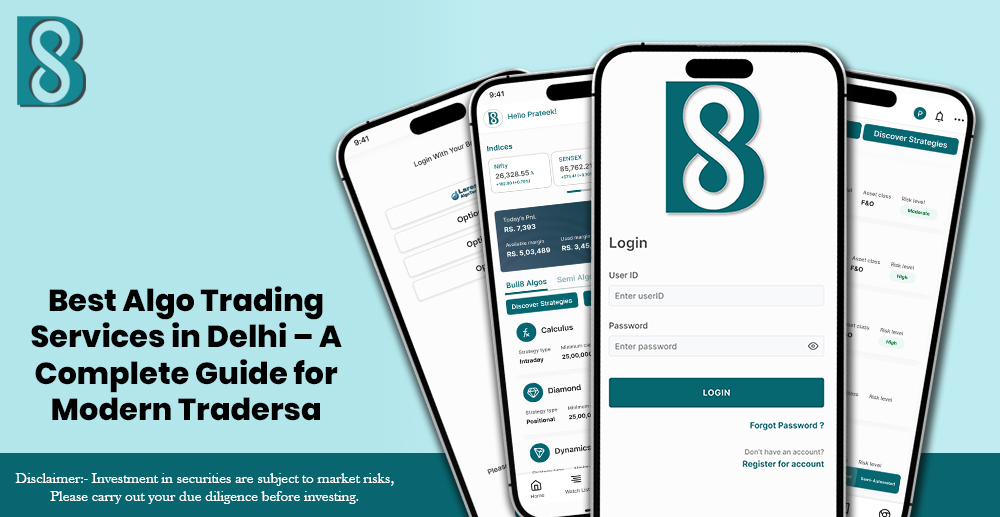
Best Algo Trading Services in Delhi – A Complete Guide for Modern Traders
Introduction
Choosing the Best Algo Trading Services in Delhi requires understanding the key features that define a reliable trading platform. Over the past decade, the Indian stock market has witnessed tremendous growth. With increasing digital adoption, advanced trading platforms, and wider access to financial markets, more individuals are actively participating in trading and investing. Cities like Delhi, Noida, and Gurgaon have emerged as important hubs for financial activity, where retail traders, professional investors, and financial firms operate actively in equity, derivatives, and commodities markets.
As market participation has grown, so has the demand for faster, more disciplined, and technology-driven trading methods. Traditional manual trading, where traders analyze charts and place orders manually, is gradually being replaced by algorithmic trading systems. These systems execute trades automatically based on predefined rules, allowing traders to respond instantly to market opportunities.
In highly volatile markets, speed and accuracy play a crucial role. Even a delay of a few seconds can result in missed opportunities or unfavorable trade execution. This is where algorithmic trading offers a significant advantage. By automating the decision-making and execution process, trading algorithms can analyze data, identify trading signals, and place orders in milliseconds.
In Delhi NCR, the rise of digital trading platforms, broker API integrations, and fintech innovation has accelerated the adoption of algorithmic trading among retail traders. Many traders are now seeking structured trading systems that remove emotional decision-making and provide consistent strategy execution.
Modern retail-focused platforms like Bull8 are helping bridge the gap between institutional-level trading technology and individual traders. By offering pre-built strategies, automated execution, and built-in risk management, platforms such as Bull8 are making algorithmic trading more accessible and practical for everyday traders.
As the financial ecosystem in Delhi continues to evolve, algorithmic trading is quickly becoming a core component of modern trading strategies.
What is Algorithmic Trading?
Algorithmic trading, often referred to as algo trading, is a method of executing trades automatically using computer programs that follow predefined rules and instructions. Instead of manually analyzing charts and placing orders, traders create or use trading algorithms that monitor market conditions and execute trades based on specific criteria.
In simple terms, algorithmic trading combines technology, data analysis, and trading strategies to automate the entire trading process.
An algorithm can analyze multiple market factors simultaneously, including:
Price movements
Technical indicators
Volume patterns
Market volatility
Order flow
Once the predefined conditions are met, the system automatically executes a trade without requiring human intervention.
For example, an algorithm might be programmed to buy a stock when the price crosses a moving average and sell it when the price drops below a certain level. These rules can be simple or extremely complex depending on the strategy design.
How Trading Algorithms Work
Algorithmic trading systems typically follow a structured workflow:
Market Data Analysis – The system continuously receives real-time market data.
Strategy Logic – The algorithm evaluates trading conditions based on predefined rules.
Signal Generation – When conditions match the strategy rules, a buy or sell signal is generated.
Order Execution – The system sends the order directly to the exchange through a broker connection.
Because this entire process is automated, algorithmic trading can execute trades much faster than manual trading.
Manual Trading vs Algorithmic Trading
Trading Type
Description
Manual Trading
Human decision based trading where orders are placed manually
Algo Trading
Automated trading where strategies execute trades automatically
Manual trading depends heavily on human judgment, emotions, and reaction speed. On the other hand, algorithmic trading follows predefined rules consistently and executes trades instantly.
As financial markets become more competitive and data-driven, algorithmic trading is rapidly becoming an essential tool for modern traders.
Why Algo Trading is Growing Rapidly in Delhi
Delhi has become one of the fastest-growing hubs for algorithmic trading in India. With a strong financial ecosystem, access to advanced technology, and increasing retail participation in the stock market, traders across Delhi NCR are increasingly adopting automated trading solutions.
One of the biggest reasons behind this growth is the rising number of retail traders in cities like Delhi, Noida, and Gurgaon. With the availability of mobile trading apps and online broker platforms, more individuals are entering the markets than ever before.
However, as market participation increases, trading also becomes more competitive. Retail traders are now looking for ways to improve their efficiency, manage risks better, and execute trades faster. Algorithmic trading provides exactly that.
Another major factor driving algo trading adoption in Delhi is the presence of financial firms and proprietary trading desks. Many trading firms operate in Delhi NCR and use advanced algorithmic strategies to manage large trading volumes. This has increased awareness about algorithmic trading among retail traders as well.
The rapid growth of fintech companies has also played a crucial role. Modern trading platforms now offer:
Broker API integrations
Real-time market data access
Automated trading dashboards
Strategy execution tools
These technologies make it easier for traders to deploy automated strategies without needing complex infrastructure.
Delhi’s strong technology ecosystem also contributes to the growth of algo trading. Many traders in the region have technical backgrounds and are comfortable using advanced trading platforms.
Furthermore, traders are realizing that emotional decision-making often leads to losses. Panic buying, impulsive selling, and overtrading are common mistakes in manual trading. Algorithmic trading eliminates these emotional factors by following predefined rules.
As a result, more traders in Delhi are moving towards structured trading systems that provide discipline, consistency, and automation.
How Algo Trading Services Work
Algorithmic trading services operate through a combination of software systems, market data feeds, and broker integrations that enable automated execution of trading strategies.
While the technology behind algo trading may seem complex, modern platforms have simplified the process significantly for retail traders.
The workflow of algorithmic trading typically follows a structured sequence.
Step 1: Create a Trading Account
The first step is opening a trading account with a broker that supports API connectivity. APIs allow trading platforms to communicate with broker systems and execute orders automatically.
Step 2: Connect Broker API
Once the trading account is ready, the trader connects the broker account to the algorithmic trading platform using secure API integration. This connection allows the system to send orders directly to the exchange.
Step 3: Deploy Algorithm Strategy
After connecting the broker, the trader selects or deploys a trading strategy. Strategies are built using predefined rules such as:
Price breakouts
Indicator signals
Volatility patterns
Momentum strategies
These strategies can be pre-built or customized depending on the platform.
Step 4: Automated Order Execution
Once the strategy is active, the algorithm continuously monitors market data. When the strategy conditions are met, the system automatically places buy or sell orders.
This entire process happens within milliseconds, ensuring faster trade execution compared to manual trading.
Step 5: Risk Management Monitoring
Risk management is a crucial component of algorithmic trading systems. Advanced platforms include features like:
Stop-loss controls
Position sizing rules
Maximum drawdown limits
Automated exit conditions
These features help traders manage risk effectively.
Modern retail algo trading platforms such as Bull8 simplify this entire workflow. Instead of building complex infrastructure, traders can deploy automated strategies directly through a user-friendly dashboard.
Key Features of the Best Algo Trading Services in Delhi
Choosing the Best Algo Trading Services in Delhi requires understanding the key features that define a reliable trading platform.
Pre-Built Trading Strategies
Many traders lack the technical knowledge to develop trading algorithms from scratch. The best algo trading services offer pre-built strategies that are ready to deploy.
These strategies are designed based on tested trading principles and allow traders to start automated trading quickly.
Automated Execution
One of the biggest advantages of algorithmic trading is automated execution. Orders are placed instantly when market conditions match strategy rules.
This eliminates delays that often occur in manual trading.
Risk Management Systems
Effective risk control is essential in algorithmic trading. The best platforms include built-in risk management tools such as:
Stop loss mechanisms
Capital allocation rules
Maximum drawdown limits
Position size control
These features protect traders from excessive losses.
Multi-Strategy Deployment
Advanced trading platforms allow traders to run multiple strategies simultaneously. This enables diversification and reduces dependency on a single trading strategy.
For example, traders may run:
Momentum strategies
Mean reversion strategies
Options trading strategies
All at the same time.
Real-Time Monitoring
Algo trading platforms provide real-time dashboards that display performance metrics such as:
Profit and loss
Trade history
Active positions
Strategy performance
This allows traders to monitor their systems effectively.
Strategy Customization
Different traders have different risk tolerance levels. The best platforms allow traders to modify strategies according to their preferences.
Custom parameters may include:
Entry conditions
Exit rules
Stop-loss limits
Trade size
These features make algorithmic trading more flexible and adaptable.
Benefits of Using Algo Trading Software Services
Algorithmic trading offers numerous benefits that make it increasingly popular among modern traders.
Emotion-Free Trading
One of the biggest advantages of algorithmic trading is that it removes emotional decision-making. Algorithms strictly follow predefined rules, preventing impulsive trades.
Faster Trade Execution
Speed plays a critical role in trading. Algorithms execute trades within milliseconds, allowing traders to capture market opportunities quickly.
Backtesting Capability
Backtesting allows traders to test strategies using historical market data. This helps evaluate how a strategy would have performed in the past.
Consistent Strategy Execution
Human traders often deviate from their trading plans due to fear or greed. Algorithmic trading ensures strategies are executed consistently without deviation.
Portfolio Diversification
Algorithmic trading allows traders to run multiple strategies simultaneously. This diversification reduces the risk of relying on a single trading approach.
Risks and Challenges in Algo Trading
Despite its advantages, algorithmic trading also carries certain risks that traders must understand.
One major risk is strategy failure. A trading strategy that performs well in one market condition may fail in another.
Another challenge is over-optimization, where a strategy is excessively tuned to past data. While such strategies may perform well during backtesting, they may not perform effectively in real market conditions.
Technology risks also exist. Issues such as server downtime, connectivity failures, or system errors can impact trade execution.
Market volatility is another factor that can affect algorithmic strategies. Sudden market events or unexpected news can cause rapid price movements that disrupt algorithm performance.
Because of these risks, traders must use platforms that incorporate robust risk management systems.
How to Choose the Best Algo Trading Service in Delhi
Selecting the right algorithmic trading platform is critical for long-term trading success.
Here are key factors traders should consider:
· Strategy reliability
· Platform stability
· Broker integration support
· Risk management features
· Transparent performance tracking
· Easy-to-use interface
Traders should also be cautious of platforms that promise unrealistic profits. The stock market always carries risks, and no strategy can guarantee consistent profits.
Instead of focusing on promises of high returns, traders should prioritize disciplined trading systems and robust risk management frameworks.
The best platforms focus on structured trading rather than speculative trading.
Why Bull8 is Emerging as a Leading Algo Trading Software in Delhi
As algorithmic trading continues to gain popularity in Delhi NCR, platforms that focus on simplicity, automation, and risk management are becoming increasingly important.
Bull8 is emerging as a modern retail-focused algorithmic trading platform designed to simplify automated trading for everyday traders.
The platform offers rule-based trading strategies that automatically execute trades based on predefined market conditions. This eliminates the need for manual trade execution and reduces emotional decision-making.
One of the key strengths of Bull8 is its user-friendly interface, which allows traders to deploy automated strategies without complex technical knowledge.
Key features of the Bull8 algo trading platform include:
Pre-built algorithmic strategies
Automated trade execution
Broker connectivity
Risk management controls
Real-time monitoring dashboard
The platform also focuses on structured trading, ensuring that strategies operate within defined risk parameters.
By making algorithmic trading more accessible, Bull8 is helping retail traders adopt modern trading technology that was once available only to institutional investors.
Future of Algo Trading in
The future of algorithmic trading in India looks extremely promising. With rapid technological advancements and increasing retail participation, automated trading is expected to grow significantly over the next decade.
Several trends are shaping the future of algo trading:
Growth of AI-driven trading strategies
Increased adoption of broker APIs
Expansion of fintech trading platforms
Greater retail participation in derivatives markets
As trading technology continues to evolve, more traders will adopt algorithmic strategies to improve efficiency and manage risks better.
Platforms that simplify algorithmic trading for retail users will play a crucial role in this transformation.
Conclusion – The Future of Structured Trading
Algorithmic trading is rapidly becoming an essential tool for modern traders. As markets become more competitive and data-driven, automation provides a significant advantage in terms of speed, discipline, and consistency.
For traders in Delhi NCR, the growing availability of automated trading platforms has made it easier to adopt structured trading strategies.
However, success in algorithmic trading requires the right combination of technology, risk management, and strategy design.
Platforms like Bull8are helping bridge the gap between institutional trading technology and retail traders by offering user-friendly automated trading solutions.
As algorithmic trading continues to grow in India, traders who adopt structured and disciplined trading systems will be better positioned to navigate the evolving financial markets.
FAQs
What are the Best Algo Trading Services in Delhi?
The Best Algo Trading Software in Delhi provide automated systems that execute trades based on predefined strategies. Instead of manually placing orders, traders use algorithms that analyze market data and place trades automatically. These services are becoming popular among traders in Delhi NCR because they offer faster execution, rule-based strategies, and disciplined trading. Modern platforms provide dashboards for monitoring performance, built-in risk management tools, and broker integrations. Many traders now prefer using a retail algo trading platform because it simplifies automated trading without requiring coding knowledge. Platforms like the Bull8 algo trading platform are designed to help retail traders access advanced algorithmic trading technology easily.
How does an algo trading platform in Delhi work?
An algo trading Softwarein Delhi works by connecting a trader’s strategy with real-time market data and broker APIs. The system continuously analyzes price movements, indicators, and trading conditions. When predefined rules are triggered, the platform automatically places buy or sell orders through the broker account. This automated process eliminates manual intervention and ensures faster trade execution. Most modern automated trading software in India also provides features like backtesting, risk controls, and strategy monitoring dashboards. Traders can select pre-built strategies or customize their own rules depending on their trading style and risk tolerance.
Are algorithmic trading services legal in India?
Yes, algorithmic trading Softwarein India are legal and regulated under the guidelines of the Securities and Exchange Board of India (SEBI). Brokers and trading platforms offering automated execution must follow strict compliance requirements to ensure market transparency and fairness. Retail traders can use a retail algo trading platform that connects to brokers through secure APIs. These systems allow traders to deploy automated strategies without violating regulatory rules. However, traders should always choose a reliable platform with proper broker integrations and risk management features to ensure safe participation in automated trading.
Why are traders searching for the Best Algo Trading Services in Delhi?
Traders are increasingly searching for the Best Algo Trading Softwarein Delhi because algorithmic trading provides speed, discipline, and efficiency. In fast-moving markets, manual trading can lead to delays and emotional decisions. Automated systems solve this problem by executing trades instantly based on predefined rules. Delhi NCR has a growing community of active traders and fintech companies, which has accelerated the adoption of automated trading tools. With access to automated trading software in India, traders can deploy strategies, monitor performance in real time, and manage risk more effectively.
What are the benefits of using automated trading software in India?
Using automated trading software in India offers several advantages for modern traders. The biggest benefit is emotion-free trading, as algorithms follow predefined rules without fear or greed influencing decisions. Another major advantage is faster execution, which allows traders to capture opportunities in milliseconds. Many algorithmic trading services in India also offer backtesting features that allow traders to test strategies using historical data. Automated systems also help with portfolio diversification because traders can run multiple strategies simultaneously on a retail algo trading platform.
Can beginners use a retail algo trading platform?
Yes, beginners can easily start using a retail algo trading platform. Modern trading platforms are designed to simplify algorithmic trading for users without coding knowledge. Many platforms provide pre-built strategies that traders can deploy with just a few clicks. This allows beginners to experience automated trading without needing technical expertise. A good algo trading platform Delhi will also provide dashboards, risk controls, and performance tracking tools to help traders monitor their strategies. With proper learning and risk management, beginners can gradually explore advanced automated trading strategies.
What makes the best algo trading software different from regular trading apps?
The best algo trading software differs from regular trading apps because it automates the entire trading process. In traditional apps, traders manually analyze charts and place orders themselves. In contrast, algorithmic trading platforms execute trades automatically when strategy conditions are met. These platforms also include advanced features such as strategy deployment, automated order execution, and performance monitoring. Many algorithmic trading services in India also integrate with broker APIs and provide real-time market data feeds. This technology allows traders to trade more efficiently and consistently compared to manual trading methods.
How much capital is required for algo trading in Delhi?
The capital required for algorithmic trading depends on the strategy being used and the market segment being traded. Some traders start with relatively small capital while learning how automated strategies work. However, having adequate capital helps traders manage risk and diversify strategies effectively. Most algo trading Softwarein Delhi allow traders to deploy strategies with flexible capital requirements. A good retail algo trading platform will also include position sizing tools and risk management systems to protect trading capital. Proper capital allocation is essential for long-term success in algorithmic trading.
What strategies are commonly used in algorithmic trading services in India?
Many algorithmic trading services in India support a wide range of strategies. Some of the most common strategies include momentum trading, mean reversion, breakout trading, and volatility-based trading. These strategies rely on mathematical rules and technical indicators to generate trading signals. Traders often combine multiple strategies to diversify risk and improve performance. Modern Fully automated trading software in Indiaallows traders to run several strategies simultaneously on the same platform. This flexibility helps traders adapt to changing market conditions and build a more structured trading approach.
Why is the Bull8 algo trading platform gaining popularity in Delhi?
The Bull8 algo trading platform is gaining popularity among traders in Delhi because it focuses on simplifying algorithmic trading for retail users. The platform offers pre-built strategies, automated execution, and real-time monitoring tools that make trading easier. Unlike complex institutional systems, Bull8 is designed to be accessible for everyday traders. It provides broker connectivity, risk management controls, and a user-friendly interface. As more traders in Delhi search for the Best Algo Trading Software in Delhi, platforms like Bull8 are helping them adopt automated trading in a structured and disciplined way.
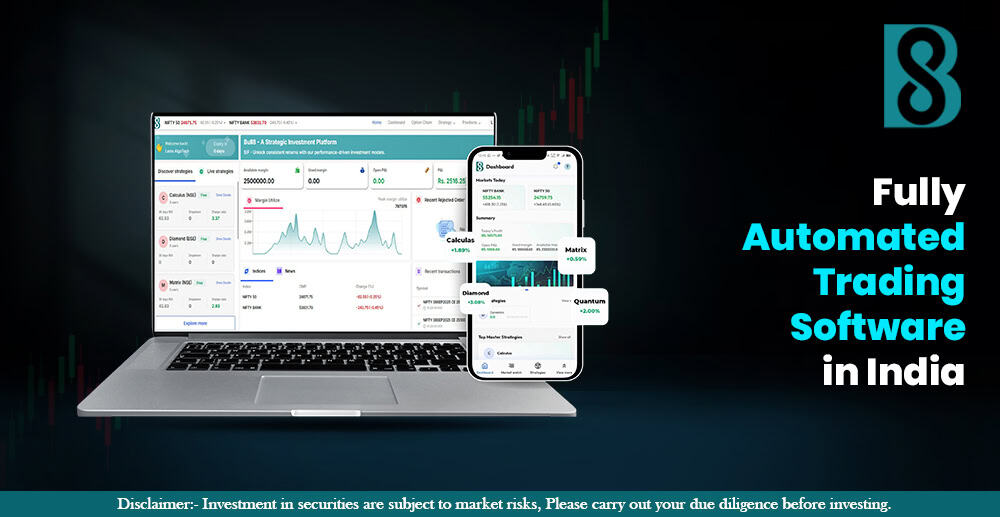
1️ Introduction: Why Fully Automated Trading Is Gaining Momentum in India
India’s retail trading ecosystem has undergone a massive transformation over the past few years. The post-COVID era marked an unprecedented surge in new retail traders entering the stock market. Low-cost trading apps, instant demat account openings, and constant exposure to stock market content on YouTube, Instagram, Telegram, and Twitter made trading appear accessible and exciting. Millions of first-time traders believed that market participation alone was enough to generate consistent income.
However, the reality turned out to be very different.
While participation increased rapidly, consistency and profitability did not. A large portion of retail traders struggled with discipline, emotional decision-making, and repeated capital erosion. Many began their journey with manual trading, relying on chart patterns, news headlines, or instinctive judgment. When results failed to meet expectations, traders moved toward tip-based Telegram and WhatsApp groups, hoping that expert calls would deliver easy profits. Instead, this often amplified losses due to poor risk control and blind execution.
The next shift came in the form of semi-automated tools—alerts, scanners, indicators, and signal dashboards. These tools promised structure but still required traders to manually execute trades. As a result, emotional overrides, hesitation, and delayed execution continued to sabotage outcomes.
The fundamental problems never changed.
Indian retail traders still face:
Emotional buying and selling driven by fear and greed
Missed entries and late exits during fast-moving markets
Inconsistent stop-loss execution
Overtrading and revenge trading after losses
Absence of a repeatable, rule-based process
Modern Indian markets are faster, more volatile, and deeply influenced by global cues, algorithmic flows, and event-driven movements. Human reaction time and emotional control are no longer sufficient. Manual execution simply cannot keep pace with today’s trading environment.
This is why fully automated trading software in India is gaining serious momentum—not as a profit shortcut, but as a process upgrade.
Fully automated trading removes emotions from execution. Trades are placed strictly based on predefined rules, not opinions or impulses. Risk management is embedded into the system rather than left to human discipline. Consistency is enforced automatically.
Bull8 enters this evolving landscape with a clear and uncompromising philosophy:
No tips. No predictions. Only rules.
Built as a structured, rule-driven, risk-first automation platform, Bull8 is designed specifically for Indian retail traders—bringing institutional-level discipline into everyday trading decisions.
2️ What Is Fully Automated Trading Software? (India-Focused Explanation)
Fully automated trading software is a technology-driven system that executes trades automatically based on predefined strategies, rules, and risk parameters—without requiring manual intervention during live market conditions. Unlike traditional trading methods, where decisions are influenced by emotions or hesitation, fully automated trading software follows logic exactly as designed.
To understand this clearly, it is important to distinguish between the three dominant trading approaches used by Indian traders today.
Manual Trading
In manual trading, the trader personally analyzes charts, tracks news, and places orders. While this method offers control, it also introduces emotional bias. Entries, exits, and stop-loss decisions are often influenced by fear, greed, or overconfidence. Execution delays are common, and discipline varies from day to day.
Semi-Automated Trading
Semi-automated systems provide alerts or signals when certain conditions are met. However, the trader still decides whether to execute the trade. This keeps emotions firmly in the loop. Traders hesitate, override signals, or enter trades late—leading to inconsistent execution and poor risk management.
Fully Automated Trading Systems
Fully automated trading software eliminates manual execution entirely. The trader selects a strategy in advance, defines capital allocation and risk limits, and the system handles everything else. Entry, exit, stop-loss, and position sizing rules are executed automatically. There is no emotional override during live markets.
In simple terms, “fully automated” means the system executes the trade—not the trader.
In the Indian market context, fully automated trading software operates with:
NSE-based execution frameworks
Retail-friendly capital deployment
Strategies aligned with Indian market volatility and liquidity
Predefined position sizing and risk management rules
Bull8 has been designed to make fully automated trading software in India accessible to retail traders without requiring coding skills, expensive infrastructure, or institutional-level resources. It simplifies automation while preserving control, transparency, and discipline.
3️ Evolution of Trading in India: From Manual Orders to Automation
The evolution of trading in India reflects a gradual shift from access-driven participation to discipline-driven execution. Each phase brought greater convenience—but also new challenges.
Phone-Based Trading Era
In the early days, orders were placed through brokers over phone calls. Execution was slow, brokerage costs were high, and participation was limited to a small segment of investors. While discipline existed due to high friction, opportunities were restricted.
Online Trading & Discount Brokers
The arrival of online platforms and discount brokers transformed the market. Trading became affordable and accessible to millions. However, ease of access also meant ease of overtrading. Many traders entered markets without understanding risk, discipline, or capital management.
Chart-Based Trading Apps
Advanced charting tools empowered traders with technical analysis. While analysis improved, execution remained manual. Emotional decision-making still dominated, especially during volatile sessions.
Entry of Automation & Algorithms
As Indian markets became more volatile and event-driven, automation emerged as a solution. Initially adopted by institutions, automation gradually reached retail traders. The purpose was not just speed—but discipline, consistency, and risk control.
Today’s markets react instantly to:
Global economic news
Central bank decisions
Algorithmic order flows
Sudden volatility spikes
Human reaction time and emotional control are increasingly inadequate. Automation has become a necessity, not a luxury.
Fully automated trading software in India represents the natural evolution of market participation—shifting the focus from prediction to process.
4️ Why Manual Trading Fails Most Retail Traders in India
Most retail traders in India do not fail due to lack of intelligence or effort. They fail due to the absence of a structured process. Manual trading exposes traders to psychological biases that compound losses over time.
Common issues include:
Overtrading after losses in an attempt to recover quickly
Ignoring stop-losses due to hope or fear
Increasing position sizes emotionally
Chasing breakouts after moves are already exhausted
Psychological biases such as fear, greed, and confirmation bias dominate manual trading decisions. Traders often exit profitable trades early and hold losing trades too long. This creates a capital erosion cycle, where occasional wins are wiped out by uncontrolled losses.
The core truth is simple
Markets reward consistency and discipline, not predictions.
Fully automated trading software in India directly addresses these challenges by removing emotional execution from the equation. Rules are defined before the market opens. Trades are executed exactly as planned. Risk management is enforced automatically.
Bull8 enables traders to shift from emotional decision-making to process-driven execution, solving the very problems that cause most manual traders to fail.
5️ Core Components of a Fully Automated Trading System
A fully automated trading software in India is only as strong as the components that power it. Automation is not simply about placing trades automatically—it is about building a complete decision-to-execution ecosystem where every action is governed by logic, data, and risk control. Missing even one component can turn automation into a dangerous tool instead of a disciplined system.
At the core lies the strategy logic engine. This is the brain of the system. It defines when to enter a trade, why that entry exists, and under what conditions the trade should be exited. In fully automated trading software in India, this logic must be designed specifically for Indian market behavior, volatility patterns, and liquidity conditions. Random or loosely defined strategies lead to inconsistent results.
Next comes market data feeds. Automation depends on real-time, accurate data. Delayed or unreliable data can result in incorrect entries, slippage, or missed exits. A robust automated system ensures that decisions are based on live NSE market data, not lagging indicators or delayed price updates.
Entry and exit rules form the execution layer. These rules remove subjectivity. Trades are not entered because a trader “feels confident” or exits because of fear. Instead, predefined conditions determine every action. This is where fully automated trading software in India begins to outperform manual and semi-automated approaches—because rules do not hesitate.
The risk management layer is the most critical component. This includes stop-loss rules, maximum drawdown limits, and exposure controls. Without embedded risk management, automation magnifies losses just as quickly as it executes trades.
Position sizing ensures capital is allocated logically, not emotionally. Many traders fail not because of poor entries, but because they overexpose capital. Automated systems prevent this.
Finally, the order execution system ensures trades are placed instantly and efficiently without human delay.
Bull8 integrates all these components into a single, controlled ecosystem—ensuring that fully automated trading software in India operates as a complete, disciplined system rather than a fragmented toolset.
6️ Risk Management: The Backbone of Automated Trading
In trading, strategy attracts attention—but risk management determines survival. This truth becomes even more critical in fully automated trading software in India, where execution speed is high and markets can shift rapidly.
Many retail traders believe losses occur due to poor strategies. In reality, most losses stem from inadequate risk control. Manual traders frequently ignore stop-losses, average losing positions, or increase exposure emotionally. Even traders who understand risk rules often fail to follow them consistently under pressure.
Fully automated trading software in India solves this problem by removing discretion from risk decisions. Risk rules are enforced automatically, without emotional override.
Bull8 embeds risk management directly into the trading system. This includes maximum drawdown limits, which prevent traders from losing beyond a predefined threshold. Once a limit is reached, the system restricts further exposure—protecting capital from emotional revenge trading.
Fixed and trailing stop-loss mechanisms ensure losses are capped and profits are protected. These are applied consistently across trades, eliminating the temptation to “wait and hope.”
Capital allocation rules ensure that no single trade or strategy dominates the portfolio. This diversification of risk is critical in volatile Indian markets, especially in derivatives trading.
Another key aspect is exposure control per strategy. Even if a strategy performs well historically, overexposure can be dangerous. Automation enforces balance.
The most powerful advantage of fully automated trading software in India is not that it predicts markets better—but that it forces discipline when traders are weakest emotionally. Bull8 transforms risk management from a guideline into a rule—executed without exception.
7️ Indian Regulatory Landscape for Automated Trading
Automation without compliance is not innovation—it is risk. In India, the regulatory environment around trading emphasizes transparency, accountability, and responsible participation. This makes choosing the right fully automated trading software in India critically important.
SEBI maintains a cautious but structured approach toward algorithmic trading. While institutional algos are heavily regulated, retail-facing automation platforms must operate responsibly within broker-integrated frameworks. The biggest risk for retail traders comes from grey-area bots—unregulated tools that promise unrealistic returns without compliance or transparency.
Such systems often bypass proper broker integration, lack audit trails, and expose traders to legal and financial risk. Many operate in regulatory blind spots, leaving users vulnerable.
Bull8 adopts a compliance-first mindset. It avoids shortcuts and focuses on structured, responsible automation aligned with Indian market norms. Strategies are rule-based, execution is transparent, and users retain visibility and control over capital deployment.
In the Indian ecosystem, responsible automation means:
Clear strategy logic
Transparent execution rules
Broker-aligned workflows
Risk disclosures and education
Fully automated trading software in India must be designed not just for performance—but for long-term sustainability within a regulated market. Bull8 positions itself as a platform built for serious traders who value compliance as much as consistency.
8️ Fully Automated Trading vs Semi-Automated Tools
Many traders believe semi-automation is “good enough.” In reality, semi-automated tools often fail at the most critical moment—when emotions take over.
Semi-automated systems typically provide alerts or signals. However, the trader must still confirm execution. This small manual step reintroduces hesitation, fear, and emotional bias. Traders delay entries, skip signals, or override exits based on market noise.
This defeats the purpose of discipline.
Fully automated trading software in India removes this weak link. Once a strategy is selected and parameters are set, the system executes trades automatically—without hesitation or second-guessing. There is no emotional override during live market conditions.
Key advantages of fully automated trading over semi-automation include:
Consistency: Every trade follows the same rules
Speed: No delay in execution
Zero hesitation: Rules execute instantly
Emotional neutrality: Fear and greed are eliminated
Semi-automation may suit traders who still want manual control. Fully automated trading is ideal for traders who value process over impulse and discipline over excitement.
Bull8 is designed for traders who want automation to do what humans struggle with most—execute rules flawlessly, every single time.
9️ Asset Classes Supported by Fully Automated Trading Software in India
One of the most important considerations when choosing fully automated trading software in India is understanding which asset classes are best suited for automation. Not all market segments behave the same way, and automation works best where liquidity, structure, and rule-based price behavior exist.
In the Indian context, fully automated trading software is most effective across equity cash, index options, and index futures.
Equity Cash Segment
Equity cash trading offers transparency, relatively lower leverage, and strong liquidity in large-cap and actively traded stocks. Automated strategies in equity cash often focus on momentum, trend-following, or breakout-based logic. Because price movements are driven by supply-demand dynamics and institutional flows, rule-based execution performs better than emotional decision-making. Fully automated trading software in India helps traders avoid overtrading and random stock selection in this segment.
Index Options
Index options are one of the most popular segments among Indian retail traders—and also one of the most dangerous when traded manually. Rapid time decay, volatility spikes, and emotional decision-making lead to frequent losses. This is where fully automated trading software in India becomes especially powerful. Options strategies require strict entry timing, predefined exits, and disciplined risk control. Automation ensures these rules are followed without hesitation.
Index Futures
Index futures offer high liquidity and predictable behavior during trending markets. Automated systems can execute futures strategies efficiently, especially when volatility is elevated. Fully automated trading software in India helps manage leverage responsibly, something manual traders often fail to do.
Across all asset classes, liquidity and volume are critical. Indian indices such as Nifty and Bank Nifty are ideal for automation due to consistent participation and institutional involvement. Bull8 focuses on asset classes where rule-based automation adds real value—rather than encouraging random or speculative trading.
Strategy-Driven Trading: Why Algorithms Must Follow Rules
At the heart of every successful fully automated trading software in India lies one core principle: rules matter more than predictions. Many traders believe automation is about building complex models that forecast the market. In reality, sustainable automated trading is about executing simple, logical rules consistently.
A good automated strategy is not defined by how often it wins—but by how well it manages risk across market conditions. Rule-based strategies focus on:
Clearly defined entry conditions
Objective exit rules
Predefined stop-loss logic
Controlled position sizing
In manual trading, even well-designed strategies fail because traders override rules emotionally. Fear causes early exits. Greed causes delayed exits. Losses trigger impulsive trades. Fully automated trading software in India removes this inconsistency by executing strategies exactly as designed.
Another critical element is backtesting. Strategies must be tested across historical Indian market data to understand behavior during different volatility regimes. However, backtesting alone is not enough. Forward testing ensures that strategies perform reasonably in live conditions, accounting for slippage and market noise.
One of the biggest mistakes traders make is chasing “high return” strategies. These systems often ignore drawdowns and risk exposure. Bull8 promotes a discipline-over-returns mindset, where capital preservation and consistency are prioritized over aggressive profit targets.
Automation does not make strategies smarter—it makes execution disciplined. Bull8 ensures that strategies follow rules relentlessly, which is exactly what most manual traders struggle to achieve.
1️1️ How Bull8 Works as a Fully Automated Trading Software in India
Bull8 is built on a simple but powerful belief:
Trading success comes from structure, not predictions.
Unlike platforms that push tips or discretionary signals, Bull8 operates as a fully automated trading software in India that emphasizes clarity, discipline, and control.
Bull8’s Core Philosophy
Bull8 does not sell excitement. It does not promise guaranteed profits. Instead, it focuses on:
No tips
No discretionary trading
Only predefined, rule-based strategies
This philosophy is critical for retail traders who want consistency rather than randomness.
Automation Flow Inside Bull8
The Bull8 workflow is designed to be simple yet structured:
The trader selects a pre-built strategy aligned with their risk profile
Capital allocation is defined clearly
Risk limits and exposure controls are set
The system executes trades automatically
Rules are enforced consistently without emotional interference
Everything happens within a transparent framework. Traders know what the strategy does, how risk is managed, and how execution occurs.
Bull8 is designed specifically for retail traders, not institutions. It avoids complexity for complexity’s sake and focuses on usability, transparency, and control. Traders do not need coding skills or advanced technical knowledge to use the platform effectively.
By acting as a process partner rather than a prediction engine, Bull8 redefines what fully automated trading software in India should look like—disciplined, accessible, and sustainable.
1️2️ Benefits of Using Fully Automated Trading Software for Indian Traders
The benefits of fully automated trading software in India go far beyond convenience. At its core, automation transforms how traders behave, not just how trades are executed.
Time Freedom
Automation frees traders from staring at screens all day. Once strategies and risk parameters are set, the system handles execution. This makes automated trading ideal for working professionals and business owners.
Emotion-Free Execution
Fear, greed, and hesitation are eliminated. Fully automated trading software in India ensures that trades are executed exactly according to predefined rules—no second-guessing.
Consistency
Consistency is the biggest edge in trading. Automation ensures the same logic is applied every day, regardless of market noise or emotional state.
Scalability
Manual trading does not scale well. Automation allows traders to manage multiple strategies or asset classes without increasing emotional load.
Better Capital Discipline
Position sizing, exposure control, and drawdown limits are enforced automatically. This protects traders from catastrophic losses.
Bull8 embeds each of these benefits directly into its system design. They are not marketing promises—they are enforced mechanisms. This is why fully automated trading software in India, when built correctly, becomes a long-term process advantage rather than a short-term experiment.
1️3️ Common Myths About Automated Trading in India
As interest in fully automated trading software in India grows, so do misconceptions. Many of these myths come from unrealistic marketing, unregulated bots, and a general misunderstanding of what automation is actually designed to do. Clearing these myths is essential for traders who want to approach automation with the right expectations and mindset.
Myth 1: Automated trading guarantees profits
This is the most dangerous misconception. No trading system—manual or automated—can guarantee profits. Markets are uncertain by nature. What automation guarantees is discipline and consistency, not outcomes. Fully automated trading software in India ensures that rules are followed exactly as designed, but it cannot eliminate market risk. Bull8 is transparent about this reality and focuses on process integrity rather than profit promises.
Myth 2: Only institutions can use algorithms
Historically, automation was limited to large institutions due to cost and complexity. Today, technology has made automation accessible to retail traders. In fact, retail traders often benefit more from automation because it protects them from emotional mistakes. Bull8 is built specifically for Indian retail traders, not institutional desks.
Myth 3: Automation is risky
Automation itself is not risky—poorly designed automation is. The real risk lies in undisciplined manual trading, where stop-losses are ignored and emotions dominate. Fully automated trading software in India, when built with proper risk controls, actually reduces risk by enforcing rules consistently.
Myth 4: Manual traders are smarter than algorithms
Human intuition can be valuable, but it is unreliable under pressure. Algorithms are not “smarter” than humans—they are simply more consistent. Bull8 combines human-designed logic with machine-level discipline, creating a balanced and realistic approach to trading automation.
Bull8 actively focuses on education and realistic expectations, helping traders understand that automation is a process tool, not a magic solution.
1️4️ Who Should Use Fully Automated Trading Software?
Fully automated trading software in India is not meant for everyone. It is most effective for traders who value structure, discipline, and long-term consistency over excitement and impulsive decision-making.
Ideal users include:
Traders who have full-time jobs or businesses often cannot monitor markets continuously. Automation allows them to participate in markets without constant screen time, while still maintaining discipline.
Consistency-focused traders
Some traders understand strategies well but struggle with execution. Fully automated trading software in India removes emotional interference and ensures consistent application of rules.
Risk-aware traders
Traders who prioritize capital preservation over aggressive returns benefit significantly from automation. Built-in risk management protects against catastrophic losses.
System builders
Traders who think in terms of process, probability, and long-term performance rather than daily profits are ideal candidates for automation.
Who should NOT use automation?
Automation is not suitable for impulse traders, tip-chasers, or those seeking instant profits. Traders who frequently override rules or chase market excitement will find automation restrictive.
Bull8 is designed for traders who are ready to treat trading as a structured activity, not a speculative game. It rewards patience, discipline, and respect for risk.
1️5️ The Future of Fully Automated Trading in India (2026–2030)
The future of fully automated trading software in India is closely tied to the evolution of technology, regulation, and retail trader maturity. Between 2026 and 2030, automation is expected to move from an “edge” to a standard requirement for serious traders.
One major development will be the deeper integration of AI with rule-based automation. Rather than replacing rules, AI will enhance strategy evaluation, volatility assessment, and risk calibration. Automation will become smarter—but still rule-driven.
Retail adoption is set to increase significantly. As more traders experience the limitations of manual and semi-automated trading, the demand for disciplined systems will rise. Fully automated trading software in India will increasingly be viewed as a risk management tool rather than a profit engine.
Regulatory frameworks are also expected to mature. Clearer guidelines will help eliminate grey-area bots and promote responsible platforms. Compliance-first systems like Bull8 will gain trust as traders become more aware of long-term sustainability.
Early adopters of automation gain a process advantage. They learn to think in probabilities, manage risk systematically, and detach emotions from execution. Bull8 is built to be future-ready, scalable, and aligned with India’s evolving market structure.
Conclusion: Automation Is About Process, Not Profits
Fully automated trading software in India is not about chasing guaranteed returns or replacing human intelligence. It is about building a disciplined, repeatable, and risk-aware process that can survive across market cycles.
Markets will always be uncertain. Volatility, news events, and global factors are beyond any trader’s control. What traders can control is how they execute decisions, manage risk, and respond to losses.
Automation enforces this control.
Bull8 is not a shortcut.
It is not a tip provider.
It is not a prediction engine.
Bull8 is a system—a process partner for serious Indian traders who understand that long-term success comes from discipline, structure, and consistency.
In a market where emotions destroy capital faster than bad strategies, fully automated trading software in India represents the natural evolution of trading itself—and Bull8 stands at the centre of that evolution.
FAQs
FAQ 1: What is fully automated trading software in India?
Fully automated trading software in India is a system that executes trades automatically based on predefined strategies, rules, and risk parameters, without requiring manual intervention during live market hours. Once a trader selects a strategy and sets capital and risk limits, the software handles entries, exits, stop-losses, and position sizing automatically. Unlike manual or semi-automated trading, emotions such as fear and greed do not influence execution. The primary purpose of fully automated trading software in India is not to predict markets, but to enforce discipline, consistency, and structured risk management across changing market conditions.
FAQ 2: How is fully automated trading software different from semi-automated trading?
Semi-automated trading tools provide alerts or signals but still require the trader to manually place orders. This reintroduces emotional decision-making, hesitation, and execution delays. Fully automated trading software in India removes this manual step entirely. Trades are executed automatically based on predefined rules, ensuring consistency and speed. There is no emotional override during live markets. While semi-automation assists decision-making, full automation enforces discipline. For traders who struggle with execution consistency and emotional control, fully automated trading software in India offers a more reliable, process-driven approach.
FAQ 3: Is fully automated trading software in India legal and safe to use?
Yes, fully automated trading software in India can be legal and safe when it operates within regulatory guidelines and uses proper broker-integrated execution. The risk arises from unregulated or grey-area bots that promise guaranteed returns without transparency or compliance. Responsible platforms focus on rule-based strategies, clear risk disclosures, and structured execution. Traders should always choose compliance-first systems and avoid tools that bypass broker frameworks. Fully automated trading software in India is safest when it emphasises discipline, transparency, and risk control rather than unrealistic profit claims.
FAQ 4: Can fully automated trading software in India guarantee profits?
No. Fully automated trading software in India does not and should not guarantee profits. Markets are inherently uncertain, and no system can eliminate risk. What automation guarantees is discipline and consistency, not outcomes. By removing emotional decision-making and enforcing predefined rules, automated systems help traders avoid common mistakes such as overtrading, ignoring stop-losses, or revenge trading. Platforms like Bull8 focus on process integrity rather than profit promises, helping traders build sustainable trading habits instead of chasing unrealistic returns.
FAQ 5: Who should use fully automated trading software in India?
Fully automated trading software in India is ideal for traders who value structure, discipline, and long-term consistency. This includes busy professionals who cannot monitor markets full-time, traders who struggle with emotional execution, and risk-aware individuals who prioritize capital preservation. It is also suitable for traders who think in terms of systems and probabilities rather than daily profits. However, automation is not suitable for impulse traders, tip-chasers, or those seeking instant gains. Automation rewards patience and respect for rules.
FAQ 6: Which asset classes work best with fully automated trading software in India?
Fully automated trading software in India works best in asset classes with high liquidity, clear structure, and predictable behavior. These include equity cash (large-cap and actively traded stocks), index futures, and index options. Indian indices like Nifty and Bank Nifty are especially suited for automation due to strong volume and institutional participation. Automation performs poorly in illiquid or highly speculative instruments. Platforms like Bull8 focus on asset classes where rule-based execution and risk control provide genuine advantages.
FAQ 7: How important is risk management in fully automated trading software in India?
Risk management is the most critical component of fully automated trading software in India. Even the best strategies fail without proper risk control. Automated systems enforce stop-losses, position sizing, maximum drawdown limits, and exposure rules consistently—something most manual traders struggle to do. Automation removes emotional overrides that lead to large losses. The goal is not to avoid losses entirely, but to control them. Fully automated trading software in India succeeds when risk management is embedded into execution, not treated as an afterthought.
FAQ 8: Does fully automated trading software in India require coding knowledge?
No. Modern fully automated trading software in India is designed to be retail-friendly and does not require coding or advanced technical skills. Traders typically select pre-built strategies, define capital allocation, and set risk parameters through simple interfaces. The complexity is handled by the system in the background. This makes automation accessible to traders who understand markets but do not have programming expertise. Platforms like Bull8 focus on simplicity and transparency, ensuring traders can use automation without technical barriers.
FAQ 9: Is fully automated trading suitable for beginners in India?
Fully automated trading software in India can be suitable for beginners—but only if they approach it with realistic expectations. Beginners should understand that automation is not a shortcut to profits. It is a learning tool that enforces discipline and risk control. New traders benefit by avoiding emotional mistakes and developing structured trading habits early. However, beginners should still focus on education, understand how strategies work, and start with controlled capital. Automation works best when combined with a long-term learning mindset.
FAQ 10: Why is fully automated trading software in India becoming more popular?
Fully automated trading software in India is gaining popularity because markets have become faster, more volatile, and emotionally demanding. Manual trading struggles to keep up with event-driven movements, algorithmic flows, and rapid price changes. Automation offers consistency, speed, and emotional neutrality—qualities increasingly essential. As retail traders experience the limitations of manual and semi-automated approaches, they turn toward systems that prioritise process over prediction. This shift reflects a broader maturity in how Indian traders approach markets.